China

Taxonomy

Code

Scope note(s)

    Source note(s)

      Display note(s)

        Hierarchical terms

        Equivalent terms

        China

          Associated terms

          4 People & Organisations results for China

          3 results directly related Exclude narrower terms
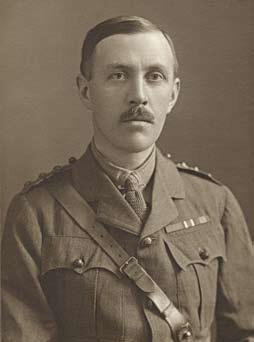
          Bailey, Frederick Marshman
          3 February 1882 – 17 April 1967

          a British political officer and one of the last major figures of the Great Game. His expeditions in Tibet and Assam Himalaya gave him many opportunities to pursue his hobbies of photography, butterfly collecting and trophy hunting in the high Tibetan region.

          In 1913 he made an unauthorised exploration to the Tsangpo Gorges with Captain Henry Morshead of the Survey of India. Morshead was later a surveyor for the initial 1921 British Mount Everest reconnaissance expedition, along with George Mallory. Their adventures led them to the Rong Chu Valley, a gorge on the Upper Tsangpo. It was in that valley that Bailey spotted a tall blue poppy at the margin of the forest and pressed it in his notebook, now called Meconopsis baileyi.

          One of Bailey's more well-known adventures occurred in 1918, when he travelled to Tashkent in Central Asia on a mission to discover the intentions of the new Bolshevik government, specifically in relation to India.

          He helped Frank Kingdon-Ward and Lord Cawdor in 1924 when he was a Political Officer in Gangtok, Sikkim. Bailey arranged passports and encouraged them to search the 40 mi unexplored gap of the river to solve the riddles of the Tsangpo Gorges. Kingdon-Ward wrote a book by the same name documenting that expedition.


          Fluent in Tibetan
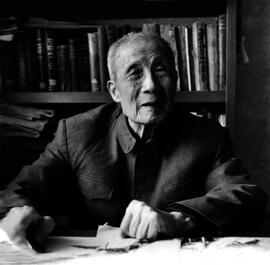
          Ching, Ren-Chang
          Person · 1898-1986

          Chinese botanist, known as the father of Chinese pteridology. Wrote the first complete monograph of Chinese Ferns. He published over 160 articles and monographs, as well as 15 translations.

          Developed the Ren-Chang Ching System for ferns. In 1940, Ren-Chang Ching published the Natural Classification System of Polypodiaceae, in which he divided plants of Polypodiaceae into 33 families and 249 genera, and proposed 5 evolutionary clues (Xing, 1994). His system ended the conservative classification system of Joseph Dalton Hooker and solved the biggest problem of fern botany at that time, which made great contributions to the worldwide fern taxonomy.


          Became interested in botany when studying at the First Agricultural School in Jiangsu Province. After graduation, he attended the University of Nanking and got a bachelor degree in forestry.

          Ren-Chang, went on to work as an assistant at Southeast University and later got a job with the Natural History Museum of Academia Sinica.

          In 1929, he began researching ferns at the Botany Museum at the University of Copenhagen (Denmark). After returning to China, he worked as a researcher at the Institute of Hydrobiology in Peiping. In 1934, he was sent to Jiangxi to establish the Lushan Botanical Garden and became its director.

          During the War of Resistance against Japan, he established a fern research center in Kunming. From 1945, he became an associate professor at the Department of Forestry and Biology of Yunnan University.

          In 1949, he also became the Deputy Director of the Forestry Bureau of Yunnan Province.


          In order to study ferns he learned English, French, Latin, and other languages.

          He took over 18,300 photographs of fern patterns.

          Forrest, George
          Q204566| F32388 | VIAF ID: 64335134 (Personal) | ISNI: 0000 0000 4457 4445 | Q204566 · Person · 1873-1932

          Born in Falkirk in 1873, George Forrest became one of Scotland's most prolific plant collectors, conducting seven expeditions in Yunnan province, S.W. China between 1904 and his death there in 1932.

          Tsoong, Pu-Chiu
          Person · 1906-1981

          Chinese botanist. Pu-Chiu Tsoong was an authority on the Chinese Scrophulariaceae and edited two volumes (67(1) and 68) on the family in Flora Reipublicae Popularis Sinicae.

          Collected between 1935-1954.

          He collected plants in Anhui in 1935 with Tchen-Ngo Liou and later made a number of excursions in the Tsingling Range of Shanxi Province, among other expeditions.