Área de identidad
Código de referencia
Título
Fecha(s)
- 1933-06-21 (Criação)
Nivel de descripción
Volumen y soporte
1 page
Área de contexto
Nombre del productor
Institución archivística
Historia archivística
Origen del ingreso o transferencia
Área de contenido y estructura
Alcance y contenido
SUMMARY:
Observations suggest Blood pheasants may practice both polyandry and polygyny, including instances of two males with one female staying near a site with chicks despite disturbance. Three locals report taking eggs and say they have often seen two females with one male, claiming either arrangement occurs.
CONTENT:
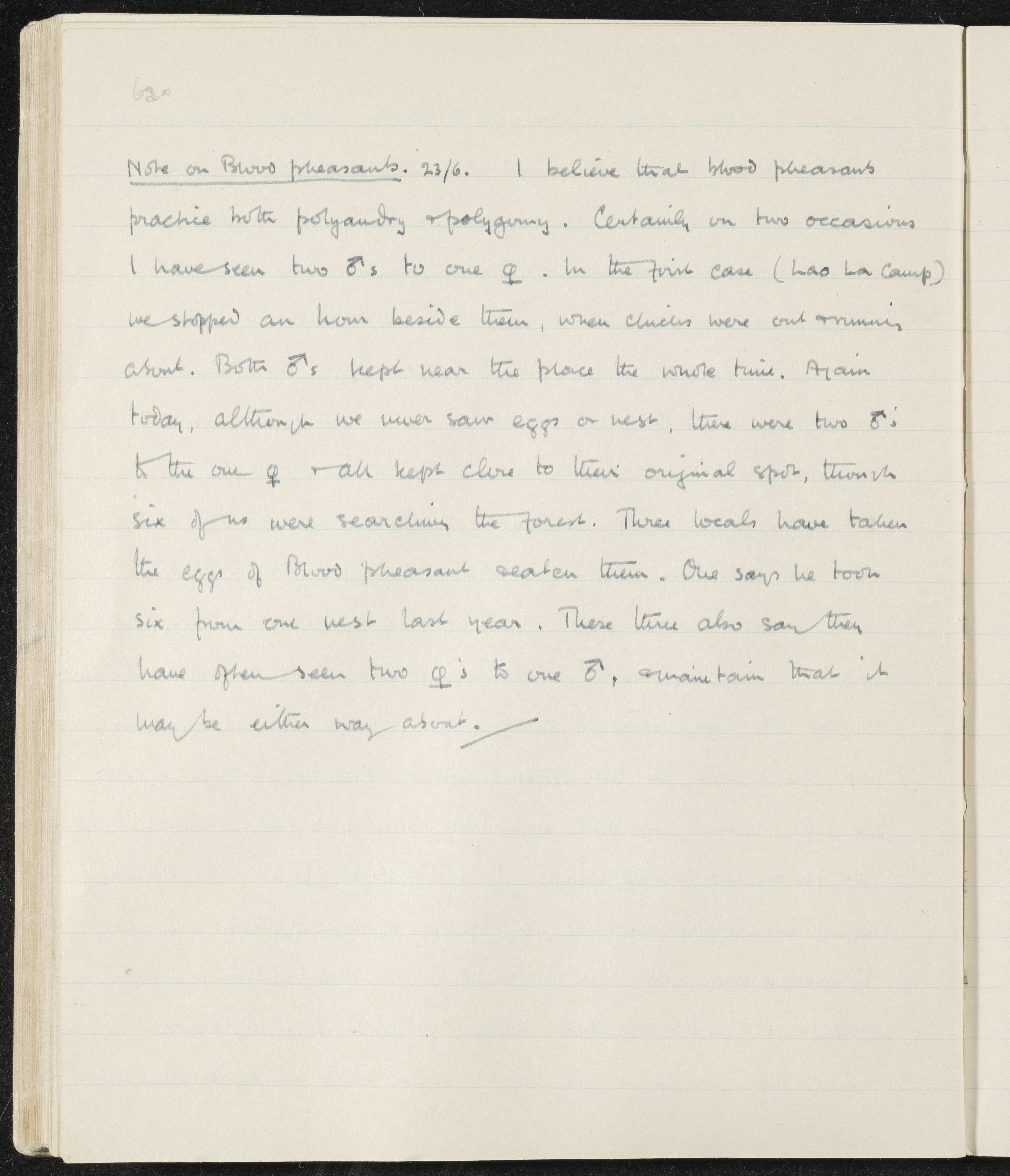
Note on Blood pheasants. 23/6. I believe that blood pheasants practice both polyandry and polygyny. Certainly on two occasions I have seen two males to one female. In the first case (Lao La Camp) we stopped an hour beside them, when chicks were out running about. Both males kept near the place the whole time. Again today, although we never saw eggs or nest, there were two males to the one female and all kept close to their original spot, though six of us were searching the forest. Three locals have taken the eggs of Blood pheasant and eaten them. One says he took six from one nest last year. These three also say they have often seen two females to one male, and maintain that it may be either way about.
Valorización, destrucción y programación
Acumulaciones
Sistema de arreglo
Área de condiciones de acceso y uso
Condiciones de acceso
Condiciones
Idioma del material
Escritura del material
Notas sobre las lenguas y escrituras
Características físicas y requisitos técnicos
Instrumentos de descripción
Área de materiales relacionados
Existencia y localización de originales
Existencia y localización de copias
Unidades de descripción relacionadas
Área de notas
Identificador/es alternativo(os)
Puntos de acceso
Puntos de acceso por materia
Puntos de acceso por lugar
Puntos de acceso por autoridad
- Three locals (Materia)