Identity area
Reference code
Title
Date(s)
- 1933-06-21 (Creation)
Level of description
Extent and medium
1 page
Context area
Name of creator
Repository
Archival history
Immediate source of acquisition or transfer
Content and structure area
Scope and content
SUMMARY:
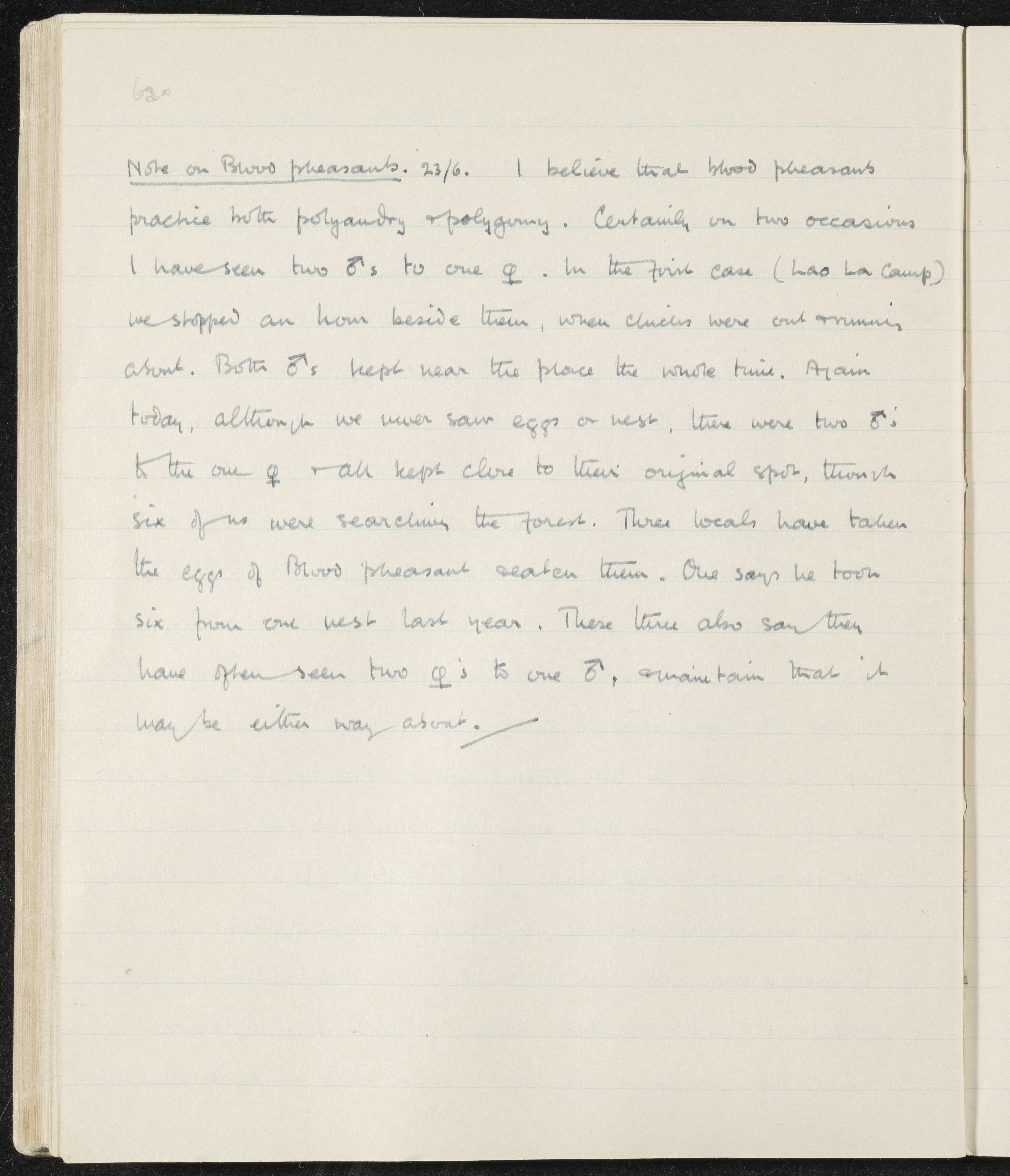
Observations suggest Blood pheasants may practice both polyandry and polygyny, including instances of two males with one female staying near a site with chicks despite disturbance. Three locals report taking eggs and say they have often seen two females with one male, claiming either arrangement occurs.
CONTENT:
Note on Blood pheasants. 23/6. I believe that blood pheasants practice both polyandry and polygyny. Certainly on two occasions I have seen two males to one female. In the first case (Lao La Camp) we stopped an hour beside them, when chicks were out running about. Both males kept near the place the whole time. Again today, although we never saw eggs or nest, there were two males to the one female and all kept close to their original spot, though six of us were searching the forest. Three locals have taken the eggs of Blood pheasant and eaten them. One says he took six from one nest last year. These three also say they have often seen two females to one male, and maintain that it may be either way about.
Appraisal, destruction and scheduling
Accruals
System of arrangement
Conditions of access and use area
Conditions governing access
Conditions governing reproduction
Language of material
Script of material
Language and script notes
Physical characteristics and technical requirements
Finding aids
Allied materials area
Existence and location of originals
Existence and location of copies
Related units of description
Notes area
Alternative identifier(s)
Access points
Subject access points
Place access points
Name access points
- Three locals (Subject)