India

Elements area

Taxonomy

Code

Scope note(s)

    Source note(s)

      Display note(s)

        Hierarchical terms

        India

          Equivalent terms

          India

            Associated terms

            India

              176 Archival description results for India

              176 results directly related Exclude narrower terms
              LSH/1/1/6/1/11 · Part · 1933-03-02
              Part of The Ludlow & Sherriff Collection

              SUMMARY:
              The diarist records a cable from Taylor about plans to arrive in Calcutta on April 2, then details travel from Kala to Gyantse with strong winds and dust storms, wildlife sightings and shooting, and use of the wireless. Mail reports from Wright Smith on the 1937 primulas, and upon reaching Gyantse they call on Richardson, Dr Morgan, Colbourne, Hudson, and receive a friendly visit from Tendong.

              CONTENT:
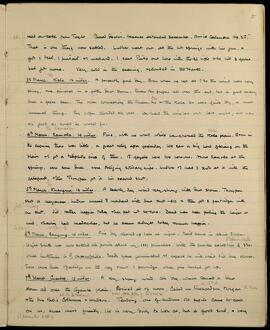
              NB read a cable from Taylor "Passed Doctor. Absence extended December. Arrive Calcutta April 2nd."
              That is one thing now settled. Ludlow went out at the hot springs with his gun, and got 1 teal, 1 pintail and 1 mallard. I sent Punso out here with the .22 rifle and he hit 3 geese but got none. Very cold in the evening, clouded in the North.

              3rd March. To Kala. 12 miles. A perfectly fine day. Even when we left at 7:30 the wind was very strong, and we finished in a filthy dust storm. Rham tso frozen all over this end, but a good many duck and geese seen. The river connecting the Rham tso and the Kala tso was quite dry, a most unusual thing. By 1:00 pm clouded all over. We had the wireless out last night, and it was as good as could be wished for.

              4th March. To Samoda. 14 miles. Fine, with no wind while we crossed the Kala plain. Even in the evening there was little, a great relief after yesterday. We saw a big herd of kiang on the plain and got a telephoto cine of them. 18 gazelle were too nervous. Above Samoda at the springs were some duck, and one obliging solitary snipe. Ludlow and I had 3 shots at it with the catapult, then Tsompen got it on his second shot.

              5th March. To Khangma. 14 miles. A beastly day, wind very strong, with dust storm. Tsompen shot a merganser, Ludlow missed 8 mallard with dust shot .410 and then got 3 partridges with one shot. Jill (dog) rather happier today and her feet not so sore. David has been feeling the height and wind, and having bad headaches, but he seems alright today and much happier.

              6th March. Saugong. 14 miles. Fine day, cleared up late at night. Mail came in about 8:00 pm. Wright Smith has now settled all points about my 1937 primulas, with the possible exception of 3301 which he thinks is P. chasmophila. Seeds have germinated, and I expect he will wait till they flower. Saw more duck and partridge on the way and shot 1 partridge, when five burhel got up.

              7th March. Gyantse. 15 miles. A very strong wind all day, which caused a dust storm all over the Gyantse plain. Arrived at 12 noon. Called on Richardson, Morgan the doctor (16 B.T.A.) and the two B.O.'s (O.C. 16th Detachment) Colbourne and Hudson. Tendong, now Jongpen of Gyantse, one of Ludlow's old pupils came to call on us, and was most friendly. He is very dirty to look at, but a good soul, and very...
              LSH/1/1/10/1/43 · Part · 1933-10-10
              Part of The Ludlow & Sherriff Collection

              SUMMARY:
              Travel from Chumpithang to Karponang and then on to Kalimpong in fine but cold weather, with extensive seed collecting including Meconopsis superba and Gentiana depressa. Transport was arranged at Rinchengang for Danang and Tseringpen; Betty was met near Gangtok before reaching Kalimpong, where coolies were paid off and a lorry arranged. Plants were later sent by air from Calcutta via BOAC.

              CONTENT:
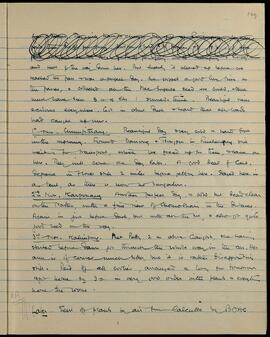
              and most of the way down here. But luckily it cleared up before we reached the pass and was a perfect day. We stopped a good long time on the passes, and collected all the Meconopsis superba seed we could, there must have been 3 or 4 lbs I should think. Beautiful views of clouds everywhere. Got in about dusk and heard that all loads had caught up now.

              1st Nov. Chumpithang. Beautiful day, very cold and hard frost in the morning. Found Danang and Tseringpen in Rinchengang still waiting for transport, which we fixed up for them, and came on here. They will come one day later. A good deal of Gentiana depressa in flower still 2 miles before getting here. Stayed here in a tent, as there is now no bungalow.

              2nd Nov. Karponang. Another perfect day, and cold but dead clear on the Natu, with a fine view of Chomolhari in the distance. Again in just before dusk, but with all the kit, and also got quite good seed on the way.

              3rd Nov. Kalimpong. Met Betty 2 miles above Gangtok, she having started before dawn for through the whole way in the car. Her arm is of course much better, but it is rather disappointing still. Paid off all coolies, arranged a lorry for tomorrow and got home by 3:00 in very good order with plants and everything none the worse.

              Later. Sent off plants by air from Calcutta by BOAC.

              LSH/1/1/1/1/93 · Part · 1933-11-02
              Part of The Ludlow & Sherriff Collection
              • SUMMARY:
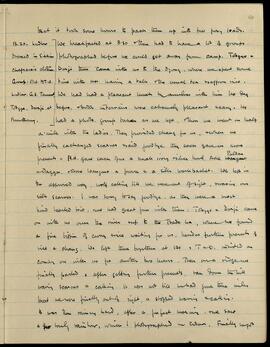
                The party took group photographs in Sikkim clothes, then visited the Dzong for tea and saffron rice with H.H., following a pleasant lunch the previous day. After farewell exchanges and gifts from Ashe Paldan Wangmo and Ashe Wangmo, they departed, with Tobgye and Dorji accompanying them over the river toward the Bada La.

              CONTENT:
              44

              that it took some hours to pack them up into two pony loads.

              B. 20. Ludlow

              • We breakfasted at 8.30 then had to have a lot of groups
                dressed in Sikkim
              • photographed before we could get away from camp. Tobgye and
                chaprasis clothes.
              • Dorji then came into us to the Dzong, where we spent some
                Group: F.W. H.W.
              • time with H.H. having a talk and the usual tea and saffron rice.
                Ludlow. G.S. Tenzing
              • We had had a pleasant lunch by ourselves with him the day
                Tobgye, Dorji at
              • before, and both interviews were extremely pleasant and easy. He
                Bumthang.
              • had a photo group taken as we left, and then we went on half
                a mile with the ladies. They provided chang for us, and when we
                finally exchanged scarves and said goodbye, they each gave us more
                presents — H.H. gave each of us a small ivory and silver bowl, Ashe Paldan Wangmo
                a dagger, Ashe Wangmo a purse and a silk workbasket. We left in
                the approved way, wolf calling till we were out of sight, waving our
                silk scarves. I was sorry to say goodbye, as they were a most
                kind hearted trio, and we had great fun with them. Tobgye and Dorji came
                on with us over the river and up to the Bada La, where we found
                a fine tiffin of
              LSH/1/1/9/1/104 · Part · 1949-07-12
              Part of The Ludlow & Sherriff Collection

              SUMMARY:
              At Dur Chutsen on the Mangde Chu, the diarist met Ludlow and identified his Meconopsis as Meconopsis sherriffii, noting abundant Androsace globifera. A letter reported Betty’s injury, requiring travel to Calcutta and forcing a return to Bumthang before proceeding to Ripong; the next day was a halt during which Dorong returned with a large haul, noted as more effective than Pasang and Gunden.

              CONTENT:
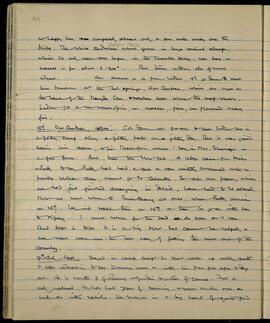
              so happy here, completely absent only a few miles away over the divide. The white Androsace globifera which grows in huge vertical clumps, which I've only seen once before, in the Chachhu Valley, was here in masses - for about 200-300'. But there's nothing else of much interest. An answer is in from Ludlow, so go down to meet him tomorrow at the hot springs, Dur Chutsen, which are right on the bank of the Mangde Chu, somewhere near where the map shows. Ludlow got a new Meconopsis, in masses, pink, one flowered very fine.

              18th - Dur Chutsen 10800'. Got down at 9:00 am to meet Ludlow in a filthy camp, along a filthy path on a filthy day. But it was grand seeing him again, and his Meconopsis, which I see is Meconopsis sherriffii in a fine form. But then the blow fell. A letter came for Hicks and Betty, to say Betty had had a fall and was mildly concussed with a possible broken arm, must go to Calcutta. So all our plans, which we had just finished arranging in detail, have had to be altered. Now we must return to Bumthang at once, where Betty arrives on the 26th. We will reach there on the 25th and then go on with her to Ripong. I must return for the seed as soon as I can. And that is that. It is a big blow, but cannot be helped, and we must work out the best way of getting the most out of the country.

              19th July Halt. Stayed in camp, except for short walks up muddy paths. It was interesting to see Dorong come in with his press full after 2 days out. He is worth 3 of Pasang and Gunden together of course. That is only natural. He has had years of training, and years on his own as well as with sahibs. He brought in a big haul of quite good

              LSH/1/1/5/1/123 · Part · 1933-06-21
              Part of The Ludlow & Sherriff Collection

              SUMMARY:
              The diarist reports fever and painful throat affecting both himself and Tsongpen, while Pinto has recovered. They move from Dungshuggang to a camp 2 miles beyond Wangchelah at about 12,500 ft, finding few new plants but noting abundant rhododendrons and several Primula species.

              CONTENT:
              Sherriff 60

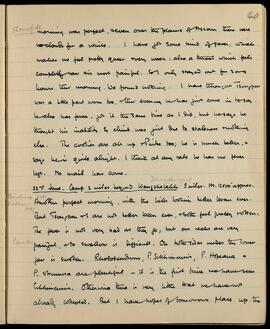
              Morning was perfect, even over the plains of Assam there were no clouds for a while. I have got some kind of fever, which makes me feel pretty queer every week; also a throat which feels completely raw and most painful. So I only stayed out for 3 or 4 hours this morning. We found nothing. I have thought Tsongpen was a little past work too, this evening he has just come in to say he also has fever, got it the same time as I did, but he says he thought his inability to climb was just due to staleness and nothing else. The coolies are all up and Pinto too; he is much better, and says he is quite alright. I think at any rate he has no fever left. No mail has come.

              Dungshuggang
              22nd June. Camp 2 miles beyond Wangchelah 5 miles. Ht. 12500' approx.
              Another perfect morning, with the hills looking better than ever. But Tsongpen and I are not better than ever, and both feel pretty rotten. The fever is not very bad as they go, but our necks are very painful, and to swallow is difficult. On both sides under the lower jaw is swollen. Rhododendrons, P. sikkimensis, P. Hopeana and P. strumosa are plentiful — it is the first time we have seen sikkimensis. Otherwise there is very little that we have not already collected. But I have hopes of tomorrow's place up the

              LSH/1/1/5/1/131 · Part · 1933-06-21
              Part of The Ludlow & Sherriff Collection

              SUMMARY:
              Notes record Parnassius butterflies, a woodcock nest with four eggs found on 22 June, and a list of Primula species observed. The writer describes the steep peaks of Dungshinggang, clear views toward Sikkim and beyond Chomolahri, getting soaked in a noon storm, and a 25 June entry noting rain overnight, a clear morning, and later cloud.

              CONTENT:
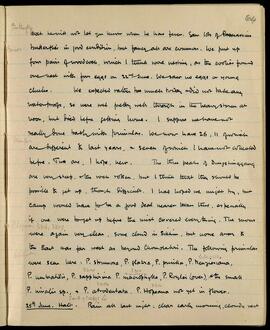
              that he will not let you know when he has fever. Saw lots of Parnassius butterflies in good condition, but fancy all are common. We put up four pairs of woodcock, which I think were nesting, as the coolies found one nest with four eggs on 22nd June. We saw no eggs or young chicks.

              We expected rather too much today and did not take any waterproofs, so were wet pretty well through in the heavy storm at noon, but dried before getting home. I suppose we have not really done badly with primulas. We now have 26, 11 of which are different to last year's, and seven of which I have not collected before. Two are, I hope, new.

              The three peaks of Dungshinggang are very steep, the rock rotten, but I think that they should be possible to get up, though difficult. I had hoped we might try, but camp would have to be a good deal nearer than this, especially if one were to get up before the mist covered everything. The snows were again very clear, some cloud in Sikkim, but none away to the East as far west as beyond Chomolahri. The following primulas
              were seen here: P. strumosa, P. glabra, P. pusilla, P. Menziesiana,
              P. umbratilis, P. sapphirina, P. macrophylla, P. Roylei (over), the small
              P. nivalis sp., and P. atrodentata. P. Hopeana not yet in flower.

              25th June. Hall - Rain all last night, clear early morning, cloudy rest.

              LSH/1/1/9/1/107 · Part · 1949-07-12
              Part of The Ludlow & Sherriff Collection

              SUMMARY:
              The writer reports finding a new lily and abundant Notholirion macrophyllum, and receives mail from Kalimpong with news that Branklyn is for sale and may be acquired. A letter from Taylor confirms P. umbratilis roots arrived safely and began to show growth after soaking. On 23rd July they marched to Dhur, noting an uninteresting, damp route where two rivers join.

              CONTENT:
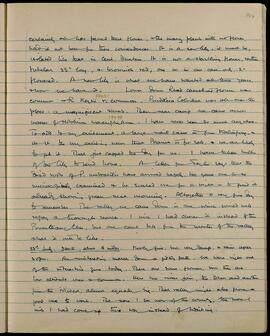
              certainly all has passed their flower, the many plants with no flower, had it not been for these coincidences. It is a new lily: it must be, isolated like that in Cent. Bhutan. It is not a startling flower, rather tubular 2 1/2" long, a brownish red, one or in one case only, 2-flowered. A new lily is what we have wanted all these years, now we have it. Lower down Rhododendron camelliiflorum was common. R. keysii v. common. Buddleja colvilei was all over the place - a magnificent shrub. Then near camp we came across masses of Notholirion macrophyllum. I have never seen so much anywhere. To add to my excitement, a large mail came in from Kalimpong, & in it, the very exciting news that Branklyn is for sale, & we are likely to get it. That just capped the day for us. I have taken bulbs of the lily to send home. A letter from Taylor says that the dried roots of P. umbratilis have arrived safely. He gave one to be microscopically examined & he soaked one for a night - to find it already showing green next morning. Altogether a very fine day to remember. The valley we came down is one which would well repay a thorough search. I wish I had chosen it instead of the Bumthang Chu, but one can't tell from the mouth of the valley what it will be like.

              23rd July. DHUR, about 4 miles. Mostly fine, but very damp, & rain after 2.0pm. An uninteresting march down a filthy path. We were right out of the interesting zone today. There are some flowers, but they are low altitude ones & common. Here two rivers join, the Dhur and another from the N-West, almost equal size. That valley might also prove a good one to work. The more I see now of the country, the more I wish I had come up this way instead of waiting.

              LSH/1/1/10/1/10 · Part · 1949-09-14
              Part of The Ludlow & Sherriff Collection

              SUMMARY:
              The diarist halts in the Diruphuang valley amid heavy rain, notes a sense of the monsoon ending, and reaches a nearby pass without difficulty. Skimmia seed brought by Pasang is abundant and promising. Letters and plans are mentioned, including Tobgye writing from Kalimpong, Betty in Calcutta, and Hicks intending to be in Bumthang earlier than expected.

              CONTENT:
              146 19768 P. alboviana x brunosa

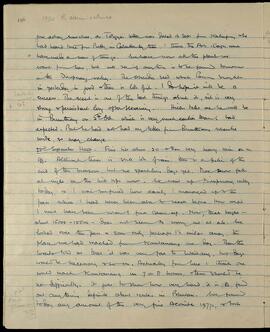
              gone astray somewhere, as Tobgye's letter was dated 4 Sept from Kalimpong, she had heard twice from Betty in Calcutta by then. I think the Arts & Crafts must have made a mess of things. We have now all the plants we want from here, but will see if another is to be found tomorrow in the Diruphuang valley. The Skimmia seed which Pasang brought in yesterday is good and there is lots of it. I do hope it will be a success. The scent is one of the best things about it, and it is very strong and persistent long after flowering. Hicks tells me he will be in Bumthang on 5th Oct. which is very much earlier than I had expected. But he had not had my letter from Bumthang when he wrote, so may change.

              23rd September Halt. Fine till about 2.0 and then very heavy rain on and off. Although there is still lots of rain, there is a feeling of the end of the monsoon, but no sparkling days yet. More snow falls at night on the hill tops now. We went up Diruphuang valley today, and I was surprised how easily I managed up to the pass which I had never been able to reach before. How unfit I must have been when I first came up. Now, that height - about 15000 - 15500 - does not seem to worry me at all. We looked over the pass and saw

              LSH/1/1/6/1/164 · Part · 1938-11-20 - 1938-11-24
              Part of The Ludlow & Sherriff Collection

              SUMMARY:
              The writer records local repercussions for aiding the Political Officer and objections to an interpreter at Tawang, then details marches from Haat to Jiri Chu, Demri Chu, Chungkar, and Satsalor. They assist the Dzongpen with photography, collect Lil. wallichianum bulbs, and note Ludlow’s kindness and medical aid to injured locals, with supplies sent and plans to leave Dewangiri on the 27th.

              CONTENT:
              Also that those Tibetans who hired the P.O. ponies were punished for having done so when he had gone. The same happened to anyone who helped the P.O., so that locals are in rather a fix.
              About the interpreter at Tawang, whom some of his own people had objected to. They did not like him, and thought his interpretation bad.

              20th November. Haat. Fine. I wish I had gone on today, as I could easily have done so. A second bearer is more polite. Dzongpen wants to take photographs. He took 12 and developed them, but none were even recognisable. So I had to go with him and take another 12 today. But no more developing - these will go to Kalimpong.

              21st November. To Jiri Chu. Fine. I was glad to get away from Purtogong. The Dzongpen was very kind indeed to us all there, but there was nothing to do but talk to him all day, which became very tiring. Coolies came direct, with no change. We have almost seen the last of the Main Range now: it was very clear today. From beyond Chunyhar one gets a last glimpse. Dundum flies not nearly so bad this year as in 1836. Collected again a few Lil. Wallichianum bulbs.

              22nd November. To Demri Chu. Fine. If I had remembered how short a march this was, I would have arranged coolies to go on to Chunyhar. These two days are absurdly short, there is little of interest to be found on these lost dry hillsides. Got a few more bulbs of Lil. Wallichianum, now have about 40-50.

              23rd November. To Chungkar. Fine, very clear sky. Another absurdly short march. Ludlow sent a note back here to say we leave Dewangiri on 27th. He also sent three bottles of beer and a small tin of chocolates, which was very thoughtful of him. Jill put up a lot of 'leku' today and also a dozen or more partridge. She uses her nose now very well indeed, has a lot of fun hunting on the hillside. There is a man here with his leg half cut off by a fall onto a rock. Ludlow was looking after him and tried to get him to consent to come to Kalimpong. But we showed no enthusiasm, although his leg will probably be useless in future unless he goes.

              24th November. Satsalor. Fine. Taylor and Tenduk must have searched the P. Sherrifae cliffs pretty well, as I could hardly find a capsule. There is a man at Chungkar with a terrible gash in his knee, which is septic. Ludlow treated him for all the time he was there, and I dressed him twice. We both tried our best to get him to come to Kalimpong, but with no success. He merely said he could not go. He had the lamas in, they told him...

              LSH/1/1/2/1/253 · Part · 1969-04-29
              Part of The Ludlow & Sherriff Collection

              SUMMARY:
              The party halts at Chungkar, notes many Great Hornbills, and meets the Dzongpen of Jonghar, who previously reported on Tobgye to H.H. They march to Satsalor with views of the snows, collect primulas, lily bulbs, and seeds, send off letters and seeds, then proceed to Diwangiri in Assam by following and repeatedly fording a clear, mahseer-filled river.

              CONTENT:
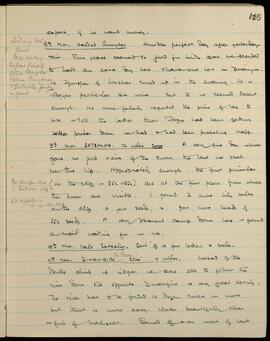
              experts, if he wants money.

              8th Nov. Halted Chungkar. Another perfect day after yesterday's rain. This place seemed so good for birds that we decided to halt an extra day here, and have one less in Diwangiri. The Dzongpen of Jonghar turned up in the evening. He is Tobgye's particular bête noire, but to us seemed decent enough. He once falsely reported the price of lac to H.H. and told the latter that Tobgye had been getting better prices than he had and had been pocketing half.

              [Marginal notes: Ludlow p. 165. Birds: large numbers of the Great Hornbill below Chungkar, between Chungkar and Satsalor feeding on fruit.]

              9th Nov. SATSALOR. 12 miles 3000'. A very fine day which gave us good views of the snows, the last we shall see this trip. Appropriately enough, the first primulas (on the cliff - 552 and 554) are at the first place from which the snows are visible. I found 2 more lily bulbs on the cliff, a few seeds, and four more heads of 552 seeds. A very pleasant camp down here — found a mail waiting for us too.

              [Marginal notes: Pri. Sherriffae 552 and ludlowii 554. Lil. nepalense var. concolor 559.]

              10th Nov. Halt Satsalor. Sent off a few letters and seeds.

              11th Nov. DIWANGIRI (in Assam). 2500' 7 miles. Instead of the double climb up ridges, we were able to follow the river down till opposite Diwangiri, a very great blessing. The river has to be forded a dozen times or more, but that is now easy. Water beautifully clear and full of mahseer. Rained off and on most of last