Bhutan

Elements area

Taxonomy

Code

Scope note(s)

    Source note(s)

      Display note(s)

        Hierarchical terms

        Bhutan

        Equivalent terms

        Bhutan

          Associated terms

          Bhutan

            419 Archival description results for Bhutan

            419 results directly related Exclude narrower terms
            LSH/1/1/9/1/17 · Part · 1949-04-08
            Part of The Ludlow & Sherriff Collection

            SUMMARY:
            After heavy overnight rain, the party went from Chamkhar (Bumthang) over the Kyikyi La to camp behind Byakar Dz, receiving food gifts from Pintso Wangdi and Ashi Choden Mother while H.H. added atta; rhododendrons were noted and a film pack was successfully developed. The following day was a rainy halt with more presents, preparations for Lhuntse, and a short excursion with Bette to collect a Prunus and a beautiful crab apple, with supplies sent as far as the Rudo La.

            CONTENT:
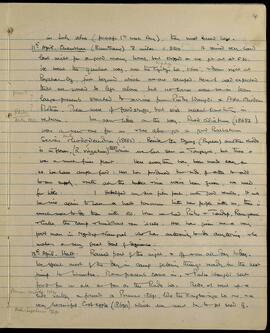
            in July also (perhaps 1st week Aug), they must breed here.

            11th April. Chamkhar (Bumthang) 8 miles. c. 9500'. It rained very hard last night for a good many hours, but stopped as we got out at 5.30. We went the quicker way, over the Kyikyi La, 11,600', & down right at Byakar Dz, just behind which we are camped. Here I had expected that we would be left alone, but no sooner were we in than large presents started to arrive from Pintso Wangdi & Ashi Choden Mother. These were of foodstuffs, but still meant something in return. We saw little on the way. Rhod. ciliatum (18683) was a new one for us, we also got a good Barbatum Series Rhododendron (18682). Beside the Dzong (Byakar) another rhodo is in flower, (R. virgatum) 18687 which we last saw in Tongkyuk, but this was a much finer plant. Here everything has been made easy for us. We have ample food: H.H. has produced two mds. of atta to add to our supply, with all the butter & rice we've been given, we need for little. I developed the first film pack, with good results. It will be nice again to have a halt tomorrow. With new people with us, there is much more to do than with old. When we had Pintso & Tendup, Ramzana & Linka, the camp bundobast ran itself. H.H. has given me a very good man in Ngudup Namgyal who has authority to do anything, which makes a very great deal of difference.

            12th April. Halt. Rained part of the night, & off & on all day today. We spent most of the day in camp getting things ready for the next jump to Lhuntse. More presents came in, & Pintso Wangdi sent food for us all as far as the Rudo La. Bette & I went up a side valley & found a Prunus 18691, like the Kongbo Nga La one, & a very beautiful Crab apple (18690) which we must try to get seed of.
            LSH/1/1/3/3/102 · Part · 1933-04-09
            Part of The Ludlow & Sherriff Collection

            SUMMARY:
            Notes list characteristic birds of Chayal Dzong with distribution observations across the Tsangpo and nearby regions. Locality records include sightings at Trimo (April 1936) and Keupup, Sikkim (Feb. 1938), with mentions of areas such as Subansiri, Gyamda Chu, and Tsari.

            CONTENT:
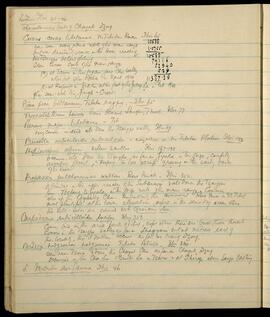
            Ludlow Ibis 45-46
            Characteristic birds of Chayal Dzong

            Corvus corax tibetanus The Tibetan Raven - Ibis 65
            Was seen everywhere north of the main range
            but was decidedly scarce in the lower reaches of
            the Tsangpo below Lilung.
            Seen twice south of the main range
            (a) at Trimo in the Nyam Jang Chu valley
            at the foot of the Poda in April 1936
            (b) at Keupup in Sikkim at the foot of the Jelep La in Feb. 1938
            Often seen with the Jungle-Crow.

            Pica pica bottanensis Tibetan Magpie. - Ibis 65

            Trochalopteron henrici Prince Henri's Laughing Thrush. Ibis 77

            Parus major tibetanus - Tit
            Very common indeed all down the Tsangpo valley. Ibis 67

            Prunella rubeculoides rubeculoides - everywhere on the Tibetan Plateau Ibis 192

            Phylloscopus affinis Willow Warbler. Ibis 197-198.
            Occurs all down the Tsangpo as far as Gyala in the Gorge, carefully
            avoiding forest, keeping to low scrub growing on the sandy banks
            of the river.

            Propasser pulcherrimus waltoni Rose Finch. Ibis 352.
            Abundant in the upper reaches of the Subansiri & all down the Tsangpo
            from Tsetang to Gyala in the Gorge north of the main range common
            also up the Gyamda Chu. Undoubtedly the commonest Rose Finch in SE Tibet
            most plentiful at the lower elevations especially in the semi-dry areas where
            the hill-sides are covered with Quercus ilex.

            Carpodacus rubicilloides lucifer Ibis 353
            Common bird in the arid parts of Tibet, especially where there are buckthorn thickets
            Common in the Tsangpo Valley as far as Lhagyari but not noticed east of
            this locality, though it doubtless occurs as far as Nang Dzong.

            Perdix hodgsoniae hodgsoniae Tibetan Partridge. Ibis 384.
            Seen near Tsong & down the Chayal Chu as far as Chayal Dzong.
            Occurred on the Cha La & Bimbi La in Tsari & at Shira above Sanga Chöling

            L Describe avifauna Ibis 46

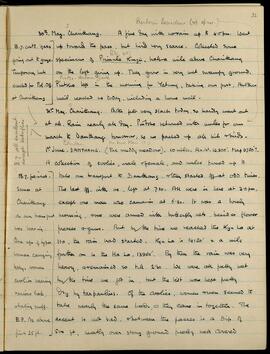
            LSH/1/1/1/1/49 · Part · 1940-05-30 - 1940-06-01
            Part of The Ludlow & Sherriff Collection

            SUMMARY:
            Entries describe 30–31 May at Charithang with fine then rainy weather, scarce birds, collection of Primula Kingii, and mail; guide Pintsho went to Yatung and returned with mules to prepare for the march. On 1 June they marched about 10 miles to Damthang, crossing Kyu La (14,150') and Ha La (13,950') in heavy rain; despite everyone getting wet, the kit stayed dry and women coolies carried comparable loads.

            CONTENT:
            92
            Berberis lasioclema (41) sp. nov.

            30th May. Charithang. A fine day with no rain up to 4.0 p.m. Went
            B.7. contd. Yaks up towards the pass, but birds very scarce. Collected some
            going out to graze. specimens of Primula Kingii (6/12.40), half a mile above Charithang
            Temporary huts on the left going up. They grow in very wet swampy ground.
            erected for Pol. Off. Pintsho (the Bhutan Guide) left in the morning for Yatung, taking our post. Another
            at Charithang mail reached us today, including a home mail.

            31st May. Charithang. Both felt very slack today, so hardly went out
            at all. Rain nearly all day. Pintsho returned with mules for our
            B.7 all excellent march to Damthang tomorrow, so we packed up all kit & birds.
            except butterflies.
            Bhutan The mud plain (L.)
            1st June. DAMTHANG. (The muddy meadow). 10 miles. An. ht. 10,300'. Map 9750'?
            A collection of coolies, male & female, and mules turned up to
            B.7. finished. take our transport to Damthang, & they started off at odd times.
            Scenes at The last off, with us, left at 7.30. All were in here at 3.0 p.m.,
            Charithang except one man who came in at 6.30. It was a lovely
            as our transport morning, & we were armed with butterfly nets, besides flower
            was leaving. presses & guns. But by the time we reached the Kyu La at
            Close ups of types, 11.0, the rain had started. Kyu La is 14150' & a mile
            woman carrying further on is the Ha La, 13950'. By then the rain was very
            baby; women heavy, & remained so till 2.30. We were all pretty wet
            coolies wearing by the time we got in, but the kit was kept pretty
            various hats, dry by tarpaulins. Of the coolies, women even seemed to
            taking snuff. take nearly the same load, & they came in together. The
            B.8. As above ascent is not bad, & between the passes is a dip of
            first 35 ft. 500 ft, mostly over stony ground pretty well covered

            LSH/1/1/4/1/157 · Part · 1933-10-19
            Part of The Ludlow & Sherriff Collection

            SUMMARY:
            Halt at Chayul; in the afternoon Danona and Fienduh arrived after traveling via Lo La and Bimbi La to Migyitun, reporting snow on the passes. Problems with headmen at Migyitun and Chuchar over demands for loshas, while seed collecting was largely successful though several desired gentians were unripe or snow-covered at Tsobumang, Zundali, Kyimpu, and Lo La.

            CONTENT:
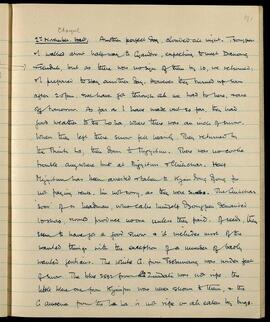
            Chayul
            2nd November. Halt: Another perfect day, clouded all night. Tsomp-
            I walked about half way to Cyandro, expecting to meet Danona
            Fienduh, but as there was no sign of them by 10, we returned,
            and prepared to stay another day. However they turned up soon
            after 2:00 pm, and we have got through all we had to here, and are
            off tomorrow. As far as I have made out so far, they had
            good weather to the Lo La, where there was an inch of snow.
            When they left there snow fell heavily. They returned by
            the Bimbi La, then down to Migyitun. There was no coolie
            trouble anywhere but at Migyitun and Chuchar. Halt.
            Migyitun has been arrested and taken to Kyimdong Dzong for
            not paying rents. I'm not sorry, as they were snobs. The Chuchar
            'sort' of a headman, who calls himself Dzongpen, demanded
            loshas, and would produce no one unless they paid. Of seeds, they
            seem to have got a good show and it includes most of the
            wanted things with the exception of a number of badly
            wanted gentians. The white C. from Tsobumang was under feet
            of snow. The blue 2592 from Zundali was not ripe, the
            little blue one from Kyimpu was never shown to them, and the
            C. amoena from the Lo La is not ripe or all eaten by bugs.

            LSH/1/1/1/1/65 · Part · 1933-06-21
            Part of The Ludlow & Sherriff Collection

            SUMMARY:
            Revisited Cheli La and collected flowers including Primula sikkimensis, Kashmir corydalis, and Bergenia ligulata; left Ha with Ludlow, ascended through rhododendron scrub to the pass with views of Chomolhari. Transport was by ponies, mules, and porters; spent the night at Chang na na amid a heavy thunderstorm and troublesome flies.

            CONTENT:
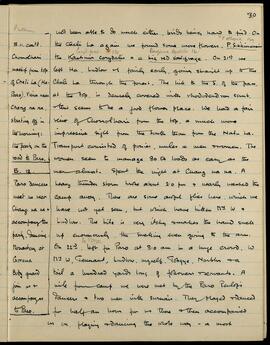
            30

            B. 11. contd. not been able to do much either, birds being hard to find. On
            Chomolhari the Cheli La again we found some more flowers, P. sikkimensis
            massif from top (? P. obliqua 129), the Kashmir corydalis (Coryd. cash. 131) &
            of Cheli La (Ha- a big red saxifrage (Bergenia ligulata 130). On 21st we
            Paro). Views near left Ha, Ludlow & I fairly early, going straight up to the
            Chang na na, Cheli La through the forest. The hill to the S. of the pass,
            starting off in at the top, is densely covered with rhododendron scrub.
            the morning: This seems to be a good flower place. We had a fair
            the party on the view of Chomolhari from the top, a much more
            road to Paro. impressive sight from the South than from the Natu La.
            Transport consisted of ponies, mules & men & women. The
            women seem to manage 80 lb loads as easily as the
            men almost. Spent the night at Chang na na. A
            B. 12. heavy thunder storm broke about 2.0 pm & nearly washed the
            Paro dancers camp away. There are some awful flies here, which we
            meet us near

            LSH/1/1/5/1/175 · Part · 1933-07-21
            Part of The Ludlow & Sherriff Collection

            SUMMARY:
            At Chendebi, the diarist notes mostly fine weather, ripe buckwheat being cut, and a white Crawfurdia observed. The party splits: kit sent to Ritang, Pintso to Dungshinggang for taxation inquiries about Nepali sheep, and Tenduk collecting iris seeds near Punzor; plans are made to travel via the Rinchen Chu and Tang Chu. On 4 August, a halt at Chendebi is recorded; Primula seeds are unripe, a plant clump is taken to send by air mail, and Tsongpen goes to collect P. bracteosa roots.

            CONTENT:
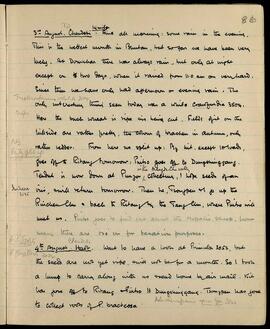
            3rd August. Chendebi. 14 miles. Fine all morning: some rain in the evening.

            This is the wettest month in Bhutan, but so far we have been very lucky. At Domkhar there was always rain, but only at night except on two days, when it rained from 11.0 am on, very hard. Since then we have only had afternoon or evening rain. The only interesting thing seen today was a white Crawfurdia 3504 (Tripleurospermum volubile 3504).

            Here the buckwheat is ripe and is being cut. Fields of it on the hillside are rather pretty, the colour of bracken in autumn, only rather redder. From here we split up: My kit, except 10 loads, goes off to Ritang tomorrow: Pintso goes off to Dungshinggang in the Mangde Chu valley.

            Tenduk is now down at Punzor, collecting, I hope seeds of an iris (Iris 3535), and will return tomorrow. Then he, Tsongpen and I go up the Rinchen Chu and back to Ritang by the Tang Chu, where Pintso will meet us. Pintso goes to find out about the Nepali sheep, how many there are and so on for taxation purposes.

            4th August. Halt. Chendebi. Went to have a look at Primula 3052 (P. flagellaris 3052), but the seeds are not yet ripe, and will not be for a month. So I took a lump to carry along with us and send home by air mail. Kit has gone off to Ritang and Pintso to Dungshinggang. Tsongpen has gone to collect roots of P. bracteosa. (Aster sheriffianus approx 4000 3532)

            LSH/1/1/1/1/81 · Part · 1933-07-05 - 1933-07-06
            Part of The Ludlow & Sherriff Collection

            SUMMARY:
            Field notes record plant specimens and a wet, muddy march from Chendebi over the Pele La and down the Longte Chu, with difficulties taking flower photographs and observations on loads carried by local porters. A report was sent from Trongsa on 8 July 1933 noted as slightly underexposed, and the next camp was at Tsang Ka.

            CONTENT:
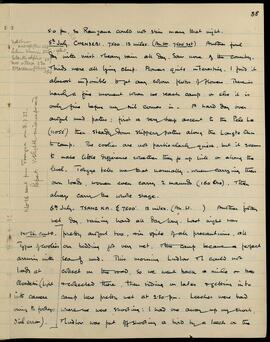
            38

            5.0 pm, so Ramzana could not skin many that night.

            Notholirion macrophyllum 228
            Lilium nanum 225 - 1 plant.
            Calanthe alpina 226
            Meconopsis villosa 230
            Oreocharis foliosa 234

            5th July. CHENDEBI. 7500. 13 miles. (An. Ht. 7500' set) Another foul day with mist & heavy rain all day. Saw none of the country, birds were all lying clump. Flowers quite interesting. I find it almost impossible to get any colour photos of flowers. There is hardly a fine moment when we reach camp, or else it is only fine before my tail comes in. A hard day over awful mud paths; first a very steep ascent to the Pele La (11055') then steady down slippery paths along the Longte Chu to camp. The coolies are not particularly quick, but it seems to make little difference whether they go up hill or along the level. Tobgye tells me that normally, when carrying their own loads, women even carry 2 maunds (160 lbs), & then always carry the whole stage.

            No 16 sent from Trongsa on 8.7.33.
            Report slightly underexposed

            6th July. TSANG KA. 7500'. 12 miles. (An. Ht. ) Another filthy wet day, raining hard all

            LSH/1/1/5/1/55 · Part · 1933-05-09
            Part of The Ludlow & Sherriff Collection

            SUMMARY:
            Listened to the Coronation broadcast by wireless with Puntso, Tenduk, and another Puntso from Ha, and prepared outgoing mail. Halted at Chendesi with heavy rain and collected rhododendrons, primulas, and conifers. Marched from Chendesi to Phobsikha with notes on weather, altitude, timing, route, and nearby cultivation.

            CONTENT:
            27

            I don't know. The wireless behaved very well, and we have heard the whole Coronation show from 2.45 pm onwards – that is from the very beginning. We even heard the Oath taken by the King. Puntso and Tenduk were joined by the other Puntso from Ha, and all came into my tent and listened. I am sending off a mail on 14th, so have been writing a good deal this afternoon.

            13th May. Halt Chendesi. 8000 ft. Fine till 2.0 pm, then very heavy rain and hail for a few hours. Overcast in the evening. Went up the forest to the south of Chendesi, and found Rhod. Thomsonii, Rhod. Keysii and a variation of Rhod. Falconeri (?). There are lots of Prim. erythrocarpa up that way in open fields and edges of forest. Took specimens of all the conifers seen. Packed up a mail, to be sent off tomorrow morning early.

            14th May. Phobsikha 98 miles. BP. 193.8° Temp. 58° Time 4.30 pm. Ht. 10500 ft. Left Chendesi at 5.30 am, reached here at 2.0 pm. Very heavy rain yesterday evening and a good deal through the night. Clear this morning: rain began falling at 2.0 pm. Path leaves Chendesi and follows a rough bearing of 250° Magnetic. At first fairly steep, but on the whole easy, with a good deal of level going. It passed several cultivated areas on the hillside.

            LSH/1/1/3/3/183 · Part · 1983-05-05
            Part of The Ludlow & Sherriff Collection

            SUMMARY:
            At Chichechar, the party searched in the evening for new game birds; Ludlow heard them and later saw one, while Pintso also saw one, yielding two skins for identification. Danong returned from Thijijitum with flowering magnolia, a rhododendron, and Meconopsis but no primula. The group then split, with Ludlow and Sherriff joining M. over the Bimbi La while the writer proceeded to do the Kingkor.

            CONTENT:
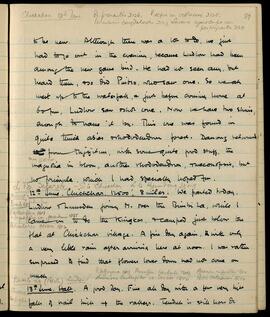
            Chichechar 12th June
            Pr. prenanthoides 2126. P. alpina violacea 2128, Pedicularis corydaloides 2127, Lonicera cyanocarpa var. porphyrantha 2129. 89

            to be new. Although there was a lot to do, we just had to go out in the evening, because Ludlow had been among the new game birds. He had not seen any, but heard them, as did Pintso, who saw one. So we all went up to the waterfall, and just before coming home at 6 p.m., Ludlow saw another one. Now we have two skins, enough to name it by. This one was found in quite thick Abies rhododendron forest. Danong returned from Thijijitum, with some quite good stuff, the magnolia in bloom, another rhododendron, Meconopsis, but no primula, which I had specially hoped for.

            L. & S. Separate - S. to Chichechar - L. to Kyimdong Dzong.
            Sieru
            Bimbi La
            P. bellidifolia 1801
            P. bryophila var. jerdoniana 1895
            Pedicularis oederi 1802

            12th June. Chichechar. 12500', 8 miles. We parted today, Ludlow and Sherriff joining M. over the Bimbi La, while I came on to do the Kingkor,

            LSH/1/1/7/1/23 · Part · 1940-04-22
            Part of The Ludlow & Sherriff Collection

            SUMMARY:
            The diary describes the poorly maintained Molo–Lhalung path, the heavy loads carried by local coolies, and observations of Primula species along the route, including P. Normaniana and P. latisecta with notes on their phenology. From a camp on the Chindi Chu the party climbed over the Nyug La through dense forest with Rhododendron and bamboo, noted P. tsariensis var. porrecta and P. Boothii, and obtained a view of the Lhalung valley, with P. Boothii extending its known distribution from the type locality in Bhutan.

            CONTENT:
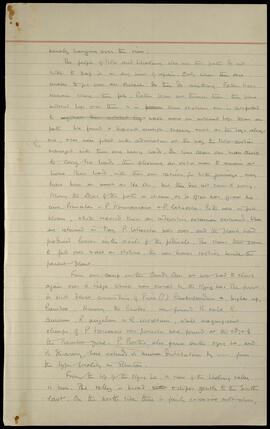
            usually hanging over the river.

            The people of Molo and Lhalung who use this path do not bother to keep it in any kind of repair. Only when they are unable to get over an obstacle do they do anything. Fallen trees remain where they fell. Rather than cut through them, they place notched logs over them and in some stretches one is compelled to walk more on notched logs than on path. We found it difficult enough, slippery and wet as the logs always are, and we were filled with admiration at the way the Molo coolies managed with their very heavy loads. In some cases one man chose to carry two loads, thus allowing an extra man to remain at home. These loads, with their own rations for both journeys, may have been as much as 160 lbs, but they did not seem to worry. Along the edges of the path or stream, as it often was, grew two new Primulas - P. Normaniana and P. latisecta. Both were in full bloom, and both records show an interesting extension westward. When we returned in May P. latisecta was over, and the plants had produced leaves in the axils of the pedicels. The stems then seem to fall over and act as stolons, the new leaves rooting beside the parent plant.

            From our camp on the Chindi Chu we now had to climb again over a ridge which was crossed by the Nyug La. The forest is still dense, consisting of Picea (?) Rhododendron and, higher up, Bamboo. Among the Rhodos, we found R. rude, R. aureum, R. arizelum and R. uvarifolium, while magnificent clumps of P. tsariensis var porrecta were found at the edge of the Bamboo zone. P. Boothii also grows on the Nyug La, and its discovery here extends its known distribution by —— from the type locality in Bhutan.

            From the top of the Nyug La, a view of the Lhalung valley is seen. The valley is broad and slopes gently to the South East. On the north side there is fairly extensive cultivation,