Bhutan

Elements area

Taxonomy

Code

Scope note(s)

    Source note(s)

      Display note(s)

        Hierarchical terms

        Bhutan

        Equivalent terms

        Bhutan

          Associated terms

          Bhutan

            419 Archival description results for Bhutan

            419 results directly related Exclude narrower terms
            LSH/1/1/6/1/127 · Part · 1933-09-01 - 1933-09-07
            Part of The Ludlow & Sherriff Collection

            SUMMARY:
            Diary notes record halts and short marches from Kyabden via Cha-Chomo Dzong, Te, Pang/Pona, Ligang, and into Dzeng, with generally fine weather and some rain. Plant records include Gentiana waltonii and Rhododendron bulu. Taylor falls ill and, with Kesang (whose poisoned foot is lanced), goes down the Tsangpo by kowa boats; the writer later meets Ludlow near Temo La.

            CONTENT:
            not meet Krush on the way back.

            Kyabden
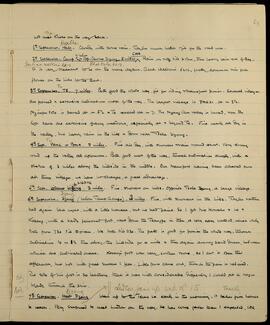
            1st September. Halt. Cloudy with some rain. Taylor much better fit for the road now.

            2nd September. Camp below CHA-Chomo Dzong. Smiles. Rain on and off till 2.0 pm, then heavy rain rest of day.
            Gentiana waltonii 6212. Rhododendron bulu 6213.
            It is very pleasant to be on the move again. Gentiana waltonii 6212, pretty common in full flower on the hills to the East.

            To 3rd September. TE. 7 miles. Path good the whole way, fit for riding transport ponies. Several villages are passed and extensive cultivation most of the way. The largest village is PAGZI, at mile 2 1/2. Nyönpa tolo is passed at mile 5 1/2 and Te reached at mile 7. The Nyang Chu valley is broad, on the left bank are extensive grassy meadows, especially at and beyond Te. Fine nearly all day in the valley, but heavy rain in the hills and down near Tsela Dzong.

            To 4th Sept. PANG or PONA. 8 miles. Fine all day, with showers of rain round about. Very strong wind up the valley all afternoon. Path good most of the way, through cultivation chiefly, with a stretch of 3 miles along the hillside in the middle. Our transport having been collected from all these villages, we have no changes, a great advantage.

            LIGDING
            5th Sept. Ligang. 3 miles. Fine, showers on hills. Opposite Tsela Dzong, a large village.

            Dzeng
            6th September. Dzeng (below Temo Gompa). 8 miles. Fine, with showers in the hills. Taylor rather bad again last night, with a little nausea, but no bad pains. So I got two kowas and he and Kesang, with a badly poisoned foot, went down the Tsangpo in them, a very easy method, which only took from 7.30 till 10.0 am. We took till 11.30. The path is good for ponies the whole way, through cultivation to mile 1 1/2 then along the hillside for a mile and then again among sand dunes, between which are cultivated areas. Kesang's foot was very swollen and sore, so I cut it open this afternoon, but not with great success I fear. Little pus came out, though the pain is relieved. The sole of his foot is so leathery, that it was with considerable difficulty I could get a razor blade through the skin.

            Ludlow joins up with L. & S. Temola

            Dzeng
            7th September. Halt Dzeng. Went up to the Temo La early in the morning. It takes five hours to reach. Very surprised to meet Ludlow on the way. He has come faster than I expected. We
            LSH/1/1/6/1/31 · Part · 1938-03-31
            Part of The Ludlow & Sherriff Collection

            SUMMARY:
            The party halts at Kyimdong Dzong for several days due to transport delays, washing and repairing gear, developing photographs, and interacting with local officials; the Tsongpen scouts a snowy pass and brings back a rhododendron, while the Dzongpen visits and provides provisions. Kyimdong is noted as the source of Lhasa note paper and has villages under it (Shu, Langong, Sumbatse); later they move to a camp below Taktsa after Pinto assembles animals, with Ludlow not yet following, and note coniferous forest along the route.

            CONTENT:
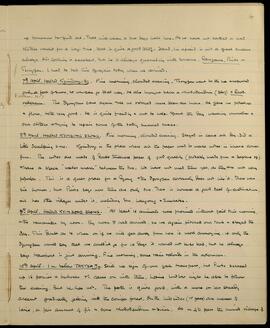
            up tomorrow to find one. That will mean a two days halt here. As we have not bathed or had clothes washed for a long time, that is quite a good thing. Daud, I'm afraid is not a great success always. His cooking is excellent, but he is always quarrelling with someone, Ramzana, Pinto or Tsongpen. I had to tell him off again today when we arrived.

            7th April. Halted Kyimdong Dzong. Fine morning, clouded evening. Tsongpen went to the la and reported only a foot of snow, so we can go that way. He also brought back a rhododendron (3607) = Rhod. vellereum. The Dzongpen came again to see us and stayed more than an hour. He gave us potatoes and flour, both very good. He is quite friendly and out to help. Spent the day washing ourselves and our clothes and trying to repair some of the badly smashed boxes.

            8th April. Halted KYIMDONG DZONG. Fine morning, clouded evening. Stayed in camp all day. Did a little developing etc. Kyimdong is the place where all the paper used to make notes in Lhasa comes from. The notes are made of double thickness paper of good quality (probably made from a Daphne sp.) and have a black "water mark" between the two. We have not used them yet, as they are not very popular. This is a queer place for a Dzong and this Dzongpen certainly does not like it. There were six houses, but Pinto says now there are only two. There is however a good deal of cultivation, and it has other villages under it, including Shu, Langong and Sumbatse.

            9th April. Halted KYIMDONG DZONG. "At least" 16 animals were promised without fail this morning, and the remainder by noon. By noon 8 had arrived, so we again pitched our tents and stayed the day. This doubt as to when or if we will get away from here is most annoying. If only the Dzongpen would say that we couldn't go for 10 days it would not be so bad, but he always says transport is just arriving. Fine morning, some rain clouds in the afternoon.

            10th April. 1 m. below TAKTSA. Still no sign of our yak transport, but Pinto scraped up 16 ponies and bullocks and came on with them, hoping Ludlow might be able to follow this evening. But he has not. The path is quite good, with a more or less steady ascent gradually getting into the conifer forest. On the hillsides (N face) are masses of larix, a fair amount of fir and some rhododendron and birch. At m 4 1/2 pass the ruined village of

            LSH/1/1/4/1/119 · Part · 1933-09-24
            Part of The Ludlow & Sherriff Collection

            SUMMARY:
            Diary entries record fine weather, observations of flowering Gentiana and seed collecting of Primula species around Kyimpu Halt and Le La. On 4 October the author moves to a camp north of Drichung La, parts from Ludlow and Lumsden, and continues with Ahmad Sheikh, Tsongpen, and Pimbo toward Trim while continuing seed collections.

            CONTENT:
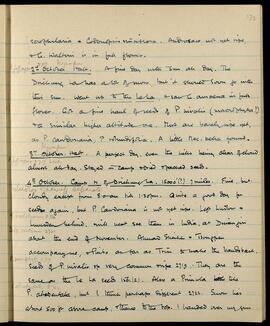
            Scrophularia & Codonopsis vinciflora. Androsace not yet ripe, & G. waltonii is in full flower.

            2nd October. Kyimpu Halt. A fine day with sun all day. The Drichung La has a lot of snow, but it should soon go with this sun. Went up to the Le La, & saw G. amoena in full flower. Got a fine haul of seeds of P. nivalis (macrophylla?) & a similar higher altitude one. Most are barely ripe yet, as P. cawdoriana, P. rotundifolia. A little Mec. bella found.

            3rd October. Kyimpu Halt. A perfect day, even the hills being clear of cloud almost all day. Stayed in camp & dried & packed seeds.

            4th October. Camp N of Drichung La. 15000'(?) 7 miles. Fine, but cloudy except from 8.0 am till 1.30 pm. Quite a good day for seeds again, but P. cawdoriana is not yet ripe. Left Ludlow & Lumsden behind, will next see them in India, at Dirang Dzong about the end of November. Ahmad Sheikh & Tsongpen accompany me, & Pimbo as far as Trim to make the bandobast. Seeds of P. nivalis sp very common & ripe 2719. They are the same as the Le La seeds 1561(2). Also a Primula like P. atrodentata, but I think perhaps different 2722. Snow lies about 500 ft above camp, & thence to the top. I handed over my gun

            LSH/1/1/6/1/158 · Part · 1938-10-22
            Part of The Ludlow & Sherriff Collection

            SUMMARY:
            Notes describe packing issues near S. Chöling, hospitality from Ama Ayalmo, and a report that Tenduk collected seedlings up the Drichu-chu. Entries for early November cover travel from Kyimpu to Nyeron and on to Chayul Dzong with seed collecting (including Gentiana waltonii, Primula spp., and a new Fritillaria), weather observations, and dealings with Dzongpens and passports.

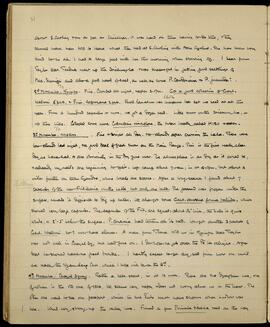
            CONTENT:
            81

            About S. Chöling ran as far as Chunchar. It was hard on them having to do this, they should have been told to leave what they had at S. Chöling with Ama Ayalmo. She has been very kind to us all. I had a large feed with her this morning when starting off. I hear from Tarlur that Tenduk went up the Drichu-chu and was successful in getting good seedlings of Meconopsis sherriffii and also a good haul of seed, as well as some Primula cawdoriana and Primula jucunda? .

            2nd November. To Kyimpu. Fine. Clouded all night, rain at 2.0 pm. Got a good collection of Gentiana waltonii (6652) 6 packets, and Primula jaffreyana 2 packets. Rhododendron lanatum var. luciferum has set no seed at all this year. From a hundred capsules or more, we got a dozen seed. Little snow on the Drichu-chu, or up these hills. Collected some more Codonopsis vinciflora, the tubers locally called KIBU eaten.

            3rd November. To NYERON. Fine bright all day. No clouds after crossing the Lela. There were low clouds last night, and a good deal of fresh snow on the Main Range. This is the first really clear day we have had, and are obviously in the dry zone now. The atmosphere is as dry as it could be, and already my nails are beginning to split. Left camp about 7.0 am; in at 4.0 pm, but about 4 miles further on than Ayandro, where locals are scarce. After a long search I found about 7 capsules of the new Fritillaria on the Lela, but only one bulb. The ground was frozen under the surface, and made it difficult to dig up bulbs. We also got some Gentiana amoena forma pallida, which showed very large capsules. The capsules of the Fritillaria are squat; about 1/2" high, the bulb is quite white, and 2"-3" below the surface. Primula consocia had thrown all its seed. We got another 3 packets of Gentiana waltonii, so I now have eleven. A man from Tsona told us in Kyimpu that Tarlur was not well in Chayul Dzong, but had gone on. I do hope he gets over the Pö La alright. After that he should have no great trouble. I hardly expect to get any seed from now on until we reach the Nyam Sang Chu, which I hope will be on the 12th.

            4th November. Chayul Dzong. Rather a late start, in at 12 noon. There are two Dzongpens here, one of whom is the old one of 1936. He seems very happy and does not worry about us in the least. The other one wants to see our passport, which I'm sure Pinko must have shown when Ludlow was here. Wind very strong up the valley here. Found a few Primula tibetica seed on the way.

            LSH/1/1/1/1/140 · Part · 1933-08-17
            Part of The Ludlow & Sherriff Collection

            SUMMARY:
            Describes Sengai Dzong near Lachung at the junction of two glacial streams, with a small ramshackle dzong and a cliff monastery inhabited by a few lamas. Surrounding cliffs feature hanging glaciers above forests of slender firs (Abies Webbiana), with the scene marred by monsoon clouds and heavy rain.

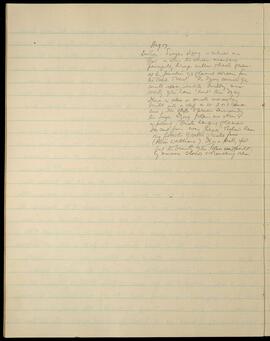
            CONTENT:
            Aug 17
            Lachung. Sengai Dzong is situated on a
            flat - where the stream meanders
            peacefully through willow & rhododendron glades -
            at the junction of 2 glacial streams from
            the North West. The Dzong consists of a
            small ramshackle building more
            worthy of the name 'hut' than Dzong.
            There is also a small monastery
            built into a cliff in which 2 or 3 Lamas
            live. The cliffs & peaks surrounding
            the Sengai Dzong plain are sheer &
            imposing. Small hanging glaciers
            descend from every peak & below them
            are forests of rather slender firs
            (Abies Webbiana). It is a pretty spot
            but the beauty of the place was spoilt
            by monsoon clouds & drenching rain

            LSH/1/1/6/1/62 · Part · 1938-05-29
            Part of The Ludlow & Sherriff Collection

            SUMMARY:
            Field notes from Langong record several Primula taxa with observations on abundance, flower color, and phenology, including comparisons to a prior Bhutan primula (3366). P. tsariensis is noted as abundant north and south of the Main Himalayan Range, and a bearing for the Langong valley is given.

            CONTENT:
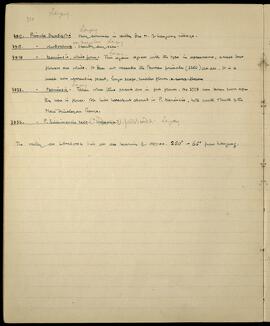
            31a
            Langong.

            1. Primula dryadifolia. Langong. Very common in valley due N. of Langong village.

              • var. microdonta. Langong. Hardly any seen.
              • tsariensis, white form. Langong. This again agrees with the type in appearance, except that flowers are white. It does not resemble the Bhutan primula (3366) at all. It is a much more upstanding plant, longer scape, smaller flower.
              • tsariensis. Langong. Taken when these plants are in full flower. No 3779 was taken soon after they were in flower. The hills hereabouts abound in P. tsariensis, both north & south of the Main Himalayan Range.
              • P. sikkimensis sect. (? Hopeana?). pudibunda. Langong.

            The valley at LANGONG lies at a bearing of approx. 250° - 65° from Langong.

            LSH/1/1/6/1/80 · Part · 1938-06-20
            Part of The Ludlow & Sherriff Collection

            SUMMARY:
            Notes record plant collections around Chiniung La and Langong, including Primula and Pedicularis species with specimen numbers. The 4-mile route from Langong to Chiniung La over the Main Range is described, with fir forest, deep snow drifts near the pass, Lopas crossing the pass with past fatalities, and a large lake south of the pass still half iced.

            CONTENT:
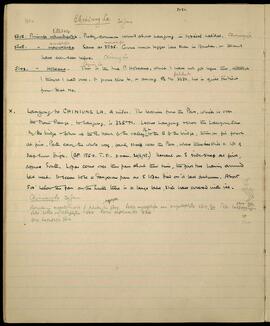
            Chiniung La 20 June

            1. Primula rotundifolia. Pretty common round about Langong in typical habitat. Chiniung La

            2. Primula macrophylla. Same as 3895. Grows much bigger here than in Bhutan, or than I have ever seen before. Chiniung La

            3. Primula hopeana. This is the true P. hopeana, which I have not got before this, although I thought I had once. It grows close to, or among Pedicularis No 3932, but is quite distinct from that No. Chiniung La

            X. Langong to CHINIUNG LA. 4 miles. The bearing from the Pass, which is over the Main Range, to Langong, is 325°M. Leave Langong across the Langong Chu by the bridge & follow up the R. bank of the valley 1/2 m to the E of the bridge, through fir forest at first. Path easy the whole way, fairly steep near the Pass, where there are still a lot of deep snow drifts. (BP. 185.0. T. 51. 9.0am. 20/6/38.) Descent on S side steep at first, approx South. Lopas come over this pass about this time, the first two having arrived last week. It seems to be a dangerous pass as 5 Lopas died on it last autumn. About 500' below the pass on the South there is a large lake, still half covered with ice.

            Chiniung La 20 June

            Pedicularis megalochila f. rhodantha 5607. Pedicularis mycophylla var. megalophylla 5613, type. Pedicularis takpoensis 5614.
            Pedicularis bella var. holophylla 5615. Pedicularis siphonantha 5616.
            Meconopsis horridula 5612.

            LSH/1/1/6/1/150 · Part · 1938-10-22
            Part of The Ludlow & Sherriff Collection

            SUMMARY:
            Detailed route description from Langong up the Langong Chu through Öla to the Lingtsang La, descending to Rimbu and crossing the Yula to reach Migyitun, with mileages, bearings, heights, and seasonal limitations. Notes include a difficult alternate to Tsokan, a pilgrimage route via Öla–Lingtsang La–Rimbu–Pa La, and extensive glaciers and precipitous peaks south of the route. On 22 October 1938, about two feet of snow were reported on the top.

            CONTENT:
            77a
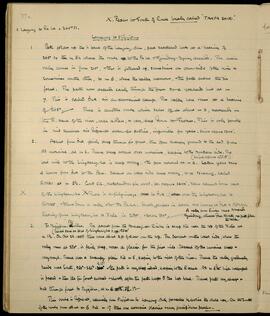
            X. Peaks to South of Route locally called "TAKPA SHIRI".
            X Langong to Pa La = 265° M.

            Langong to Migyitun

            1. Path follows up the left bank of the Langong Chu, past scattered huts at a bearing of 265° to mile 3½ where the route to the Pa La and Kyindong Dzong ascends. The main valley comes in from 210°; this is followed up, sometimes on one side of the river and sometimes on the other, to mile 6, where the valley narrows and the path enters the fir forest. The path now ascends easily through the forest to a yakherd's hut at mile 7. This is called Öla and is a convenient camp. The valley here runs at a bearing of 265°. There is another route which takes off at about mile 6 and ascends on the right bank of the river, over a pass, and very steeply down to Tsokan. This is only possible in mid-summer and is difficult even for coolies, and impossible for yaks. Height approx. 13,000'.

            2. Ascent from Öla is fairly steep through fir forest, then open swampy ground to the end of an old moraine at mile 2. Thence there is a steep ascent over the moraine, keeping to the northern side. The last mile to the Lingtsang La is steep and rocky; the pass is reached at mile 4 (height approx. 15,500'). Laden yaks take 4 hours from Öla to the pass. Descent on the west side is steep and rocky to a tsukang called Rimbu at mile 5½. Good camping ground, rhododendron firewood. Height approx. 14,000'. Yaks cannot come west of the Lingtsang La. There is a pilgrimage over to Öla, over the Lingtsang La to Rimbu, and thence down a valley to the Pa La. Small gompas in each rest house at Öla and Rimbu. Bearing from Lingtsang La to Yula is 280°, back 80°. A valley from Rimbu runs towards Kyindong, almost due north; no path follows the valley.

            3. To Migyitun, 12 miles. The ascent from the tsukang at Rimbu is steep until near the top of the Yula at mile 1½ (height same as that of Lingtsang La, approx. 15,500'). On October 22, 1938, there were about 2 feet of snow on the top. The descent on the west side, where the valley runs at 280°, is fairly steep, over a glacier for the first mile. Descent off the moraine is steep and very rough. Thence over a swampy plain until mile 5, keeping to the right of the river. Thence the valley gradually bends more south: 250°-235°-215°. The path is very steep indeed, keeping to the right bank. At mile 6½, a high waterfall is passed, and then the fir forest is entered; shortly after, the path keeps to the left bank. Thence the path is very steep and bad through the forest to Migyitun at mile 12.

            This route is difficult, especially from Migyitun to Langong. Only passable by coolies the whole way. On the south of the route from about mile 6 until mile 17, there are extensive glaciers and very precipitous peaks.

            LSH/1/1/8/1/79 · Part · 1936-03-03
            Part of The Ludlow & Sherriff Collection

            SUMMARY:
            At Langstong the party endures cold, poor weather, sends Angur and Akong to scout a northern nala with little to collect, and notes the continued absence of Mohammed the mail runner. Stores are divided for multiple future legs, with a planned rendezvous at Tsela Dzong about 10th Oct. On 20 March, Ludlow and Elliot depart via Tsela Dzong to Gyala with assigned team members.

            CONTENT:
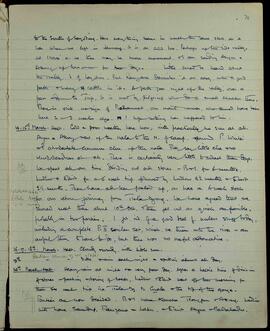
            to the south of Langstong. Here everything seems in much the same state as it was when we left in January. It is as cold too. Perhaps up the side valleys at 11,000' or so there may be more movement, so I am sending Angur & Akong up tomorrow for two days. Little could be heard about the valley S of Langstong. But Ramzana describes it as easy, with a good path & many cattle in it. A path goes right up the valley, over a pass & down to Trip. It is used by pilgrims who do a small circuit there. There is still no sign of Mohammed, our mail runner, who should have been here 2 or 3 weeks ago. I hope nothing has happened to him.

            14-15th March. Halt. Cold & poor weather here now, with practically no sun at all. Angur & Akong went up the nala to the N. of camp. Found P. whitei cf. rhododendrata common close up the nala. They saw little else and no rhododendrons at all. There is certainly very little to collect these days. We spent all our time dividing out all stores — B & I for 6 months, Ludlow & Elliot for a 6 week trip followed by Ludlow 4 1/2 months & Elliot 2 1/2 months. These have all been packed up, as has a 6 week stock for our return journey from Tsela Dzong. We have agreed that we should meet there about 10th Oct. Then get out as quick as possible, probably in two parties. I got rid of a good deal of useless stuff today, including a complete B II boiler set, which we threw into the river — an awful thing to have to do, but there was no useful alternative.

            16-17-18th March. Halt. Cloudy & windy, with little sun.

            19th March. Ditto & rain each night & spitting almost all day.

            20th March. Halt. Heavy rain at night & a very poor day. After a hectic time of division of stores & packing & storing of boxes, Ludlow & Elliot went off this morning for their six weeks trip via Tsela Dzong to Gyala & the top of the gorge. Parties are now decided. B & I have Kancha Tsongpen & Akong. Ludlow will have Samdup, Ramzana & Laku, & Elliot Angur & Balbahadur.

            LSH/1/1/8/1/30 · Part · 1946-12-19 - 1946-12-23
            Part of The Ludlow & Sherriff Collection

            SUMMARY:
            Notes record minimum temperatures and weather at Latso and Lunang on 19–21 December, seed collections with numbers near Tse and Tumbatse, and Kodachrome photographs started at Dan with scenes at Dan Phu Chu and Tongkyuk Dzong. Photo subjects include Hippophae and snow peaks, dated 21–23 December 1946.

            CONTENT:
            37

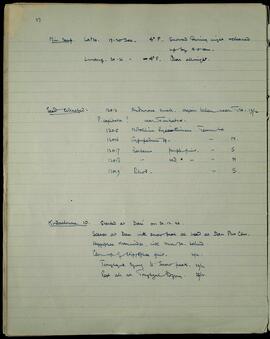
            Min. temp. Latso. 19-20 Dec. 4° F. Snowed during night cleared up by 4.0 am.
            Lunang. 20-21 " -4° F. Clear all night.

            Seed collected: 12013 Androsace small. again taken near Tse. 19/12
            P. capitata ? near Tumbatse.
            12015 Notholirion hyacinthinum Tumbatse
            12016 Cypripedium sp. " N.
            12017 Berberis purple fruit. " S
            12018 " red " " N
            12019 Rhod. " S.

            Kodachrome 10. Started at Dan on 21. 12. 46.
            Scenes at Dan with snow peak at head at Dan Phu Chu.
            Hippophae rhamnoides, with snow pk. behind.
            Close up of Hippophae fruit. 21/12.
            Tongkyuk Dzong to snow peak. 22/12
            Rest ho. at Tongkyuk Dzong. 23/12