Bhutan

Elements area

Taxonomy

Code

Scope note(s)

    Source note(s)

      Display note(s)

        Hierarchical terms

        Bhutan

        Equivalent terms

        Bhutan

          Associated terms

          Bhutan

            419 Archival description results for Bhutan

            419 results directly related Exclude narrower terms
            LSH/1/1/7/1/15 · Part · 1940-05-24
            Part of The Ludlow & Sherriff Collection

            SUMMARY:
            The diarist describes a first view of the Gyamda Chu joining the Tsangpo near Tsela Dzong and a trip via the Kulu Phu Chu to Kuchala before going to Tse. With transport arranged by the Dzongpen of Tsela Dz, Ludlow went alone toward Pasum La and Tongyuk Dzong in Pome while the diarist and Taylor explored west of the Gyamda Chu, camping near the Shura La and noting several gentians and other alpine plants.

            CONTENT:
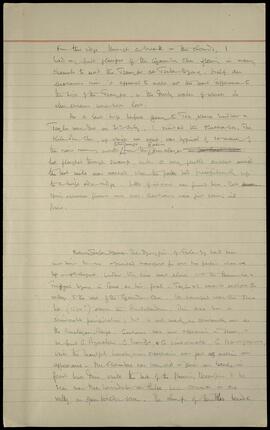
            From this ridge, through a break in the clouds, I had my first glimpse of the Gyamda Chu, flowing in many channels to meet the Tsangpo at Tsela Dzong. Half an enormous river, it appeared to make not the least difference to the size of the Tsangpo, in the dirty water of which its clear streams were soon lost.

            As a last trip before going to Tse, where Ludlow & Taylor were due on 31st July, I visited the Kuchala. The Kulu Phu Chu, up which we went, was typical of so many of the rivers running north to the Tsangpo from the Eastern Himalayas. We ploughed through swamp, with a very gentle ascent until the last mile was reached when the path led precipitously up to a knife edge ridge. Little of interest was found here. Most spring & summer flowers were over: Gentians were just coming into flower.

            The Dzongpen of Tsela Dz had been most kind to us & provided transport for our two parties when we left on 10th August. Ludlow this time went alone with the Pasum La & Tongyuk Dzong in Pome as his goal. Taylor & I were to explore the valleys to the west of the Gyamda Chu. We camped near the Shura La (15,700?) above the Rhododendrons. This area has a considerable precipitation, but is not nearly so constantly wet as the Himalayan Range. Gentians were now appearing in flower, & we found G. przewalskii, G. sherriffii & G. sino-ornata, G. tsarongensis, while the beautiful Lomatogonium oreocharis was just making an appearance. Meconopsis florindae was seen still in flower on banks in forest lower down, while the last of the flowering Meconopsis to be seen was M. horridula var. lutea, here common in one valley, on open boulder scree. The clumps of thistles beside
            LSH/1/1/8/1/6 · Part · 1946-10-30
            Part of The Ludlow & Sherriff Collection

            SUMMARY:
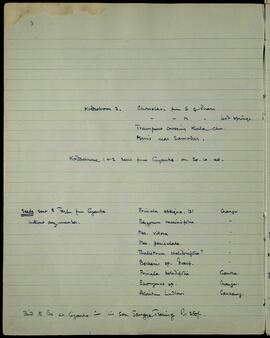
            Notes reference Kodachrome images of Chomolhari from south of Phari, hot springs, transport crossing the Kala Chu, and manis near Samodar. Kodachromes 1 and 2 were sent from Gyantse on 30/10/1946, and seeds (unnumbered) were sent to Taylor from Gyantse; taxa and collection localities are listed. A payment of Rs 250 was made to Bo at Gyantse for his son Sangye Tsering.

            CONTENT:
            3

            Kodachrome 2. Chomolhari from S of Phari
            " " N " hot springs.
            Transport crossing Kala Chu.
            Manis near Samodar.

            Kodachrome 1 & 2 sent from Gyantse on 30. 10. 46.

            Seeds sent to Taylor from Gyantse
            without any number.

            Primula obliqua. (2) Changu
            Polygonum vaccinifolium "
            Mec. villosa "
            Mec. paniculata. "
            Thalictrum chelidonifolia? "
            Berberis sp. dwarf. "
            Primula bellidifolia. Gautsa.
            Euonymus sp. Changu.
            Aconitum Ludlowi Sankang.

            Paid to Bo at Gyantse for his son Sangye Tsering Rs 250/-.

            LSH/1/1/1/1/201 · Part · 1937-09-17 - 1937-09-24
            Part of The Ludlow & Sherriff Collection

            SUMMARY:
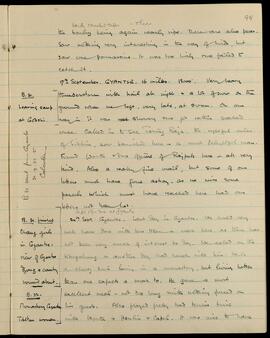
            Diary notes describe arrival at Gyantse after storms, a visit to Tering Raja, meeting Worth and Rajput officers, and mail issues, with B.31 sent to Calcutta on 21 September 1937. Subsequent days in Gyantse included social calls on the Kengchung, a good lunch, and tennis with Worth, Henlin, and Capel, with observations of local crops and a parnassius butterfly.

            CONTENT:
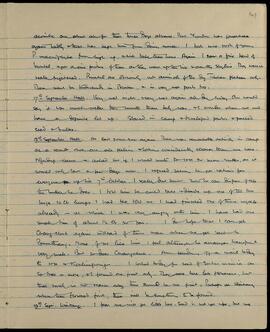
            99
            barley & mustard crops - & peas
            the barley being again nearly ripe. There are also peas. Saw nothing very interesting in the way of birds, but saw one parnassius. It was too lively & we failed to catch it.

            17th September. GYANTSE. 16 miles. 13000'. Very heavy
            B. 31. thunderstorm with hail all night & a lot of snow on the
            Leaving camp ground when we left, very late, at 9.0 am. On our
            at Gobshi. way in it was showery & we got rather soaked
            once. Called in to see Tering Raja, the rightful ruler
            of Sikkim, now banished here - a most delightful man.
            Found Worth & two officers of Rajputs here - all very
            kind. Also a really fine mail, but some of our
            letters must have gone astray, as we miss some
            parcels which must have reached here had our
            letters not been lost.

            B 31 sent from Gyantse 21.9.37 to Calcutta

            Sept 19 - we at Gyantse
            B. 31. finished 24th Sept. Gyantse. Last day in Gyantse. We could very
            Chang girls well have done with less than a week here, as there has
            in Gyantse: not been very much of interest to do. We called on the
            view of Gyantse Kengchung & another day had lunch with him. He is
            Dzong & country a cheery soul living in a monastery, but living better
            round about. than one expects a monk to. He gave a most
            B. 32. excellent meal - not too long with nothing forced on
            Monastery Gyantse. his guests. Also played pretty bad tennis twice
            Tibetan women. with Worth & Henlin & Capel. It was nice to have

            LSH/1/1/9/1/128 · Part · 1933-08-31 - 1933-09-01
            Part of The Ludlow & Sherriff Collection

            SUMMARY:
            Travel from Gyetsa to Bumthang in rainy, misty weather with few notable plants collected and leeches troublesome. The diarist meets HH, discussing his health, former drinking, and his visit to holy water near Kurjey monastery; news includes Kapshopa Shape being locked up (said to be in Netang/Nechung) and reported trouble between the DL and the Tibetan Government. Dansey passes through the area and Dorji Llowden is expected shortly.

            CONTENT:
            was here. We got a few flowers again today, including a rather striking creeper 19664 which I don't ever remember having seen before. Leeches pretty bad. Dansey & Co passed through here rumoured to be in Bumthang today, I'm told.

            31st August. Gyetsa. Heavy rain all night, but clearing up soon after we left. Mist much like the Yuto La, and then pretty clear and bright. Nothing of interest anywhere on the way. Here the country looks very pretty indeed, with the patches of bright pink here and there of the buckwheat crops.

            1st September. Bumthang. Wet night, but just fine till we got here when there was quite a lot of sun. I sent a letter to HH to ask if I could come to see him today or tomorrow. He sent round to say he was coming today at 12.0 and he came. We had a pleasant talk, with the ever present difficulty of Urdu and Hindi. He seems in good form, but had again had a giddy fit on the way to Tongsa. I asked him today if he drank much, and he gave the answer "Not now. I used to when worried and depressed, but have given it up." He was quite frank about it, and I am sure truthful. HH was on his way to have a bathe in some very holy water just beyond Kurjey monastery which is supposed to be very good for one. Khampas take a lot of the water away with them when on pilgrimage from Kham. HH told me that Kapshopa Shape was very safely locked up. He said in Netang. I wonder if he means Nechung. He is said to be shut up in a small place where there is little more than room for himself. He also said there was some trouble between the DL and the Tib. Government. I should think that Kapshopa is at the bottom of it all. What surprises me is that they all seem surprised that Kapshopa should be locked up. A more patently crooked man it would be hard to find, always too nicely spoken. Dorji Llowden is coming the day after tomorrow. I'm glad to have tomorrow free as

            LSH/1/1/9/1/119 · Part · 1937-08-14
            Part of The Ludlow & Sherriff Collection

            SUMMARY:
            The diarist parts from Betty in heavy rain and reaches Ha after a fast five-hour journey, then halts there with very wet conditions from 18–20 August, attempting fishing with limited success and noting few flowers at this altitude. Letters mention Betty’s route toward Bumthang, Changu, Karponang, and Kalimpong, and the diarist suspects H.H. has held back missing mail.

            CONTENT:
            Cyananthus lobatus is in full flower too, and several Saxifrages and even Primula pusilla. When we left each other at 10:30, Betty to go on to India, or to return to Bumthang, the rain came down in solid sheets. With me it continued till after I reached Ha, which took 5 hours going fast. It was very sad leaving Betty, and I know she felt it very much not being able to finish her trip right in the seed collecting. She will have a very busy 2 1/2 months now till she flies back at the end of October—just as busy as we will have here I think.

            18-19-20 August. Halt. Ha. All days very wet, either here or up the valley, or everywhere. River very full indeed, fuller than any high water marks on 18th and much discoloured. I tried fishing but could touch nothing at all that day. Other days fishing fair, but I have seen no fish over 1 1/2 lb, except on 19th one of perhaps 2 1/2 lb came to my fly—the only big fish seen. Ludlow would have called that a small fish in May. It seems that the time for fishing here is certainly not in the wettest part of the monsoon. Probably the best months are April, May, June and September. Got a letter back from Betty to say she reached Bumthang all right, but obviously very wet. She will now be on her way from Changu to Karponang, and in Kalimpong tomorrow, all being well. It has been very nice here, but one wants someone else to enjoy the place with. There are few flowers left at this altitude now, and so little interest except fishing. No news still of the missing mail. I think H.H. must have kept it till I return. Had a letter from him, but no mention of the mail in it.

            LSH/1/1/5/1/189 · Part · 1933-08-16 - 1933-08-25
            Part of The Ludlow & Sherriff Collection

            SUMMARY:
            Travelled to Ha on 16 August via Chela La, noting apple trees from Kashmir and non-flowering saffron, and met Chuni and Mr. Williamson there. From 17–25 August halted in Ha with wet weather, spending days with Tobgye and companions in sports and archery; a small lake had been made above the rest house. An earlier encounter involved someone examining the diarist’s false teeth and inquiring about getting some made.

            CONTENT:
            false teeth to show him, but he insisted on my taking them out and showing them properly, then seized them and had a good look. Could I eat meat, fruit and so on? - could he have some made, as he had two loose teeth?

            16th August. Ha. 16 miles. Fine for a few hours, then rained hard till the evening. Para did not get up very early, I was only able to be off by 9.15. On the way I saw the apple trees sent from Kashmir, and the saffron. The 'apples' are either the common wild ones, or they are not apples at all. The saffron is still alive, and looks healthy enough, but it never flowers according to the locals. But it was not in a very good place. Tobgye met me at the Chela La, where we had lunch. Then we slithered down a very wet path to Ha and met Chuni and Mr. Williamson.

            17th - 25th August. Halt in Ha. I spent a very pleasant nine days with Tobgye and Co. in Ha. It was still pretty wet. We always had some rain, usually very heavy in the middle of the day, and fine in the mornings and evenings. Tobgye was determined to give us plenty of exercise, and we played hockey or football or had archery or something every day. He has made a very fine small lake just above the rest house, at Ha.

            LSH/1/1/1/1/57 · Part · 1933-06-08
            Part of The Ludlow & Sherriff Collection

            SUMMARY:
            The party traveled to Ha from Damthang, noting the syces’ strong running, increasing butterflies, and a scenic evening. They stayed in the guest house opposite the Dzong and the “three sisters,” with generous provisions from Tobgye. Shooting was curtailed due to proximity to Paro and oversight by the Paro Penlop.

            CONTENT:
            26

            passes to the summer yak grazing ground. Had she not been called here, she would not have come, yet it was with difficulty she could walk. Coming back from Ha, we again rode and the three syces with us ran very nearly the whole way and were not distressed at all. All were beautiful runners. It was not unusual for them, and they seemed capable of doing much more than the 8 miles uphill from Ha to Damthang.

            11th June. HA. 8 miles. 9100'. Another good day, with lots of sun. Rode and walked down to Ha. The road is good after the first two miles, mostly over fairly level grassy land beside the river. Butterflies are now appearing in greater numbers, though we saw nothing of any rareness. Staying in the guest house on left bank of the river, opposite the Dzong and the "three sisters" the three dome shaped very steep wooded hills immediately behind the Dzong. A lovely evening with beautiful cloud effects. Tobgye provided a fine lunch for us, and sent down whisky, beer, tea, tomatoes, rice, eggs, chickens and everything we could possibly want. One could not ever come across a more thoughtful man than he is. Shooting will have to be curtailed here, as we are so near Paro. The Paro Penlop has sent over a man here too, who will see or hear if we do much shooting. I think Tobgye is rather worried about it. But this valley is all really his, having been given his father by the

            [Marginal note:]
            B. 9. cont?
            View taken up the Ha valley in the evening from the front of the Ha rest house.

            LSH/1/1/1/1/59 · Part · 1933-06-08
            Part of The Ludlow & Sherriff Collection

            SUMMARY:
            Notes compare Tobgye’s stance with that of Paro regarding Nepalese settlers, and describe a comfortable rest house and a massively built Dzong. Fieldwork continued along the Paro road in fir forest with few birds seen; prisoners from Ha wearing kangues were working on road repairs, and views of Ha Dzong were noted alongside new flowers and shrubs.

            CONTENT:
            27

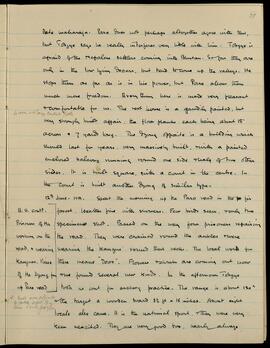
            Late Maharaja. Paro does not perhaps altogether agree with this, but Tobgye says he really interferes very little with him. Tobgye is afraid of the Nepalese settlers coming into Bhutan. So far they are only in the low lying Dooars, but tend to come up the valleys. He stops them as far as is in his power, but Paro allows them much more freedom. Everything here is made very pleasant and comfortable for us. 4 rooms and a large central hall. The rest house is a gaudily painted, but very strongly built affair, the floor planks each being about 18" across and 7 yards long. The Dzong opposite is a building which should last for years, very massively built, with a painted enclosed balcony running round one side and half of two other sides. It is built square, with a court in the centre. In the court is built another Dzong of similar type.

            12th June - HA. B. S. continued. Spent the morning up the Paro road in the fir forest. Weather fine with showers. Few birds seen, and only two specimens shot. I tried my utmost to catch sight of any there but failed. Prisoners of Ha working on the road, and wearing Kangues. Views of Ha Dzong from up Paro road. Passed on the way four prisoners repairing the road. They were chained round the ankles and were wearing the 'kangue' round their necks. The local word for these means "door". Flowers and shrubs are coming out now and we found several new kinds. In the afternoon Tobgye

            LSH/1/1/10/1/7 · Part · 1949-09-14
            Part of The Ludlow & Sherriff Collection

            SUMMARY:
            In Haat, persistent rain kept the party in camp where photos were developed and seeds and bulbs packed; the writer collected young P. macrophylla roots and observed a large, unalarmed herd of burrhel, noting their abundance in Bhutan even in wet areas. With some sun returning, Tundru was ill with diarrhoea, and a dispute arose when Ngudup asked for a letter to H.H. for more butter despite rations lasting until 7th October.

            CONTENT:
            accounts are about all for their three days absence. Poor Tundru has diarrhoea again badly which has kept him from doing much. I took nice roots of young P. macrophylla from high up, will take them home. Again I saw a fine herd of burrhel, and got a fine picture of them as they went up the hill and over the skyline. They were not really frightened. Burrhel are obviously not animals of the dry Tibetan plateau only. There must be thousands in Bhutan, and in very wet parts too.

            17th September. Haat. Very wet night, and very wet again all day today. One would say it was much wetter this month than July was, and I wonder when we will have a definite let up. Stayed in camp and developed photos and packed seed and bulbs.

            18th September. Haat. At last some sun again. There was remarkable activity in camp as a result, and we are all feeling and looking considerably cleaner than we were. Ngudup came and asked me if I would write to H.H. for more butter, as it would only last a few days now. I refused, seeing he has rations for everyone up till 7th October. I really don't know how he can dispose of all the butter he does. I told him he could take and divide up one of the two huge 10 lb lumps I had. He told me I had finished one of these myself already - at which I was very angry with him. I have had one small tin of about 1/2 lb so far.

            LSH/1/1/9/1/129 · Part · 1933-09-01
            Part of The Ludlow & Sherriff Collection

            SUMMARY:
            The diarist manages specimens and arranges penicillin injections for Danang in hospital, while noting a letter from Ludlow via Yundu confirming successful plant finds. Plans are made for travel to meet Ludlow at Pasu Sefu and for Pasang and Mundrup to collect primulas via Tumle La, Tongsa, Chendesi, and Ritang, with mention of a hoped-for bridge over the Tang Chu.

            CONTENT:
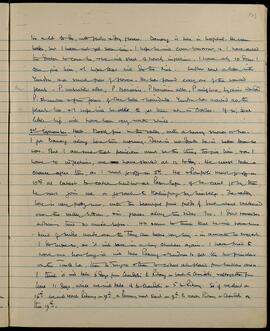
            I've a lot to do, with photos and dry flowers. Danang is here in hospital. He seems better, but I have not yet seen him. I hope he will come tomorrow, as I have asked the doctor to come too, and will start 4 hourly injections. I have only 10 doses I can give him, and hope that will do the trick. Ludlow sent a letter with Yundu, and a small press of flowers. He has found every one of the wanted plants - P. umbratilis alba, P. tsariensis, P. tsariensis alba, P. uniflora, Lychnis Wardii, P. strumosa and fine forms of Meconopsis horridula. Yundu has marked all the plants too, and I hope will be able to get them all in October. If so, that little trip will have been very worth while.

            2nd September. Haat. Mostly fine in the valley, with a heavy shower or two. I got Danang along here this morning. There is no doubt he is better than he was. But I am sure that penicillin must be the thing to give him, as I have 10 injections, we have started at 12 today. He must take a chance after this, as I must go off on 5th. He and Sompoli must go off on 10th at latest to catch Ludlow at Pasu Sefu. If he can't go by then, he must join me or go back to Kalimpong by himself. The valley here is very pretty now, with the beautiful pink fields of buckwheat scattered over the valley bottom, and in places along the sides too. I don't remember noticing this so much before. HH seems to think that he will have some kind of bridge made over the Tang Chu before very long - in a month he suggests. I do hope so, as it will save us a long chukker again. I have tried to work out how long it will take Pasang and Mundrup to get the two primulas on the Tumle La, then to Tongsa and then to collect all plants from Ludlow's area. I think it will take 6 days from Chendesi to Ritang or back to Chendesi, and altogether from here 11 days, which will take 4 to Chendesi or 5 to Ritang. So if we start on 15th we will reach Ritang on 19th, and Pasang must start on 9th to reach Ritang or Chendesi on the 19th.