Tibet

Elements area

Taxonomy

Code

Scope note(s)

    Source note(s)

      Display note(s)

        Hierarchical terms

        Tibet

          Equivalent terms

          Tibet

            Associated terms

            Tibet

              192 Archival description results for Tibet

              192 results directly related Exclude narrower terms
              LSH/1/1/1/1/5 · Part
              Part of The Ludlow & Sherriff Collection

              SUMMARY:
              Itemized transport and travel expenses, tickets, luggage fees, stores, and hires across multiple stages, with payments to staff and tips. Routes include movements between Sialkot, Lahore, Paro, Kalimpong, Gangtok, and Yatung, and through Bhutanese localities such as Wangdupotrang, Ridang, Chendebi, Gyetsa, and Bumthang. Mentions payments to Pintso and Danong and a present from Tobgye.

              CONTENT:
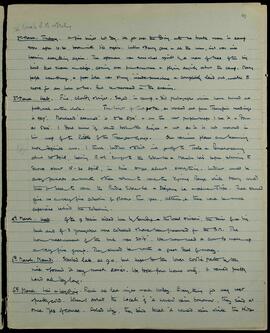
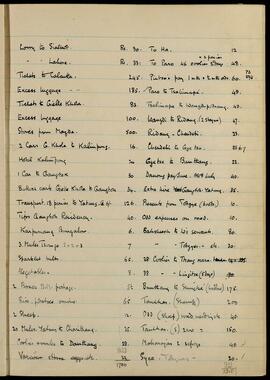
              Lorry to Sialkot. Rs. 30. To Ha. 12

              • Lahore. Rs. 33. To Paro 46 coolies & 2 ponies 2 days 48.
                Tickets to Calcutta. 245. Pintso's pay 1 mth + 1/2 mth adv. 60. Pd 22/6.
                Excess luggage .. .. 185. Paro to Tsalimape. 49.
                Tickets to Gielle Khola. 83. Tsalimape to Wangdupotrang. 49.
                Excess luggage 100. Wangdi to Ridang (2 stages) 47.
                Stores from Mazda. 500. Ridang - Chendebi. 23.
                2 Cars G. Khola to Kalimpong. 16. Chendebi to Gyetsa. 67
                Hotel Kalimpong 24 Gyetsa to Bumthang. 22.
                1 Car to Gangtok 30 Danong pay June. All & July 40.
                Bullock carts Gielle Khola to Gangtok 34. Extra hire Gangtok - Yatung. 35.
                Transport. 18 ponies to Yatung @ 6/- 126. Presents from Tobgye (boots.) 10.
                Tips Gangtok Residency. 40. Odd expenses on road. 10.
                Karponang Bungalow.
              LSH/1/1/1/1/6 · Part
              Part of The Ludlow & Sherriff Collection

              SUMMARY:
              Itemized expenses and payments for travel, wages, tips, and supplies, including lorry to Srinagar, bungalow charges, road expenses, parcels, and tickets. Mentions payments to Damang, Pintso, A. Sheikh, and a watch for R.S. Lama, with routes involving Yatung, Kalimpong, and Calcutta.

              CONTENT:
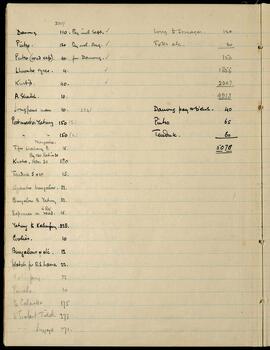
              2907
              Damang 110. Pay incl Sept. ✓ Lorry to Srinagar. 120.
              Pintso. 120 Pay incl. Aug. ✓ Tolls etc. 30
              Pintso (road exp). 40. for Damang. ✓ 150
              Lhuentse syces. 4. ✓ 1856
              Kurtip. 40. ✓ 2907
              A. Sheikh. 10. 4913

              Jongpens men 10. 3241 Damang pay & b'shish. 40
              Postmaster Yatung 150 (S.) Pintso 65

                • 150 (L.) Tenduk. 60
                  Nangarbe. 5078
                  Tips Lhakang to 15.
                  Pay 130. Ration 20
                  Kusho. Adv. 30 180
                  Tenduk 5 + 10 15.
                  Gyantse bungalow. 32.
                  Bungalow to Yatung 32.
                  Rs/
                  Expenses on road. 15.
                  Yatung to Kalimpong. 228.
                  Coolies. 10
                  Bungalows & etc. 12
                  Watch for R.S. Lama 22.
                  Kalimpong. 32
                  Parcels. 10
                  To Calcutta 175
                  To Sealkote Tickets. 273
                  Luggage 171.
              LSH/1/1/6/1/160 · Part · 1936-11-07
              Part of The Ludlow & Sherriff Collection

              SUMMARY:
              The diarist describes violent winds near Tre that wrecked tents, forcing a camp beside a house, and a difficult march with wildlife sightings before nearing Tsona. On 9 November they reached Tsona amid snow, found Pinbo ill with malaria, settled arrangements for ponies, paid off Kusho and Kesang, and noted correspondence from Ludlow at Shakti.

              CONTENT:
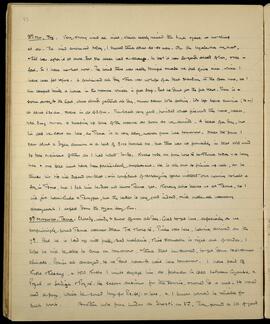
              8th Nov, Tre. Very strong wind all night, which nearly ruined the tents and gave us no sleep at all. The wind continued today, I should think about 40-50 mph. On the Nyalaha Malwat, Jill was after it at once. But she never had a chance. In 100s it was 50 yards ahead of her, 1000 in fact. So I have no hat now. The wind there was really terrific and made me feel quite sick, which I have never felt before. It continued all day and there was no hope of a tent standing in the open here, so I am camped beside a house in the manure which is feet deep. But we drive for the full blast. There is a storm away to the East, where clouds gathered all day; snow seems to be falling. We left before sunrise (to us) at about 6:30 am, were in at 4:30 pm. The locals very good, provided what firewood they have, water, yak dung and soon were sweeping up some of the manure as soon as we arrived. A beast of a day, but I'm glad we came on here, as Tsona is a very easy march from here tomorrow. Near the pass I saw about a dozen ammon and a herd of 8-10 burhel too, but there was no possibility in that cold wind to take a cinema of them as I had hoped to do. Kusho rode on from here to Tsona today - a long trek and one that must have been particularly unpleasant. He is all out to finish up well, as he thinks his tip will depend on that: is confident of arranging yaks without our having to halt a day in Tsona, but I tell him he does not know Tsona yet. Kesang also leaves us at Tsona, so I will just have Lhakpa and Tsongpen, but the latter is very good indeed, will make all necessary arrangements I expect down the Nyam Jang Chu.

              9th November. Tsona. Cloudy, windy and snow off and on all day. Glad to get here, especially as we surprisingly found Tsona warmer than Tre or Shoto. Pinbo was here, having arrived on the 7th. But he is laid up with pretty bad malaria; his stomach is right out of order. I hope he will be able to come on tomorrow; I think that he should, to get down to a warmer climate. Ponies all arranged, so we don't have to wait here tomorrow. I have paid off Kusho and Kesang, and told Kusho I might engage him as postman in 1940 between Gyantse and Poyal or Sadiya and Poyal. He seems anxious for the service, and would do it well. He would need a pony, which he could buy for Rs. 40/- or less, and I know would be reliable for such work. Another note from Ludlow at Shakti on 3rd. They found a lot of food.

              LSH/1/1/8/1/75 · Part · 1936-03-02 - 1936-03-03
              Part of The Ludlow & Sherriff Collection

              SUMMARY:
              Arrived at Trulung and rejoined Bill; a swarm of cliff-dwelling bees overran camp, stinging many and briefly incapacitating Joker before recovery. Hypsometer readings put the camp at 4917', contrasting with other sources, and plans were laid for Ludlow and Elliot to go to Tsela and Pemakochung while Bill visits Sobhe La and Namdu La before returning to Showa, with later work on the Gyala Range.

              CONTENT:
              2nd March. Trulung. A fine bright hot day. We got over the driving with no trouble & were in camp soon after 10.30, back with Bill again. Ludlow & Henry gave us all the news, & it was nice hearing everything again. The afternoon was somewhat spoilt by a mass of bees of the big kind that swarm on cliffs, coming over from somewhere & flying angrily about the camp. Many people were stung, & poor Joker was stung inside somewhere & completely laid out, unable to move for an hour or two. But he recovered in the evening.

              3rd March. Halt. Fine, cloudy & bright. Stayed in camp & did photographs which have turned out pretty well on the whole. The height of camp site, as worked out from hypsometer readings is 4917'. Morehead 'assumed' it to be 5700' & on the new purple maps I see it is down as 5300'. I don't know if Ward took the height or not, as it is not marked in his map of the Riddle of the Tsangpo Gorges. Our various plans are becoming more definite now. I think Ludlow & Elliot will go to Tsela & Pemakochung about 20 April, leaving Bill to go to the Sobhe La & Namdu La before returning to Showa about 15-20 April, in time to get almost everything. Ludlow would be away perhaps a month & then return to work the Gyala Range while Henry would then go

              LSH/1/1/8/1/45 · Part · 1947-01-13
              Part of The Ludlow & Sherriff Collection

              SUMMARY:
              Travel from Namdi to Trulung was exhausting with frequent ascents and descents, few rhododendrons observed, and views over the junction of the Po Tsangpo and Tanghyuk Chu towards Gompo Ne; takin were reported abundant, and kalij pheasants were shot en route. After halting at Trulung with rain and snow, Sandup found the first rhododendron; the party then moved to Chakzam opposite Tangme at the junction of the Po Tsangpo and Yigrong Chu.

              CONTENT:
              Jan
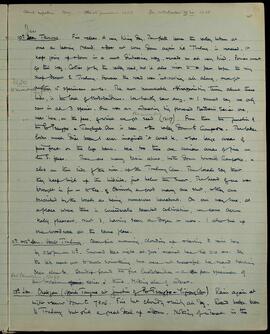
              10th Jan. TRULUNG. Fine and clear. A very tiring day. The path leaves the valley bottom at once on leaving Namdi and does not come down again till Trulung is reached. It keeps going up and down in a most distressing way, and made us all very tired. Ponies must go this way. Coolies go by the valley road, but it also rises to a pass before the very steep descent to Trulung. However the road was interesting all along, and we got another 15 specimens or so. The most remarkable and disappointing thing about these hills, is the lack of Rhododendrons. We hardly saw any, or I should say we only saw in all 3 species. One was an interesting big flowered Maddenii Series one, near here, on the pass, of which we got seed (12117). From there the junction of the Po Tsangpo and Tanghyuk Chu is seen, and the valley down to Gompo Ne. The latter looks much drier than I ever imagined it could be, and has large areas of pine forest on the left bank. Here too there are curious areas of pine on the S. faces. There are many takin about, both down towards Gompo Ne, and also on this side of the river, up the Trulung Chu. The locals say that they keep high up the hillside, just below the snow. The head of one was brought in for us to see, and obviously a good many are shot, and they are described by the locals as being numerous hereabouts. On our way here, at a place where there is considerable deserted cultivation, we came across kalij pheasant, shot 3, having seen a dozen or more. I also put up one woodcock at the same place.

              11th & 12th Jan. Halt Trulung. Clear fine morning, clouding up and starting to rain here by 5.30 pm on 11th. Snowed that night at 7000' and rained here till 11.0 am. All the lads went out to shoot something, but were not successful. We heard barking deer close to. Sandup found the first Rhododendron — a poor specimen of an arboreum series of trunk. Nothing else of interest.

              13th Jan. Chakzam (Opposite Tangme at junction of Po Tsangpo and Yigrong Chu) Rain again at night and snow down to 7500'. Fine but cloudy and misty all day. Road better than to Trulung but still a great deal up and down. Nothing of interest in the

              LSH/1/1/8/1/60 · Part · 1947-02-15 - 1947-02-20
              Part of The Ludlow & Sherriff Collection

              SUMMARY:
              Captions note Tying Tso from Re (15 Feb), Tying Chu on the march from Sangyü to Chahzam (17 Feb), and Betty on the cane bridge at Trulung (20 Feb). Detailed route description from Trulung to Tangdong via the Po Tsangpo–Tonghyuk Chu junction, with notes on terrain, cultivation, and livestock, and a bird (Horornis) recorded at Tangdong, 7000 ft, on 20 Feb 1947.

              CONTENT:
              58

              Kodachrome 13.
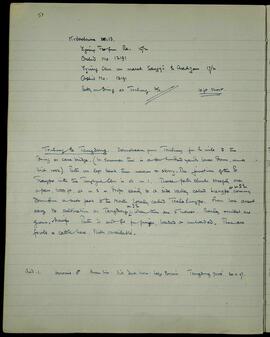
              Tying Tso from Re. 15/2
              Orchid No 12191
              Tying Chu on march Sangyü to Chahzam 17/2
              Orchid No. 12191
              Betty on Dring at Trulung. 20/2. 10 ft short.

              Trulung to Tangdong. Downstream from Trulung for ½ mile to the dring or cane bridge. (In summer this is a few hundred yards lower down, on a high rock.) Path on left bank then narrow & stony. The junction of the Po Tsangpo with the Tonghyuk Chu is at m 1. Thence path climbs steeply over a pass, 1000 ft, at m 2 & drops easily to a side valley called Lungpo at m 2½, coming down from a snow peak to the North locally called Tsela Lungpo. From here ascent easy to cultivation at Tangdong m 3½. Where there are 5 houses. Barley & millet are grown, & turnips. Path is not fit for ponies, loaded or unloaded. There are fowls & cattle here. Milk available.

              Bird .1. Horornis ♂ Brown Iris: Bill dark horn: Legs Brown. Tangdong 7000'. 20.2.47.

              LSH/1/1/8/1/185 · Part · 1946-12-22
              Part of The Ludlow & Sherriff Collection

              SUMMARY:
              Notes describe diurnal and seasonal wind patterns in the Tsangpo valley, with gentle upstream winds in early mornings and stronger downstream winds later, and increased water levels causing multiple shallow channels and sandbank issues. Observations cover downstream winds at Tsela Dzong, upstream winds in April, river breadth at Tsela in December, the influence of the Gyamda Chu valley, and seasonal changes at Yigrong Tso with winter flow extending below Chara; comparison is made with March and an entry around Feb 1st is referenced.

              CONTENT:
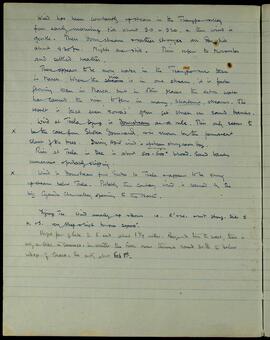
              Wind has been constantly upstream in the Tsangpo valley from early morning till about 9.0 or 9.30, and this wind is gentle. Then downstream and rather stronger all day till about 4.30 pm. Nights are still. This refers to November and settled weather.

              There appears to be more water in the Tsangpo now than in March. Where the river stream is in one stream, it is faster flowing than in March, but in other places the extra water has caused the river to flow in many, shallow, streams. The result is that even 'kowas' often get stuck on sand banks.

              Wind at Tsela Dzong is downstream as a rule. This only seems to be the case from Shoka downward, as is shown by the permanent slant of the trees. During April wind is upstream strong each day.

              River at Tsela in Dec is about 500 - 600 yds broad. Sand banks numerous and probably shifting.

              Wind is downstream from Shoka to Tsela and appears to be strong upstream below Tsela. Probably the contrary wind is caused by the big Gyamda Chu valley opening to the North.

              Yigrong Tso. Wind usually up and down i.e. E. and W. not strong. Hills to N. and S. very steep and high to over 20,000'.

              Useful part of lake is E. end, about 1 3/4 miles. Beyond this to west, there is only a lake in summer. In winter the river runs through sand beds to below village of Chara. See entry about Feb 1st.

              LSH/1/1/7/1/7 · Part · 1940-05-24
              Part of The Ludlow & Sherriff Collection

              SUMMARY:
              The diarist notes bodies with bows left beside them and observes alpine flora on nearby snow slopes and streambeds. Accompanied by Langong coolies, they visit the Tsari Sama (Sarpa) pilgrimage area, finding it rich in Primula, Rhododendron, and a new white-flowered Daphne near the pass to Lopa territory. Trashiyang is mentioned as the starting and finishing point of the pilgrimage.

              CONTENT:
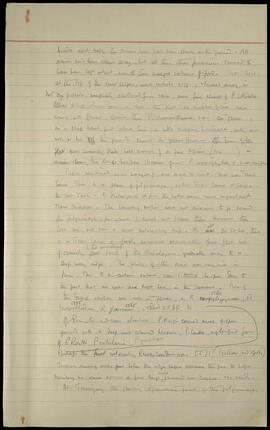
              Beside each body, the owner's bow had been stuck in the ground. All arrows had been taken away, but all their other possessions seemed to have been left intact, even to their meagre rations of food. Near here, at the top of the snow slopes, were vertical cliffs. Tucked away in dust-dry pockets, completely sheltered from rain, were fine clumps of P. littledalei.

              A little lower down, at 14,000', the first Meconopsis simplicifolia were coming into flower. Beside this, P. chamaethauma was in flower, and on a steep bank just above this, a little creeping Lonicera, only an inch or two off the ground, showed its yellow flowers. Some of the open swampy flats held masses of a fine Allium (No. ). On stony beds beside streams grow P. macrophylla v. macrocarpa.

              There remained, near Langong, one area to visit, that was Tsari Sama. This is a place of pilgrimage, called Tsari Sama or Sarpa—the new Tsari—to distinguish it from the better-known, more important Tsari Chikchar. The Langong coolies were not anxious to go round the pilgrimage, for which I could not blame them. However, they took me, and it was a most interesting trip. As at the Lo La, there is in Tsari Sama a fairly extensive, reasonably open flat bit of country, just north of the immediate Himalayas, gradually rising to a steep rocky ridge. The whole of this area was very rich in flora. This, to a certain extent, can, I think, be put down to the fact that no yaks are kept here in the summer. None of the dwarf rhodos were now in flower, and R. campylogynum (5560), R. trichocladum (5555), R. glaucum (5565). Also 5568.

              A Primula not seen elsewhere, P. Kingii covered acres of open ground with its deep wine-coloured blooms, P. laeta, a glorified form of P. Roylei. Primula, P. gracilipes.

              Perhaps the most interesting Rhododendron was 5571 (yellow, red spots). Growing among rocks just below the ridge before reaching the pass to Lopa territory, we came across a fine large, white-flowered new Daphne. No seeds.

              At Trashiyang, the starting and finishing point of the pilgrimage,

              LSH/1/1/8/1/10 · Part · 1946-11-14
              Part of The Ludlow & Sherriff Collection

              SUMMARY:
              Notes list Kodachrome slide subjects and routes, seeds dispatched from Tsetang via Lhasa to G.T. on 14 November 1946, and kowa transport costs from Gongkar Dz to Tsetang. Minimum temperatures are recorded for Gongkar, Chitishio, Camp, and Tsetang from 8–14 November 1946, with additional place references noted.

              CONTENT:
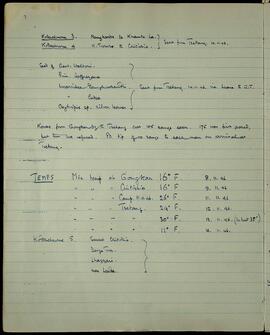
              7

              Kodachrome 3. Nangkartse to Khamka La. } Sent from Tsetang. 14.11.46.
              Kodachrome 4 K. Trombo to Chitishio. }

              Seed of Gent. Waltoni.
              Prim. Jaffreyana
              Incarvillea Younghusbandii. Sent from Tsetang 14.11.46. via Lhasa to G.T.
              Incarvillea Lutea
              Oxytropis sp. - silver leaves

              Kowas from Gongkar Dz to Tsetang cost 105 sangs each. 175 was first asked, but this we refused. Paid tip of 10 sangs to each man on arrival at Tsetang.

              TEMPS
              Min temp at Gongkar 16° F. 8.11.46
              Min temp at Chitishio 16° F 9.11.46
              Min temp at Camp. 11.11.46. 26° F. 11.11.46
              Min temp at Tsetang. 24° F. 12.11.46.
              Min temp at Tsetang. 30° F. 13.11.46. (In tent 35°)
              Min temp at Tsetang. 11° F. 14.11.46.

              Kodachrome 5. Sunset Chitishio.
              Darya Tra.
              Lhashari.
              near Lenda.

              LSH/1/1/8/1/105 · Part · 1947-05-06
              Part of The Ludlow & Sherriff Collection

              SUMMARY:
              Arrived at Tsetang and were welcomed by trader Pedong Dorji, who may help secure mules for travel to Dongkar Dz and assist with arrangements. News from Lhasa describes a serious conflict with arrests, including Reting Rimpoche, Phunkhang Shape, and others, rumors of Reting’s death, and weapons taken to Sera; Reting was reportedly imprisoned in the Tse Potala.

              CONTENT:
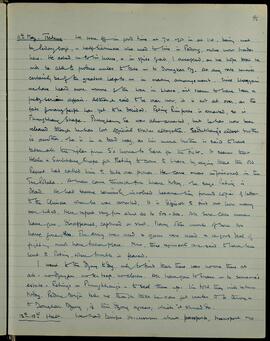
              11th May: Tsetang. We were off in good time at 7.0 & in at 1.0, being met by Pedong Dorji, a half Sikkimese who used to live in Pedong, who now trades here. He asked us to his house, & in spite of all, I accepted, as we hope that he will be able to produce mules to take us to Dongkar Dz. At any rate he will certainly be of the greatest help to us in making arrangements. Since Lhagyari we have heard more news of the war in Lhasa, it seems to have been a pretty serious affair. Although said to be over now, it is not all over, as the fate of many people has yet to be decided. Reting Rimpoche is arrested, so is Phunkhang Shape. Phunkhang Se was also arrested, but he has now been released though he has lost official status altogether. Sadutshang's eldest brother is another, he is in a bad way, as his monk brother is said to have taken all the rifles from S's house to Sera for the fight. It seems that Halu & Surkhang Shape got Reting to come to Lhasa by saying that the old Regent had called him to take over power. He came and was imprisoned in the Tse Potala. A man came through from Lhasa today, he says Reting is dead. He had become seriously involved because they found copies of letters to the Chinese when he was arrested. It is difficult to find out how many were killed. Here reports