India

Elements area

Taxonomie

Code

Bereik aantekeningen

    ron aantekeningen

      Toon aantekening(en)

        Hiërarchische termen

        India

          Gelijksoortige termen

          India

            Verwante termen

            India

              176 Archivistische beschrijving results for India

              176 results directly related Exclude narrower terms
              LSH/1/1/9/1/131 · Part · 1933-09-01
              Part of The Ludlow & Sherriff Collection

              SUMMARY:
              Halted in Bumthang, the diarist visited H.H., discussed plans regarding Paro and Chamurchi, local administrative matters including Tashi Drunyer, received reports from Lhasa about Kapsinpa Shape’s imprisonment, and noted heavy rain damage near Chenderi and the Ha–Chamurchi road area; Betty was expected in London, and Dorji was treated with penicillin and M&B 760. On 5th September they marched in rain to Shabjetang and observed a new Codonopsis common near the Dhur river, collecting tubers and another pressing.

              CONTENT:
              3rd & 4th Sept. Halt Bumthang. I went to H.H. each day, had 3 hours alone the first day and a short visit, when Choden was present, the second day. H.H. was very easy to talk to and had much more to say. He is worried about Paro and the poor servants who are there running the place—or failing to. He will go there himself in a month or two's time. Then on to Chamurchi for a month or more. I tried to get him to say he would go on to Kalimpong, but I don't think he will. He talks now of doing many things for the locals, and probably will. I just hope they will be practical and not overdone. I asked him not to spoil Tashi Drunyer by letting him do nothing and have a dozen servants or so, but to give him a definite job of work. I wonder if he will. Tashi will be left in Bumthang though, with his brother, when H.H. goes to Paro. Two of Purbo Wangdi's servants returned from Lhasa yesterday. They described Kapsinpa Shape as being very securely imprisoned, with iron manacles on wrists and legs and a cangue round his neck, and shut up in a closely walled-in room, from which there is no normal exit. More reports of road damage come in from near Chenderi and more extensive from the Ha-Chamurchi road area. The rain must certainly have been very, very heavy these last 15 days or so. Betty should have reached London on the 3rd, all being well. I continued to give Dorji penicillin injections, 100,000 units at a time till I had given 10 injections. Then I gave him a course of M&B 760. He is very much better and should manage to reach Ludlow all right.

              5th September Shabjetang. Rain almost all day. Left at 6:30 and in at 10:00. Nothing of interest, except that the new Codonopsis (Convolvulaceae 19674) is common from the mouth of the Dhur river, for quite a long way up this valley. We took 14 tubers and another pressing. There is a...
              LSH/1/1/9/1/137 · Part · 1933-09-01
              Part of The Ludlow & Sherriff Collection

              SUMMARY:
              Plans are made for visits to Kantanang, Tolgang, and the Chachhu La route while hoping for improving weather. On 12th Sept. they halt in camp; mail arrives from H.H. along with his cook Namgye, whom the writer reluctantly keeps, and letters from T. Bagge and Betty report on Betty’s arm x-rays and her safe arrival in Calcutta, while a hoped-for house falls through.

              CONTENT:
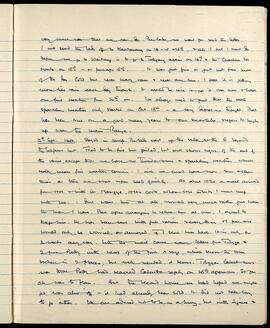
              very much now that we can do. The later we wait for seed the better. I will send the lads off to Kantanang on 14-15 or 16th, and all I feel I must do before we go to Waitang is to go to Tolgang again on 14th and the Chachhu La route on 18th - or perhaps 16th. It was just fine or just not fine most of the day. Cold but never heavy rain and never any sun. I fear it is getting more like rain each day though. It would be nice to get it over now and have our fine weather from 20th on. We always used to find that the real sparkling weather only started on Oct. 18th - a very depressing thought. That has been true on a good many years to our knowledge, refers to high up near the main Range.

              12th Sept. Halt. Stayed in camp. The lads went up the valley to the E beyond the Serpens hut. Tried to be fine but failed, but still shows signs of the end of the rains, except that we have no thunderstorms and sparkling weather, which really mean fine weather coming. I wish we could have more sun and clear skies, as these are what ripen seed quickly. At about 10.30 a mail arrived from H.H. and with it Namgye, H.H.'s cook, whom H.H. insists I must keep with me. I don't want him at all, would very much rather just have the man I have. But after arranging to return him at once, I agreed to keep him. He has been sent with full rations nevertheless and I fear H.H. would only be worried, or annoyed, if I sent him back. It is only for 3 weeks anyway. With the mail came many letters from T. Bagge and 2 from Betty with news of the first x-rays, which show the arm broken in 2 places, but well mended, it seems. T. Bagge's latest news was that Betty had reached Calcutta safely on 26th afternoon. So far all was to plan. But the second house we had hoped we might get, was also 'off' - it had already been sold. It did not take long to go either. We are advised not to be in a hurry, but with Tinnie and

              LSH/1/1/9/1/138 · Part · 1933-09-01
              Part of The Ludlow & Sherriff Collection

              SUMMARY:
              Notes a fine Aconite in flower but seeds largely unripe; mail arrived quickly from Kalimpong. On 13 September, after heavy rain and new snow down to 14,500 ft, the party halted and went up the Chachhu La route toward Nanda La to seek Notholirion bulbs and possible seed, planning to take roots on return from Waitang.

              CONTENT:
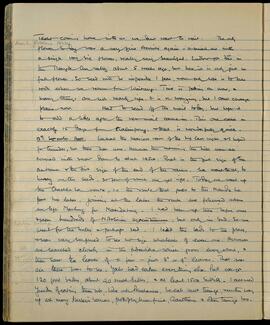
              Tashi coming home with us, we don't want to wait. The only flower today was a very fine Aconite again - a small one with a single very big flower, really very beautiful. Ludlow got this in the Rongde Chu valley about 5 weeks ago, but here it is only just in full flower. So seed will be impossible I fear, and our only hope is to take roots when we return from Waitang. Time is getting on now, and many things are not nearly ripe. It is very worrying, but I can't change plans now. Had to send off the mail today, but kept it to add a little after the new mail came in. This one came in exactly 15 days from Kalimpong, that is wonderfully quick.

              13th September. Halt. We had the heaviest rain of the trip last night, and hoped for thunder, but there was none. However this morning the hills were all covered with snow down to about 14500. That is the first sign of the autumn and the first sign of the end of the rains. We want that, to hurry on the seeds, so few of which are yet ripe. Today we went up the Chachhu La route, i.e. the route that goes to the Nanda La past two lakes, joining at the lakes the route we followed when we left Marlung for Mandating. I had been up there before once and seen hundreds of Notholirion hyacinthinum, but only in bud. So we went for the bulbs and perhaps seed. I

              LSH/1/1/10/1/9 · Part · 1949-09-14
              Part of The Ludlow & Sherriff Collection

              SUMMARY:
              The diarist notes many migratory birds from Tibet and poor seed results except likely from Marlung or passes to the west. On 21 Sept., they remain in camp while Yundon and Pasang collect Primula caveana and a fine woolly Phandra from Tamagorra Nala, returning late and exhausted, with Yundon suffering a bad headache. On 22 Sept., amid cold wind and intermittent rain and sun, letters arrive from H.H. and mail from Hicks and Ludlow, but none from Betty.

              CONTENT:
              This, in the same way as I did with Mec. simplicifolia. Hope it turns out well. The whole scene is too big for a cine-camera. There are a good many birds now on migration from Tibet. I saw hundreds of wagtails and two Afghan redstarts today. And I must have seen 20 Ibisbills, but they aren't on migration though. We did not do well with seed again, and certainly most of our seed this year will come from Marlung or over the passes to the West.

              21st Sept. Halt. Rain at night, but a lovely day of sun and cumulus clouds. I stayed in camp to deal with yesterday's seeds, while Yundon and Pasang went up Tamagorra Nala to the NE to get P. caveana and the 8 plants of white caveana marked by Yundon when we were here before. They have just returned at 6:00 pm when I was beginning to be a bit anxious about them. Boulder scree is dangerous: one can very easily make a false step and have a nasty fall. It was too late for me to examine any seed brought, but they have got all the white P. caveana, and another basket of the usual caveana as no seed is ripe. They also found the very fine Phandra which is woolly all over, and which we took twice at Marlung, but never saw in very good flower. Today they have brought both seed and fine flower. It is a beautiful thing. I have not been able to see if the seed is good or not. Otherwise just a Sax or a Saussurea, and a few odd very small primula roots - perhaps P. cervicina or P. walshii, which I may take too. As they have had such a long day, we will not go out tomorrow, but I will do the seed and get the roots properly packed. Yundon returned with a very bad head, which he said he had most of the day.

              22nd Sept. Halt. Stayed in camp. Rain and sun very cold indeed, with a strong wind. Letters came in from H.H. with food etc and a mail from Hicks, Ludlow and Kalimpong, but in some strange way no letters from Betty. Hers must have

              LSH/1/1/10/1/10 · Part · 1949-09-14
              Part of The Ludlow & Sherriff Collection

              SUMMARY:
              The diarist halts in the Diruphuang valley amid heavy rain, notes a sense of the monsoon ending, and reaches a nearby pass without difficulty. Skimmia seed brought by Pasang is abundant and promising. Letters and plans are mentioned, including Tobgye writing from Kalimpong, Betty in Calcutta, and Hicks intending to be in Bumthang earlier than expected.

              CONTENT:
              146 19768 P. alboviana x brunosa

              gone astray somewhere, as Tobgye's letter was dated 4 Sept from Kalimpong, she had heard twice from Betty in Calcutta by then. I think the Arts & Crafts must have made a mess of things. We have now all the plants we want from here, but will see if another is to be found tomorrow in the Diruphuang valley. The Skimmia seed which Pasang brought in yesterday is good and there is lots of it. I do hope it will be a success. The scent is one of the best things about it, and it is very strong and persistent long after flowering. Hicks tells me he will be in Bumthang on 5th Oct. which is very much earlier than I had expected. But he had not had my letter from Bumthang when he wrote, so may change.

              23rd September Halt. Fine till about 2.0 and then very heavy rain on and off. Although there is still lots of rain, there is a feeling of the end of the monsoon, but no sparkling days yet. More snow falls at night on the hill tops now. We went up Diruphuang valley today, and I was surprised how easily I managed up to the pass which I had never been able to reach before. How unfit I must have been when I first came up. Now, that height - about 15000 - 15500 - does not seem to worry me at all. We looked over the pass and saw

              LSH/1/1/10/1/11 · Part · 1949-09-14
              Part of The Ludlow & Sherriff Collection

              SUMMARY:
              Diary notes from Pangotang describe ongoing rains, plans to visit Marlung before turning back, and requests regarding taking Yundru and Ngudup to Kalimpong, with preference for Yundru. The writer develops Hicks’ photos, comments on Thompson’s image of P. eburnea, sends Dorji with airmail to Hicks and HH, and packs a ‘tsang’ of rooted plants for shipment to London, hoping to add more from Marlung and Ritang.

              CONTENT:
              147

              Air mail plants
              more specimens and also some roots. I have now so many roots to send home by air, that I wonder how many loads there will be, also how much it will all cost!

              24th Sept. Pangotang. Fine morning, and a bit of rain after midday. There really is precious little sign of the end of the rains, although I keep on hoping there is. We are, in a way, on our way back home now. But still there is one place, Marlung, to visit, before we can say we have turned round and started back. But everyone obviously feels that things are winding up. I had a request today from Pasang, from Ngudup and Yundru that I should take both to Kalimpong. I don't mind taking Yundru, who is a good and cheery lad and a good worker, but I hope I won't have to take Ngudup one day beyond Bumthang. I do not like him, and except to arrange transport, he is useless. I am writing to HH tomorrow to ask for Changchuk, and to give him our final dates. Today I developed Hicks' photos. If only he had taken my advice at first, all his photos would have been like these which are good. But he would not, and considered he knew better. Thompson's photo of P. eburnea is quite good, much better than Hicks' first efforts. It is a real disappointment to me that in 6 months he has only taken 48 photos altogether, in spite of having lots of film packs available. There were so many photos he could have taken.

              25th September. Sent off Dorji and with airmail to Hicks, HH and Kalimpong and paid him Rs 24/-. We then packed up a 'tsang' with rooted plants, each rooted plant in its own little basket inside the big one. The whole thing now is ready to go to London, except that I hope there will be a few more plants added from Marlung, and then more again at Ritang.
              roots

              LSH/1/1/10/1/14 · Part · 1949-09-27
              Part of The Ludlow & Sherriff Collection

              SUMMARY:
              The writer notes a woman's injury has healed and mentions the drokpas marking the first frost. On 27 Sept. they halt in misty weather, collecting good seed of several plants and observing Polygonum vaccinifolium, with plans to take roots. On 28 Sept. heavy continuous rain makes it difficult to dry collected seeds.

              CONTENT:
              see that it has healed well, she can use it perfectly. I must confess I am also very surprised, because the splinting I did was not good. There was some white frost on the ground this morning, which the drokpas seemed pleased about, because their calendar said this would be the first day of frost.

              27th Sept. Halt. This evening one would think we were in the middle of the worst part of the rains. It dawned sparklingly bright, yet within two hours we were in thick mist, & we haven't seen the sun since. A most disappointing day. But we got what we wanted, good seed of P. tenardinii, sapphirina & Waddellii, & one or two other things. I should think there will be a good deal of snow high up tonight. Many plants have no ripe seed yet, notably P. unistabilis, which is not nearly ready yet. There is quite a lot of Polygonum vaccinifolium up here, which I never suspected before, but it is not in profusion as it is on the Hala-Kyu la, in Sikkim, near Changu. What a beautiful thing it is though, why doesn't one see more of it at home I wonder. We have managed to get a few - very few - seed, & if we can get more will take roots for the Hala.

              28th Sept. Halt. Heavy rain all night, & rain without a stop today, much to our disgust. It is very hard to get seeds dry in this atmosphere. Anything we take is naturally soaking. I

              LSH/1/1/10/1/17 · Part · 1933-10-05 - 1933-10-01
              Part of The Ludlow & Sherriff Collection

              SUMMARY:
              The diarist receives letters from Betty and outlines plans: Hicks will arrive in Bumthang on 5 Oct, they hope to leave about the 13th and reach Tashigang on 3 Nov; the party will include Ludlow, the diarist, Betty, Virginia, Tess, and Tasho. Entries for 30 September at Pangotang and 1 October at Tolegang note wet weather, seed collecting (including Primula umbratilis), Pasang and Mundru’s work continuing until 17 October, a visit from the Sokpon who received gifts, and mail sent to HH for Kalimpong.

              CONTENT:
              To cheer me up today—I was feeling very miserable—a mail came in, with letters from Betty in Calcutta at last, and also from her in London. Nothing from HH at all for the first time when a mail has been sent. Hicks confirms that he will arrive in Bumthang on 5th Oct. So we should be able to leave on 13th about, and reach Tashigang on 3 Nov. Ludlow has got a passage, Betty says, and also she and I, Virginia, Tess, and Tasho. So we should have a good time, 6 of us from Bhutan.

              30th September. Pangotang. It rained all night again, but was fine when Pasang and Mundru went off about 6:00 am. We were off just after them, and had a day half rain half fine, but no sun. It doesn't look yet like clearing up, but I do most sincerely hope it is fine now for four days. There is a lot to be got in Tolegang and quite a lot on the other side. After that it doesn't matter so much, except for Pasang and Mundru, whose work won't finish until 17 October. Primula umbratilis here is nearly ripe, and I got some seed, but the big Androsace is still green. This is our last of many halts in Pangotang. The Sokpon came to call and I gave him a little bottle of saffron and a torch, which is doing him very well. But we've been in his district for a long time now, ever since 23rd of May. Sent off a small mail to HH for Kalimpong. I shall only be able to send off one more after this, except for Ha.

              1st October. Tolegang. Fine till 10:00 then rain and snow off and on the rest of the day. We are camped about 14,000-14,500' and it is raw and chilly. We got some seed of Primula umbratilis, the very pale form which occurs here, and a few other things. But the Phlomis (19716) I particularly wanted, is still in flower; seeds are not nearly ripe. Neither are seeds of the interesting Gentian 19721. But I took roots of

              LSH/1/1/10/1/18 · Part · 1933-10-01
              Part of The Ludlow & Sherriff Collection

              SUMMARY:
              The diarist reports severe infestation of P. umbratilis seed capsules by caterpillars, difficulty finding other seeds, snow melted up to about 15,500 ft, and the drogpas leaving the high pastures. On 2nd October at Ha-chu, after clear frosty weather, they observed a large herd of burhel, finished work in the Tsampa area (Bumthang Chu watershed), planned to cross to the Dhur Chu to meet Pasang and Yundon, and reflected on concluding Himalayan trips first planned with Ludlow in 1929 at Kashgar.

              CONTENT:
              From among the seeds of P. umbratilis which I collected today, I extracted 67 caterpillars, which shows the difficulty with seed. Practically every capsule I take now has worms or caterpillars. I can't find any seed of a big Swertia. All capsules have 3-4 red worms in them. None of the aconites were ready yet, and I have had to take roots of some. Snow is not now lying here. It has all melted up to 15500' or so. The drogpas have all gone down from these high grazing grounds, I am surprised to see. They come in the 5th month (July) and leave in the 7th or 8th (Sept). It is a very short season. I sympathize with them going down now, but I think they should come up much earlier, when the grass is good.

              2nd October. Ha-chu. This is the best day we have had. There was rain and some snow last night, but it cleared up to a beautiful morning and there was hard frost. Up till midday today there was lovely bright sun, and then huge clouds collected, but it has not snowed, and I should think we will now have several similar days. I got a little more of the same seed today, but nothing special. We walked onto a huge herd of 58 burhel on our way back. And now we have finished with the area called Tsampa, which includes the watershed of the Bumthang Chu, but not the Dhur Chu. Tomorrow we cross to the head of the Dhur Chu, and there meet Pasang and Yundon. It is difficult now to think that we have practically finished our work this year, and that there are now but 5 more days left. In a month I will be in Sikkim. And this is the last of our Himalayan trips, which Ludlow and I started planning in 1929, sitting in front of the fire in the drawing room of the Consulate General in Kashgar.