Showing 33 results

Archival description
33 results with digital objects Show results with digital objects
LSH/1/1/6/1/159 · Part · 1936-11-05 - 1936-11-07
Part of The Ludlow & Sherriff Collection

SUMMARY:
Diary entries describe travel from Yar Shika to Loro Tö, including a visit with the Dzongpen (gifted silk and saffron) and discussion of missing photographs from Sanga Chöling, scenic views, and lost/damaged film rolls previously entrusted to Bhutanese couriers. Subsequent days note severe transport disruptions with drunk porters fighting, the Dzongpen demanding a passport, Kusho struggling to arrange transport, strong valley winds, and observations of hares and the absence of partridges.

CONTENT:
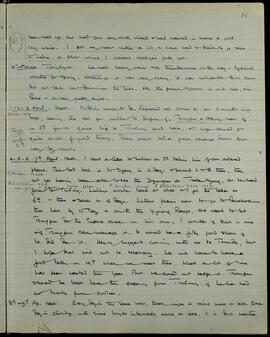
this morning, & quite a number still in flower. Clouded at night & early morning, fine & bright all day.

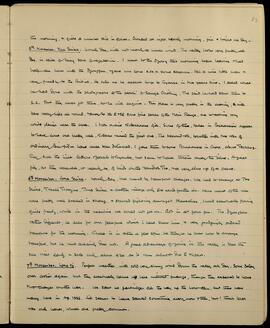
5th November. Yar Shika. Lovely day, with not nearly so much wind. The valley looks very pretty all day, in spite of being bare of vegetation. I went to the Dzong this morning before leaving & had half an hour with the Dzongpen, & gave him some silk & some saffron. He's a nice little man & very friendly to the British. He tells me he expects to go to Gyantse in two years time. I asked what he had done with the photographs of the 'peach' of Sanga Chöling. He said he had sent them to S.C. But they never got there, so he will enquire. This place is very pretty in the evening, with bare rocky hills all round, & away to the ESE some fine peaks of the Main Range, & a retreating very white glacier near the crest. I took a few Kodachrome of it. Some of these, taken in Pachakshiri appear to have come out pretty well. Kodak ruined the first one. The second roll, together with two rolls of ordinary Pan film have never been delivered. I gave them to some Bhutanese in Chura, above Tsetang. They took the line letters & parcels to Gyantse, but seem to have thrown away the films. A great pity, as they were all, or nearly so, of birds on the Yamdrok Tso, & a very close up of a crane.

6th November. Jora Shika. Lovely day, but ruined by transport changes. We had to change at Tro Shika, Trashi Trongme, Timp Shika & another village only 500 yards further on. Here most of the men were pretty well soaked in chang, & started fighting amongst themselves, blood eventually flowing quite freely, while in the meantime we cursed our fate. Got in at four p.m. The Dzongpen rather difficult; he asks for our passport which I can't show him, & very grudgingly ordered transport for the morning. Kusho is in rather a flat spin. He thought he knew how to arrange transport, but he most certainly does not. A great advantage of going in this valley is that the sun rises early & sets only about 4.30, as it runs almost due E & West.

7th November. Loro Tö. Perfect weather, with cold very strong wind down the valley all day. Some delay over coolies again, but they eventually came up here without change, though they expected to have two changes on the way. We saw no partridges all the way up the Loro chu, but there were many here in Ap. 1936. Jill seems to have scented something every now & then, but I think that was only hares, which are pretty common.
LSH/1/1/2/1/117 · Part · 1933-07-18
Part of The Ludlow & Sherriff Collection

SUMMARY:
The diarist halts at Tsona, collects and packs Paraquilegia and catches Parnassius butterflies, while dealing with staff illness and asking the Dzongpen to arrange further collection and forwarding to Sahden amid rainy, snowy weather. Delays occur when yaks fail to arrive under the Tibetan 'Tao' system, with details of payments and origins from the Mago direction. The party then camps west of Gorpa La, noting barometric readings for nearby passes and Dongkar, and a route skirting Tsona hill.

CONTENT:
57

13th August - Halt Tsona. B.P. 186.7 Temp. 58°. Spent the morning taking bits of Paraquilegia, & catching parnassius, a number of P. imperator were seen & caught, but of the others only P. epaphus. Packed the Paraquilegia in two boxes, below stones, then charcoal, then earth. Ramzana down with fever. Ahmad Sheikh now better. Always one of them seems to have it. Bagged six lots of Paraquilegia flowers, & asked the Dzongpen to arrange to collect & send on to Sahden. He promises to, but I am a little doubtful. A good deal of rain, & some fresh snow on the hills round about.

[Marginal notes: Cyananthus incanus 794, Meconopsis horridula, Clematis orientalis 797, Butterflies, Paraquilegia]

14th August. Halt at Tsona. Yaks did not turn up, so we had to wait. The system of 'Tao' in Tibet is a curse. Our yaks had to come from 2-3 days journey away in the Mago direction to take us in the opposite direction. We pay them 2 tankas a day per yak, besides which they get 3 tankas per day from the Tsona people.

[Marginal note: Gentiana aglaia 798]

15th August. Camp West of GORPA LA. 14 miles. (B.P. of Gorpa La 181.1" Temp 50°. B.P. of SANG LA. 181.9" Temp 50°. B.P. of Dongkar 188.5 Temp 58°.). If camped at Tsona village, route leaves towards the West, & skirts the Tsona hill, turning to the North, over a

LSH/1/1/6/1/17 · Part · 1938-03-21
Part of The Ludlow & Sherriff Collection

SUMMARY:
Notes abundant fish in the Tsangpo and tame black‑necked cranes, with warm conditions after Yamdrok Tso. On 20 March they traveled by skin boats (Kowah) down the Tsangpo to Dorje Tra, demonstrated the wireless to the Dzongpen, dealt with missing boxes from Tamalung, and chased cormorants; on 21 March they continued by Kowah to Chira, describing Dorje Tra’s monastery on a rock and slower river flow.

CONTENT:
Ludlow 15
Tsangpo river
Fish appear numerous. The ferrymen told us that there were large fish in the river up to 10-20 lbs. Formerly they were allowed to catch them, but not nowadays.

Magnificent river, even here, though it must be nearly at its lowest. On the plain there were many black-necked cranes, tamer than usual: some allowed me up to 40 yards. Stayed in home, very comfortable. Beautifully warm down here after the Yamdrok Tso.

20th March. Dorje Tra. 18 miles. 8 hours by Kowa - down the Tsangpo. Perfect weather, no clouds all day. We listened in to the Scotland England Rugger match yesterday evening, but heard very badly. However we could follow the whole game. On such a clear night there are probably electrical disturbances about. Certainly when I stroked Jill, she sparked all over. We were rash enough to show the wireless to the Dzongpen, in the afternoon he came again in the evening. Eleven boxes never turned up from Tamalung, although we waited till after 11:00 this morning. Transport also was very late in turning up, and finally we decided to leave ponies and sail down the Tsangpo in the skin boats - 'Kowah'. We could have got everything into three, but for comfort and safety we took six. At 11:15 we embarked and were off, much to the delight of the villagers who must love a tamasha like that.

Near Gonkar the river is quite swift, but it opens out and is slower lower down. We had some fun chasing cormorants, which abound, choosing one which has eaten so much it has difficulty in flying. One we got close to and catapulted, eventually hitting it on the head and killing it. Inside was a fish of fully 1½ lbs - the tail well up the cormorant's neck. It was a pleasant change just lying in the boats at ease. The men don't do very energetic rowing, but keep at it for hours. They drink chang as long as they have it and sing merrily all the time they row. Dorje Tra was further than expected, we were not in till nearly 8:00 pm. Then we woke the village, looking for a house to stay in. This was finally done and we had a good night, again undisturbed by any uninvited guests.

21st March. To Chira. 18 miles. 6 hours by Kowah again by Kowah down the Tsangpo. Fine, no clouds, but rather windy. River slower flowing on the whole. Dorje Tra is a picturesque place, mostly monastery, plastered up against a big rock sticking out into the river. We left at 8:00 am and halted here at...

LSH/1/1/3/3/99 · Part · 1933-04-09
Part of The Ludlow & Sherriff Collection

SUMMARY:
Notes a possible plumbago like one found near Lhakhang Dzong in 1933 and a new Trochalopteron (perhaps henrici), with locals described as helpful unlike those at Tsona. At Tro Shika on 20 April, the writer describes a picturesque, cultivated valley and recounts a passport exchange with the Dzongpen handled by Pinto, who returned with apologies.

CONTENT:
or plumbago of some kind. I hope it may be that we found near Lhakhang Dzong in 1933. It is just turning green, but I can't find any old seeds. There is also a new Trochalopteron, perhaps Henrici, which we have not seen before. The locals are all nice and helpful, not like the Tsona people at all.

20th April. Tro Shika. 9 m. BP. 190.6 Temp. 60°. Time 4:00 pm. Approx Ht. 12,253'. Another grand day, with a wonderful sky, clouding over by 3:00 pm. It felt quite hot all day, and certainly is compared to what we are now used to. A very picturesque valley, with ruins and villages on both sides. Quite a lot of cultivation at each place, some more trees, mostly poplar and willow, but now peach also. The ruins are said to have been caused by people from beyond the Lopas, who came up, mostly mounted, and plundered the whole valley a long time ago. The Dzongpen did not call but sent for our passport this morning. We sent Pinto back with it and told him to say that it was the duty of the Dzongpen to call first. Pinto came back with most apologetic messages. The result was

LSH/1/1/6/1/161 · Part · 1933-11-10 - 1933-11-13
Part of The Ludlow & Sherriff Collection

SUMMARY:
On 10 November at Trimo, the diarist notes seed collections and plants seen en route to the Pō La, and reports that Taylor has gathered many specimens between Sirimo and Shakti. They describe leaving Tsona, meeting the Dzongpen who discussed Tawang and Assam officials, sending mail by special runner toward Trashi-yang, and note health updates for Phunbo and the Dzongpen along with gifts from H.H. the Maharani, Padmadechen, and Phunbo Wangdi Palden.

CONTENT:
10th Nov. Trimo. seeds of R. baileyi 6656, R. tsariense 6657, R. wallichii 6659, P. pendulum 6660, R. tsariense 6661, P. strumosa 6658

Poda
things on the way to the Pō La - P. eburnea, Gent. amoena, Mec. grandis among others. And Taylor has another 150 specimens between Sirimo & Shakti! No mail reached them yet. I am sending their mail down by special runner - 1st day Le, 2nd beyond Shakti. It should reach Trashi-yang on 13th, so I hope Taylor may get it in Bhutan yet.

10th November. Trimo. Fine, much warmer in morning till 10:30, clouded. We left Tsona in true Tsona style. Everything was ready, ponies paid for & agreement signed, faithful promises to turn up by sunrise. Actually it was 9:00 before the mules loaded up & had to dig out one of the cooks & make him go in front of me till the Pō La. I went to the Dzongpen who seemed a nice man & fairly well educated. The only really interesting thing he talked about was Tawang, when he mentioned two points: one that the Tibetans felt very much that the officials visiting there from Assam were shooting so much, especially now the new Dalai Lama is expected: & the other was a complaint against the translator who was up with the Assam Govt official. The Dzongpen said that the Babu never told them the same as the Sahib said, but gave his own version. The Dzongpen talks Hindi pretty well, but he was not there himself. I left at 9:30 am, & reached the Pass at 12:30 & Trimo at 4:30 pm. Phunbo was very bad last night, but recovered quickly, & was well enough to ride here, has no fever now. But Dzongpen was ill today, with a very bad head, was sick on the way to the Pass.

Prim.
Gent.
Mec.
Rhodo
However he also is much better this evening. We found a very little of the Prim. eburnea Ludlow mentioned, some rather unripe G. amoena, a little Mec. grandis, & several Rhododendrons. To allow everyone to recover, & to give us a chance to get some seed, I am stopping here tomorrow. It is very nice to be here, because from here on it will be warm & dry & we will have no more transport troubles.

RB
The latter have loomed large with me this year, & it is good to feel they are now over. And none of us are sorry to get to a warm place again. Presents of butter, rice, cloths etc. from H.H. the Maharani, Padmadechen, Phunbo Wangdi Palden. They had been as far as Tsari Chinchu & back again looking for us.

LSH/1/1/2/1/25 · Part · 1924-06-23
Part of The Ludlow & Sherriff Collection

SUMMARY:
Notes describe an old dzong near a suspension bridge with traces of fortifications, said to be the oldest after Paro’s destruction, with the dzongpen planning repairs. The party marches to Rungzyung along the left bank of the Gamri Chu through hot conditions, noting conifer woodland, multiple bridges, and some rice cultivation.

CONTENT:
flowing stream about the same size as the Kuru Chu, which it joins and forms the Manas R. Below the dzong is a big suspension bridge which is said to be extremely old, which is suspended by an old iron link chain, which is occasionally locally repaired. There are signs of old fortifications on the right bank beside the bridge. This dzong with Paro was supposed to be the oldest in the country, and now that Paro has been burnt, this must be the oldest. It is only a part of its former size. The dzongpen hopes to enlarge or renew it next year. A strong wind blows up the main valley all day, and Trashigong is much cooler than its height would lead one to expect.

To 30th June. RUNGZYUNG. 8 miles. (B.P. 205.1" = 3625' Temp. 85°.)

Left at 6.0, in at 11.0. Very hot indeed. Road leaves the dzong and drops at first steeply, then easily to the bridge over the GAMRI CHU, a large river coming in from the East. This is not crossed, but the left bank followed up by a good, well graded path, over open hillside sparsely wooded with Pinus longifolia and occasional patches of thick jungle. Two side river valleys are crossed by bridges. There is a good bridge over the Gamri Chu at Rungzyung, and some rice cultivation. We did

LSH/1/1/4/1/187 · Part · 1933-11-09
Part of The Ludlow & Sherriff Collection

SUMMARY:
Notes on difficult porters at Sakden, a visit from a Maharaja-affiliated veterinary doctor, and arrival at Trashigang with mail. Plant collections are recorded from Rungzyung, Samri Chu, and the Trimo sector, and local intrigues are mentioned including a Dzongpen’s servant running off to Bumthang.

CONTENT:
He had to spend the night at Tahliti, while A. Sherriff got on here by himself, which was good work. The whole of Sakden was drunk, and just refused to carry loads, worse than Tawang or Muktur. A veterinary doc. arrived in camp, one of the Maharaja's educated men. He was quite amusing and entertaining. I rather sympathise with him - as he says what is the good of all his education - he gets no pay, is not allowed to take in the Statesman and has no vet. work to do. It is rather a problem, whether to educate any of these people. I would say definitely no, unless there is plenty of work for them to do. It feels very hot indeed down here. I had a bath - much needed - on arrival. Tomorrow we look forward to getting a mail at Trashigang. From Rungzyung, Samri Chu - Primula ceresoides 2865, Luculia gratissima 2867.

17th Nov. Trashigang 8 m.? Fine but cloudy, pretty hot till we reached here where there is always a wind. Found two mail here. From Trimo sector Rh. tsariense 2894, R. wallichii 2895, Rh. baileyi 2896. Rh. arboreum 2893.

18th Nov. Halt. From Trimo sector Rh. pendulum 2898.

19th Nov. Halt. It seems that all is not too well here, and I have just been given an account of various intrigues going on. One of the Dzongpen's servants ran off to Bumthang about

LSH/1/1/8/1/85 · Part · 1938-03-31 - 1938-04-09
Part of The Ludlow & Sherriff Collection

SUMMARY:
Heavy spring rain at Tongkyun with peach blossom in Pasha; several halt days used to repack for a two‑month return journey while letters were exchanged rapidly with Ludlow via Dzeng. Tsungpen and Akong visited Trulung; plans were made for Ludlow to go to Pemakochung and the Yigrong Range, possibly leaving Suowa to Tsungpen, and Henry may accompany the diarist to Tromda. The writer, feeling heart trouble, decides to return to India amid persistently dull, rainy weather.

CONTENT:
been held up, but had gone very slowly indeed & had waited in Lhasa a very long while. I felt my heart rather a lot, & have had to decide to go back to India, a blow which I haven't realized fully yet.

31st March. Tongkyun. We had heavy rain & a thunderstorm on the way - typical weather for spring. Although it was very heavy, it was noticeable that snow did not fall low down on the hills. All the peach blossom is out here, in Pasha - a very pretty sight.

1-2-3 April. Halt. Nothing much to do. Repacked all stores for our 2 months trip back, leaving the rest for Ludlow to dispose of. Tsungpen & Akong went to Trulung on 3rd for a quick trip to Trulung and back, & hope secured for quite a lot of good things. There must be a great change down that way by now.

4-5-6-7th April. Halt. I sent a letter to Ludlow on 3rd telling him of our altered plans. The lad took it to Dzeng in 2 days & found L & S there, they not yet having been able to see the Dzongpen at Tsola Dzong, as he had gone to Trulung. Ludlow wrote back at once & I got the letter on 6th - there & back in 4 days. Ludlow plans now to go to Pemakochung, then here by 15 May & on to the Yigrong Range. He wants to let Tsungpen do the Suowa area on his own. I wonder if that is wise & if Tsungpen can manage it. It would be a jolly good show if he did do it. Henry suggests coming with me to Tromda, but I hope that will not be necessary. We will have to have a good talk on 14th when we meet there. What a lot of time has been wasted this year. But we could not help it. Tsungpen should be back here this evening from Trulung, if he has had no trouble from coolies.

8th & 9th Ap. Halt. Every day is the same now. Each night it rains more or less. Each day is cloudy, with some bright intervals, more or less. It is dull weather,

LSH/1/1/2/1/51 · Part · 1933-07-08
Part of The Ludlow & Sherriff Collection

SUMMARY:
The party plans to go to Tsona to see the Dzongpen for formal arrangements, noting poor visibility and wet conditions since leaving Sakden but expecting drier weather north of the main range. Young lamas are described as persistently inquisitive. The entry details the 10-mile route to Shao (Tsukang), passing lakes and ascending via the Milakatong La and Bum La passes with noted elevations.

CONTENT:
24

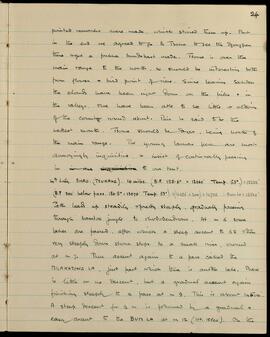
pointed remarks were made, which stirred them up. But in the end we agreed to go to Tsona to see the Dzongpen there and get a pukka bundobast made. Tsona is over the main range to the north, so should be interesting both from flower and bird point of view. Since leaving Sakden the clouds have been right down on the hills and in the valleys, and we have been able to see little or nothing of the country round about. This is said to be the wettest month. Tsona should be drier, being north of the main range. The young lamas here are most annoyingly inquisitive, and insist on continually peering into our tent.

14th July. SHAO. (TSUKANG). 10 miles. (B.P. 188.6° = 12660' Temp. 53°.) = 13293'
(B.P 300' below pass. 186.8° = 13670' Temp. 53°) = (14496 + 300) = 14796 ∴ Bum La = 15500'
Path leads up steadily and pretty steeply, gradually passing through bamboo jungle to rhododendrons. At m 6 some lakes are passed, after which a steep ascent to 6½ and then very steeply down stone steps to a small river, crossed at m 7. Then ascent again to a pass called the MILAKATONG LA, just past which there is another lake. There is little or no descent, but a gradual ascent again finishing steeply to a pass at m 9. This is about 14500'. A steep descent for ½ m is followed by a gradual and easy ascent to the BUM LA at m 12 (Ht. 15500'). On the

LSH/1/1/3/3/31 · Part · 1937-02-27
Part of The Ludlow & Sherriff Collection

SUMMARY:
Ludlow made pastry himself due to lack of ice. The party made a short, gentlemanly march to Trashigong Dzong accompanied by the Dzongpen, noted a strong breeze, observed a few shrubs including specimens 1150 and 1152 along the Dangme chu, and attempted to photograph a staged lama dance in poor light.

CONTENT:
13

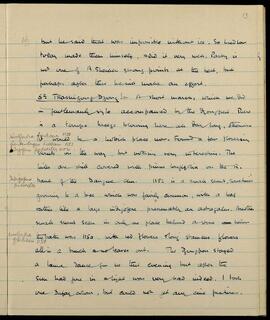
but he said that was impossible without ice. So Ludlow today made them himself, & did it very well. Pastry is not one of G. Sherriff's strong points at the best, but perhaps after this he will make an effort.

6th Trashigong Dzong 3m A short march, which we did in gentlemanly style accompanied by the Dzongpen. There is a terrific breeze blowing here all day long, otherwise it would be a hottish place now. Found a few flowers in shrubs on the way, but nothing very interesting. The hills are still covered with Pinus longifolia on the R. bank of the Dangme chu. 1152 is a small shrub, sometimes growing to a tree which was fairly common, with a leaf rather like a large Indigofera, presumably an Astragalus. Another small shrub seen in only one place behind a stone below the path was 1150, with red flowers & long stamens, flowers all in a bunch & no leaves out. The Dzongpen staged a lama dance for us this evening but after the sun had gone in & light was very bad indeed. I took one Dufay colour, but could not get any cine pictures.

[Marginal notes:]
Woodfordia fruticosa 1150
Lindenbergia hookeri 1151
Indigofera pulchella 1152
Indigofera pulchella
Woodfordia fruticosa 1150