Showing 5 results

Archivistische beschrijving
5 results with digital objects Show results with digital objects
LSH/1/1/1/1/10 · Part · 1933-05-05 - 1933-11-06
Part of The Ludlow & Sherriff Collection

SUMMARY:
Notes the 1933 traverse across Bhutan via the central highway, leaving Gangtok and being delayed at Changu on 5 May due to snow on the Natu La. Records bird observations across Changu, the Chumbi and Ha valleys, and the Tibetan plateau, including a Wood Snipe sighting by Sherriff near Mago.

CONTENT:
3a

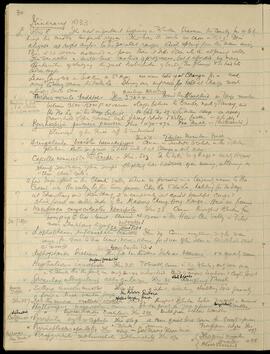
Itinerary 1933.

Ibis 6. The most important highway in Bhutan traverses the country from W. to E. through the middle temperate region. This was the route we chose in 1933. It is aligned at right angles to the parallel ranges which spring from the main axis, thus it soon ascends a pass then it dips down into an adjoining valley. This was rather a switchback method of progression but it afforded so many opportunities of studying the zonal distribution of birds (and flowers) & it had its advantages.

Leaving Gangtok in Sikkim, on 5th May we were held up at Changu for a week owing to heavy snow on the Natu La. During our enforced halt at Changu most interesting birds were:

Himalayan Blackbird
Turdus merula buddhae. Ibis 273-4. Found the Blackbird in large numbers between 13,500-15,000 ft at various stages between the Bum La, north of Tawang, and the Tse La in the Mago District. Confined to S.E. & S.W. Tibet at 12,500 and over. On 6th Nov. it is often seen on rocky grassy hill slopes covered with dwarf rhododendron bushes, etc. etc.

Pyrrhospiza punicea punicea. Ibis 470-472. Red-breasted Rose Finch. Plumage of the female difficult to understand.

Ibis 478. Tibetan Mountain Finch
Fringalauda brandti haematopygia. Common in suitable localities on the Tibetan plateau. Rather surprised to meet with it at Changu in early May.

Capella nemoricola. Wood Snipe - Ibis 503. In the hills W. of Mago in early August Sherriff saw many of this snipe flighting like woodcock of an evening, uttering a "Chur, Chur" call.

A few days spent in the Chumbi Valley, whence we proceeded in a leisurely manner to Ha. Crossed into Ha valley by the twin passes Chele La & Ha La, halting for 10 days at Sharithang and Damthang, 2 encampments set amidst beautiful conifer & rhododendron forest on either side of the Massong Chung Dong Range. Here we found:

Nucifraga caryocatactes hemispila. Ibis 22. Nutcracker! Common throughout Bhutan from 6,000 ft up to tree-limit. Observed at 12,000 in the Hamo Chu valley in Tibet near Lhakhang Dzong. (See p 19a)

Lophophanes rufonuchalis beavani. Ibis 24. S.K. Black Tit. Common everywhere, S. of the main range, from 9,000 to tree limit, seen above, for it was often seen in low rhododendron scrub at 14,000 ft.

Lophophanes dichrous. Black-browed Crested Tit. This bird has the same distribution as beavani and is equally common.

Aegithaliscus iouschistos rufiventer. Ibis 25. Tolerably common in W. Bhutan; only seen once in E. Bhutan though the party was one of 30-40 individuals. Birds of mixed deciduous & conifer forest.

Garrulax albogularis albogularis. Ibis 31. White-throated Laughing Thrush.

Suthora unicolor unicolor. Ibis 26. The Brown Suthora. A silent, sedentary, skulking bird generally found in thick bamboo jungle.

Ianthocincla ocellata ocellata. Ibis 32. Spotted Laughing Thrush. Throughout Bhutan between 7-11,000 ft in summer.

Phylloscopus magnirostris. Large-billed Warbler. Common on plateau forest from 7,000 upwards.

Trochocercus trochiloides. Ibis 288. Dull green Willow Warbler.

Pyrrhula erythrocephala. Ibis 469. Red-headed Bullfinch. A tame quiet bird common from 9,000 ft upwards in Bhutan.

Pyrrhoplectes epauletta. Ibis 469. Gold-headed Black Finch.

Propyrrhula subhimachala subhimachala. Ibis 470. Red-headed Rose Finch.

Tragopan satyra. Ibis 497.

Ithaginis cruentus cruentus. 498. Blood Pheasant.
LSH/1/1/1/1/14 · Part · 1933-05-05 - 1933-05-06
Part of The Ludlow & Sherriff Collection

SUMMARY:
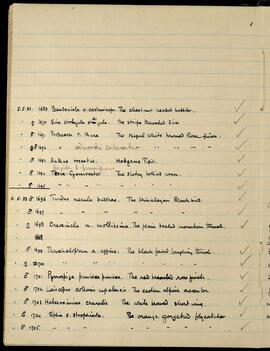
Lists bird specimens numbered 1689–1705 with sexes and common names for 5–6 May 1933. Species noted include chestnut-headed babbler, stripe-throated siva, Nepal white-browed rose finch, Hodgson's pipit, Himalayan blackbird, mountain thrush, laughing thrush, rose finch, accentor, short-wing, and flycatcher.

CONTENT:
5.5.33. 1689 Pseudominla c. castaneiceps. The chestnut headed babbler.
" ♀ 1690 Siva strigula strigula. The stripe throated Siva
" ♂ 1691 Propasser t. thura The Nepal white browed Rose finch.
" ♂ 1692 " edwardsii saturatus. " " " " "
" ♂ 1693 Anthus roseatus. Hodgson's Pipit.
" ♂ 1694 Horeites b. brunnifrons Tesia cyaniventer The slaty bellied wren.
" ♂ 1695 " " " " " " "


6.5.33 ♂ 1696 Turdus merula buddhae. The Himalayan Blackbird.
" ♂ 1697 " " " " " " "
" ♀ 1698 Oreocincla m. mollissima. The plain backed mountain thrush.
" ♂ 1699 Trochalopteron a. affine. The black faced laughing thrush.
" ♀ 1700 " " " " " " "
" ♂ 1701 Pyrrhospiza punicea punicea. The red breasted rose finch.
" ♂ 1702 Laiscopus collaris nepalensis. The eastern alpine accentor.
" ♂ 1703 Heteroxenicus cruralis The white browed short wing.
" ♂ 1704 Siphia s. strophiata. The orange gorgeted flycatcher
" ♂ 1705. " " " " " " "

LSH/1/1/1/1/194 · Part · 1933-09-14
Part of The Ludlow & Sherriff Collection

SUMMARY:
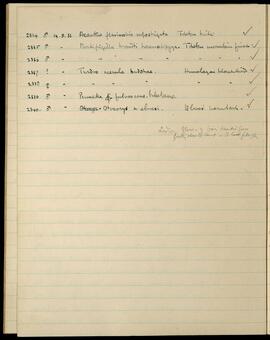
Entries 2334–2340 record bird specimens including Tibetan twite, Tibetan mountain finch, Himalayan blackbird, Prunella fulvescens tibetana, and Elwes' hornlark. Ludlow notes flocks of bar headed geese feeding close to camp on the S. bank of lake.

CONTENT:
2334 ♂ 14.9.33 Acanthis flavirostris rufostrigata Tibetan twite ✓
2335 ♂ " Montifringilla brandti haematopygia Tibetan mountain finch ✓
2336 ♂ " " " ✓
2337 ? " Turdus merula buddhae Himalayan blackbird ✓
2338 ♀ " " " ✓
2339 ♂ " Prunella fulvescens tibetana ✓
2340 ♂ " Otocorys alpestris elwesi Elwes' hornlark ✓

Ludlow. Flocks of bar headed geese feeding close to camp - S. bank of lake

LSH/1/1/2/1/42 · Part · 1933-07-08
Part of The Ludlow & Sherriff Collection

SUMMARY:
The party leaves Sakden, crosses the Se La Range via the Nyang Sang La, endures leeches at Muktur, then crosses the Tawang Chu by an iron suspension bridge and ascends to Tawang, which they recall unfavorably. They proceed via Shao to Tsona, noting rich alpine flora and exceptionally large numbers of Turdus merula buddhae between Bum La and the Tse La in the Mago district.

CONTENT:
Ibis 15.
We left Sakden on 11 July, crossed the Se La Range by the Nyang Sang La, and descended through silver birch, fir, and rhododendron forest to MUKTUR where we were almost eaten alive by leeches. The following day (July 12) we crossed the Tawang Chu by a striking iron suspension bridge, and ascended to the monastic town of Tawang (July 12), the only place in either Tibet or Bhutan of which we do not retain pleasant memories.

From Tawang to Tsona (15 July) via Shao (14 July). The passes between Tawang and Tsona held a rich flora, and at Shao, the intermediate stage, we passed through acres of Primulas and saw larger numbers of Turdus m. buddhae than I ever remember having seen before.

Ibis 273 Turdus merula buddhae. We saw this Blackbird in large numbers between 13,500 and 15,000 ft at various stages between the Bum La, north of Tawang, and the Tse La in the Mago district etc. etc. Ibis 274

LSH/1/1/4/1/68 · Part · 1933-07-23
Part of The Ludlow & Sherriff Collection

SUMMARY:
Notes describe a blackbird nesting with three young, its abundance in spring and summer especially in drier passes south of the main range, song similar to the British blackbird, nesting in rhododendrons near the alpine fringe, and flocking in autumn. It is noted as common in Sikkim and inhabiting 11,000–13,000 ft.

CONTENT:
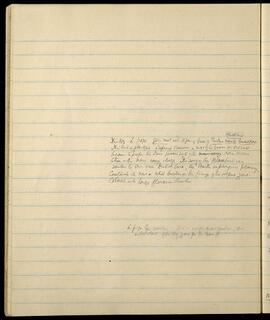
Blackbird
Ibis 1909, L. p. 170. One nest with 3 young birds of Turdus merula buddhae.
This bird is plentiful in spring and summer in most of the passes we crossed
but seems to prefer the drier passes south of the main range rather than
the main range itself. The song of the Blackbird is very
similar to our own British bird, the mellow soft notes so pleasing.
Constructs its nest in rhododendron bushes on the fringe of the alpine zone.
Collects into large flocks in Autumn.

L. p. 170. Gen. Walton - It is a common bird in Sikkim, an
inhabitant of the dry zone from 11,000–13,000 ft.