
Showing 2 results

Archivistische beschrijving
2 results with digital objects Show results with digital objects
LSH/1/1/6/1/59 · Part · 1936-06-26
Part of The Ludlow & Sherriff Collection

SUMMARY:
Entries describe camps and travel around the Langong Chu Valley near Langong with rainy weather, extensive botanical observations (including Berberis, Meconopsis, and several Primula), and bird sightings such as snowcock eggs and blood pheasant. Notes mention an attempt toward the Lo La pass, information that Tsari Sama (Tsari SARPA) will not open until August, and companions Tsongpen and Chulia (the latter unwell).

CONTENT:
29

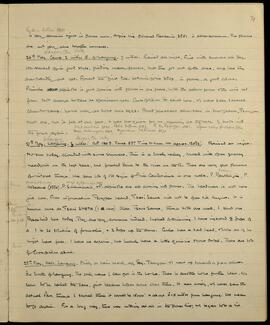
Berberis ludlowii 3851 is very common just in flower now. A fine big-flowered Berberis, 3851 is also common. The flowers are not yet close together however.

Langong Chu Valley
26th May. Camp 2 miles E. of Langong. 7 miles. Rained all night. Fine with showers all day. We started off in good style, finding many flowers, but then got out of the area, and here they are hardly out yet. Found the first Meconopsis betonicifolia 3869, in flower, a good colour. Primula alpicola is just coming into flower in one place, with the yellow form, otherwise red form. Not enough to take as specimens yet. Cremanthodium do exist here; I have seen several close to camp. Saw many snowcock eggs. Blood pheasant also seen in two places. Tsongpen shot one, but it fell at our feet and was too quick for us, running at the rate of knots into the forest again.
Fritillaria cirrhosa 3865, Pieris diffusa 3863, Rhododendron anthopogon 3861, Lysimachia prolifera 3860
Meconopsis betonicifolia 3859, Myricaria dahurica 3870

To Langong, Langong Chu Valley
27th May. Langong. 3 miles. B.P. 190.8. Temp. 58°. Time 11.00 am. Ht approx. 12083'. Rained at night. No sun today, clouded with some showers. This is a lovely valley, broad, with open grassy meadows on the left bank, but forested down to the river on the right. There are very few flowers of interest though. We saw lots of old signs of Primula cawdoriana in one nala. Primula pantlingii, P. hopeana (3880), P. sikkimensis, and P. alpicola are all coming into flower. The headman is not here just now. From information Tsongpen heard, Tsari Sama will not be open till August. It is known more as Tsari SARPA (= new) than Tsari Sama, though both are used. I shot one blackbird here today. They are very common indeed. Instead of skinning, I have injected 8 drops of a 1 to 20 solution of formalin, and 2 drops up the anus. Chulia has a bad head, looks as if he might have fever. I have no aspirin, but luckily have a little quinine and some Ortal. There are lots of Cremanthodium about.

28th May. Halt. Langong. Misty and rain nearly all day. Tsongpen T. went up towards a pass almost due South of Langong. The only name I can get is the Lo La. There is another Lo La further West. All seem to be called the same, just because Lopas come over them. It was misty; I never saw the actual Pass, though I should think it would be 15,000' and about 5-6 miles from Langong. We mean to go again. For a long way, there was nothing at all in the flower line; it began to be a bit...
LSH/1/1/6/1/155 · Part · 1938-10-22
Part of The Ludlow & Sherriff Collection

SUMMARY:
At Migyitun the diarist reports rain and snow, finds a note from Ludlow sent from Chitsam about transport from Tume, collects limited seeds, and pays off Langong coolies. The next day, despite heavy snow, the diarist and Tsangpen search south for primulas, securing some seed and purchasing a sheep, with yak transport promised. On the 25th they march 15 miles to Chikchar, obtaining a letter from Ludlow at Podzo Sumdo en route.

CONTENT:
79

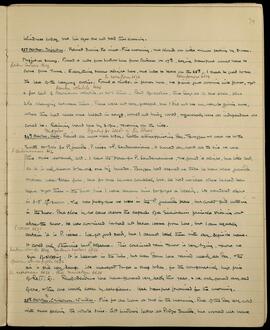
blindness today, but his eyes are not bad this evening.

23rd October. Migyitun. Rained during the night. Fine morning, but clouds on hills and snow falling by 8.00 am.

Migyitun sunny. Found a note from Ludlow here from Chitsam on 17th, saying transport would have to come from Tume [Berberis ludlowii 6623]. Everything seems alright here, and we hope to leave on the 25th. I shall be glad to see the last of the Langong coolies. Found a rhodo. [R. neriiflorum 6626] in flower here, and a Pieris [Pieris formosa 6627] just coming into flower, and got a few seed of Aconitum volubile [Aconitum volubile 6628], or so I think. Paid off coolies, three days at 12 sho each, plus 3 Rs. changing between them. They were not very grateful, but I did not see any point in giving more, when they had never once helped in camp, would not bring wood, and generally were as independent as could be. Raining hard here by 3.00 pm, snowing on the hills. [Migyitun: Hunting for seeds in the snow.]

24th October. Halt. Rained all night and all today. Rather a disappointing day. Tsangpen and I went up to the south to look for P. jucunda, P. ioessa and P. sandemaniana [P. sandemaniana 6630]. It snowed very hard all the time we were there and was extremely cold. I knew the place for P. sandemaniana, and we found it alright, but little seed, as it is only known to be one big breeder. Tsangpen had assured me that he knew where jucunda and ioessa were taken from, but for once he was completely lost. He had no idea where he had been before and got them—the first time I have known him to forget a locality. We wandered about in 6-8" of snow, and he was pretty sure we were in the P. jucunda place, but could find nothing in the snow. But close by we came across the capsules of a Sikkimensis primula sticking out above the snow. He was convinced he had not taken ioessa from here, but I am equally certain it is P. ioessa [P. ioessa 6631]. We got good seed, but I cannot label them with any definite name. It could only otherwise be P. hopeana [Berberis sheriffii 6634, Berberis hookeri 6636]. This continued rain and snow is very trying, and shows no sign of stopping. It is heaviest in the hills, but even down here rained nearly all day, and the air is still very damp [Quercus semecarpifolia 6632]. We managed to get a sheep today, for the comparatively huge price of Rs. (T) 5/-. Rhododendrons here have flowered very badly this year, and we only found any seed of one, and they are mostly eaten by caterpillars [Rh. microneres 6633, Rhod. neriiflorum 6638]. Yak transport promised for the morning.

25th October. Chikchar. 15 miles. Fine for an hour or two in the morning. Rest of the day very cold with snow falling the whole time. Got Ludlow's letter at Podzo Sumdo, but would not have