Showing 19 results

People & Organisations
Benl, Gerhard
Person · 1910-2001

German systematic botanist and teacher. Benl was born in Nuremburg and graduated from the University of Munich. He worked as a schoolteacher in Munich from 1934-1973, meanwhile continuing his botanical studies, which focussed on the genus Ptilotus (Amaranthaceae) and ferns of tropical West Africa. He was associated with the state herbarium in Munich from 1946.

Cannon, John Francis Michael
Person · 22 April 1930 - 31 March 2008

Keeper of Botany at Natural History Museum, London from 1977-1990 (retired).

After military service and study at Newcastle University, Cannon joined the Natural History Museum in 1952 as a Scientific Officer in the General Herbarium. The range of families in his section included the Umbelliferae (Parsley Family), of which he made a special study, particularly of the African species. One of his first tasks was to supervise the creation by Kim Allen of the old British Natural History Gallery. John Cannon was made Deputy Keeper under Bob Ross in 1972, and became Keeper of Botany on Bob’s retirement in1977. When he himself retired in 1990, he left the Museum and gave up botanical research. However, along with his wife Margaret, he wrote a book on Plant Dyes, published by the Museum.

President of Botanical Society of the British Isles (1983-1985)

Chandra, Subhash
Person · 1943-

Author of "The Ferns of India: Enumeration, Synonyms and Distribution" (2000)

(2026) Manging Director of National Botanical Research Institute, Pteridology Department (Lucknow, India)

Forrest, George
Q204566| F32388 | VIAF ID: 64335134 (Personal) | ISNI: 0000 0000 4457 4445 | Q204566 · Person · 1873-1932

Born in Falkirk in 1873, George Forrest became one of Scotland's most prolific plant collectors, conducting seven expeditions in Yunnan province, S.W. China between 1904 and his death there in 1932.

Person · 1948-

Christopher is a very well-known expert on the ferns of the Indian subcontinent. He has written widely on the taxonomic, cytological and molecular-cladonomic studies of the Indian pteridophytes and recently published the three-volume An Annotated Checklist of Indian Pteridophytes (2021). He has worked closely with other Indian pteridologists and more widely internationally. He has always been a ready source of advice on the identification of ferns, and he is an Honorary Member of the British Pteridological Society and the Honorary Patron of the Exotic Fern Group. Born in South Wales, he currently lives between Portugal and the UK, having moved from Nepal.

Gibby, Professor Mary
Person · 1949-2024

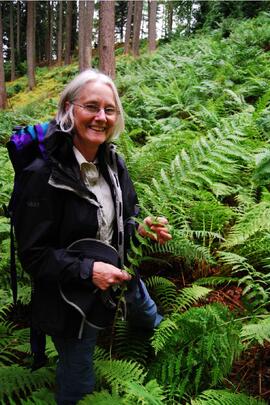
Mary Gibby was a remarkable person and a leading botanist of her generation. During her long and distinguished career, she focused on ferns, the genus Pelargonium, plant conservation, and supporting the next generation of botanical researchers. Equally at home in the laboratory with her microscope or in the hills of Scotland or mountains of Yunnan, Mary was also a sound strategic thinker and a talented manager of scientists. She was a former president of the British Pteridological Society and, until her death, editor of its international research journal, the Fern Gazette. For her many achievements Mary was elected Fellow of the Royal Society of Edinburgh in 2004 and was appointed an Officer of the Most Excellent Order of the British Empire (OBE) in 2010. Born on 27 February 1949, Mary died on 17 July 2024 during fieldwork in the Italian Alps with her husband, Professor Janis Antonovics, FRS.

Mary read botany at the University of Leeds under Professors Irene Manton and John Lovis, securing first-class honours in 1971. Under the supervision of Stanley Walker at the University of Liverpool, she studied for a Ph.D. on biosystematics and cytogenetics in the fern genus Dryopteris.

Mary made full use of the wide network of pteridologists of the Leeds and Liverpool schools, and of botanical garden collections and herbaria, and was able to hybridise diploid and tetraploid species to observe chromosome behaviour at meiosis. Knowing the origin of her artificially created hybrids, Mary understood that failure of chromosome pairing in triploids indicated that the diploid and tetraploid taxa were unrelated. Pairing in the triploid hybrid would confirm one of the ancestors of the tetraploid. The cytogenetic techniques involved had been developed and perfected by Irene Manton and her school in the 1940s, 50s and 60s, and represented state-of-the-art experimental taxonomy and biosystematics of the time. Given the difficulty of obtaining nuclear gene sequence data in these highly polyploid species, Mary’s results remain important today in the classification and identification of Dryopteris species.

As an undergraduate Mary spent a summer internship at the Natural History Museum, London (NHM), and in 1975, during the completion of her Ph.D., joined the staff of its botany department. At that time the NHM was still predominantly populated by male scientists (often without Ph.D.s) and focused on descriptive taxonomy and morphology.

Once at the NHM, and following her Leeds and Liverpool training, she chose to do much of her research at the Chelsea Physic Garden where, as a cytologist, she could be among a living collection of her ferns and other interesting plants. Her laboratory there gave the Physic Garden an active role in research at a time when it was not regularly open to the public, and Mary undoubtedly influenced the curatorial thinking and the development of its collections. Her work on Dryopteris of the northern hemisphere continued into the late eighties. At the same time, while she was embedded in the Chelsea Physic Garden community, her research interests diversified, and she started to work on the cytology of the flowering plant genus Pelargonium.

Inspired by attending a conference in the United States in 1991, Mary became interested in the application of newly emerging molecular methods to biosystematic, taxonomic and phylogeographical questions. Over subsequent years, her work focused on three groups: the genus Pelargonium, the filmy fern Trichomanes speciosum, and European/Macaronesian Asplenium.

In all three groups, her teams combined fieldwork, morphology, cytology and molecular methods, including enzyme electrophoresis and chloroplast DNA (cpDNA) sequencing.

At the NHM Mary’s fern team concentrated on two programmes: the genus Asplenium and the rare Trichomanes speciosum. The first phylogeny of Asplenium, the most speciose fern genus, was published in 2004. Under Mary’s leadership, the team became one the largest research groups on ferns worldwide

In addition to her prolific and diverse scientific career, Mary was also a distinguished scientific leader. Following her role as Associate Keeper of the NHM Botany Department, which started in 1997, she was appointed Director of Science at the Royal Botanic Garden Edinburgh (RBGE) in 2000.

The experience gained at the NHM and Chelsea Physic Garden stood Mary in good stead as she began the transformation of science at RBGE, careful at all times to foster close integration between scientists and horticulturists. Mary also strengthened institutional relationships with the University of Edinburgh, the Scottish Crop Research Institute (now part of the James Hutton Institute) and Scottish Natural Heritage (SNH, now NatureScot). As a member of the Action Plan and Science Group of SNH, she was much involved in developing early versions of Scotland’s Biodiversity Strategy and hosting the Scottish Biodiversity Forum conference, which on several occasions was held at RBGE.

Mary led the development of a programme to conserve Scottish rare plants, which brought threatened species into the public eye and began the restoration of several species into the wild. As Director of Science at RBGE Mary travelled widely, making official visits to strengthen collaborations in China, Belize, Bhutan, Indonesia, Singapore and Soqotra, among other places.

Mary was central to the restoration project for the Victorian fernery at Benmore Botanic Garden, part of RBGE, in western Scotland.

After retiring from RBGE in 2012, Mary continued to work as a research associate at the NHM London and RBGE in Edinburgh, active in editing, helping to curate collections, teaching, and helping students and colleagues.

Mary was a considerate and strong leader, an exemplary Ph.D. supervisor, and a great mentor. With an astute understanding of, and insights into, character, she knew her science and was respected as a member of the scientific community. She established large research teams and attracted substantial amounts of external funding.Outwith academia, Mary loved the outdoors and enjoyed regular collecting field trips in the UK, Europe and Africa. After the birth of her daughter, Jessica Barrett, these became family trips, Jess accompanying her mother from the age of six months on the island of Madeira and later in Africa. After retirement Mary continued fieldwork with her husband, fellow botanist and geneticist Janis Antonovics, on his annual fieldwork in the mountains in Italy.

In addition to nature and wild places, another of Mary’s major passions was for canals and narrowboats. Much time was spent aboard her beloved Swan, a working narrowboat built in 1933 that she owned and faithfully restored. She was a founding member of the Battlebridge Basin boat community at King’s Cross, London, and served as a Director of the London Narrow Boat Company Ltd from 2014 to 2020

Holttum, Richard Eric
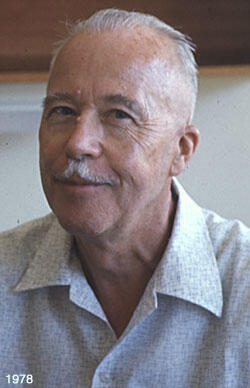
Person · 20 July 1895 - 18 Sept 1990

English botanist and writer. Specialised in the growth and cultivation of orchids. Later in his life he studied ferns.

Studied at University of Cambridge, studies were interrupted by WWI. He volunteered in France with the Friends' Ambulance Service. Returned to his studies at Cambridge in 1920 received a degree in Natural Sciences Tripos.

From 1920-1922 he worked at Cambridge University as a junior demonstrator. In 1922, he was appointed by the Colonial Office as assistant director at the Singapore Botanical Gardens. Promoted to Director in 1925, a role he would keep for the next 20 years.

During WWII, Japan occupied Singapore. Holttum was placed under house arrest while he continued to work at the Garden but he was relieved of his administrative duties. During this time he was able to concentrate on research. He wrote a number of drafts for books that would be published after the war. These include: "Gardening in the Lowlands of Malay" and the first two volumes of "A Revised Flora of Malaya."

Founding member and president of the Singapore Gardening Society. Was also a founding member of the Malayan Orchid Society.

In 1949, he left the Botanic Garden and became the first Chair of Botany at the University of Malaya until his retirement in 1954.

After retirement Holttum returned to England and began spending time at Royal Botanic Gardens, Kew. Here he continued his research and contributed to the Pteridophyta in the Flora Malesiana project.

Holttum penned about 500 scientific texts, largely on ferns and orchids, but also dealing with bamboos, gingers and the Marantaceae family. Many plant taxa are named in his honour, including the fern genus Holttumiella Copel.

Jermy, Anthony Clive
Person · 1932-2014

From BSBI Obituary:

He got his degree at University College, London, and then moved to Leicester to do a PhD on Carex section Acutae (now Phacocystis) under T.G. Tutin. This was interrupted by National Service, which he spent as a teacher in Kent, and then in 1958, instead of returning to Leicester, he got the job of Head of the Fern Section at the British Museum (Natural History), remaining there for the rest of his career, respected and liked by his staff for his sympathetic management. In 1990 the re-organisation at the Museum resulted in Clive becoming Head of Collections in the Botany Department until his retirement in 1992. He was the initiator and main organiser of the Museum’s Wildlife Garden in the grounds

Lovis, Professor John Donald
Person · 24 April 1930 - 5 September 2017

Studied botany at the Queen Mary College at the University of London. After graduation, moved to University of Leeds, completed a PhD on Apslenium trichomanes with Prof. Irene Manton. Received a DSIR Postgraduate Fellowship to study in New Zealand for a year where he collected 75% of the native fern speices. He completed his PhD in 1958 and was appointed to a lectureship at the University of Leeds.

Over the next 20 years, Lovis would continue to study the complexities of evolution through hybridisation of Asplenium. He was the first to artificially reconstruct a naturally occurring polyploid fern, and later was able to synthesise a new and artificial alloploid species unknown in the wild. In 1977, published 'Evolutionary patterns and processes in ferns' in Advances in Botanical Research, which summarised all of his cytology work in ferns to date. 1978, he was awarded a degree of Doctor of Science from the University of London for his contributions to the understanding of fern evolution.

1977, Lovis became the Professor and Chair of Botany at University of Canterbury (New Zealand). There he took an interest in fossil botany. He led regular student trips to the Cass field station and other parts of the South Island and collected intensively from the plant groups he was researching or just interested in.

Lovis was a man of many talents and interests. In his younger days quite the athlete in a variety of sports: bowling, cricket, and hockey. Loved learning about wine and ran a wine appreciation courses at Canterbury University's Department of Continuing Education. He loved photography, rugby, classical music, cheese, and Ceylon tea.

After his death in 2017, his daughter donated his whole collection to Te Papa (New Zealand).

Manton, Professor Irene
Person · 17 April 1904 - 13 May 1988

Professor Irene Manton FRS, P-PLS, FRMS, BA, PhD, ScD. Hon. DSc.

Attended Girton College, Cambridge in 1923, which she left as it was unwelcoming to women. Moved on to study at Gustaf Otto Rosenberg in Stockholm. Became a lecturer at teh University of Manchester in 1928. Received her PhD in 1930, with her thesis on Cruciferae.

Manton spent most of her career at the University of Leeds, where she was a Professor of Botany from 1946 until she became Professor Emeritus in 1969. Her work focused on ferns and algae, specifically hybridisation, polyploidy, and apomixis. She also examined chromosomes and evolution.

Irene wrote more that 170 scientific papers, one book (Problems of cytology and evolution in pteridophyta, 1950) and many general articles.

She taught Professor Mary Gibby as an undergraduate at the University of Leeds.

As a woman she set several records including being the first female professor and first female head of a department at Leeds University. She was the first (and so far only) woman president of The Linnean Society of London (1973-1976). Also she and her sister Sidnie are the only sisters as of 2004 to be elected Fellows of the Royal Society.

In 1990, The Linnean Society established the Irene Manton Prize. It was created for best doctoral thesis in botany.


From the Linnean Society:
"Irene was a ‘woman of her time’. Her life (1904–1988) spanned the better part of the
twentieth century. This period was momentous for many reasons. Firstly, there was a major
change in the role of women within the professions in general, and science in particular.
Secondly, with the advent of electron microscopy, a completely new subject was born and
Irene was present at its birth. Thirdly, science was in the process of changing from being a
discipline pursued by individuals to becoming an industry. Irene was one of a select group
of women pioneers who made their way in what had hitherto been a man’s world.

In compiling this biography, I have not changed my opinion that Irene Manton was an
exceptional woman but I have been surprised at the breadth of her intellect and the depth of
her humanity. No period of her life is without interest and I hope that the story that follows
will give insights into her as a person, into the work that she carried out, and into how and
why she managed to make the transition from being a ‘classical’ fern cytologist to being a
world leader in a new and technically-sophisticated branch of biology."