
Área de identidad
Tipo de entidad
Forma autorizada del nombre
Forma(s) paralela(s) de nombre
Forma(s) normalizada del nombre, de acuerdo a otras reglas
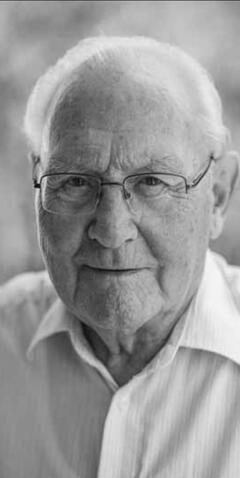
Kurt Rasbach
Dr. Kurt Rasbach
Otra(s) forma(s) de nombre
Identificadores para instituciones
Área de descripción
Fechas de existencia
Historia
German botanist and pteridologist, husband of Helga Rasbach.
Longtime collaborator with his wife, Helga Rasbach. Members of the Baden State Association for Natural History and Nature Conservation for over 60 years.
[Translated from German via Google from "In memoriam Helga und Kurt Rasbach"]
Dr. Kurt Rasbach came from the Westerwald region. He grew up in modest circumstances and under difficult times. He often recounted how he had to walk long distances to school, which sharpened his eye for natural phenomena. Returning from the Second World War with a gunshot wound, he studied medicine in Heidelberg, became a physician, and – perhaps even more importantly – a professional nature photographer.
In Glottertal in 1960, the State Insurance Institution took over the local spa and sanatorium, including the associated forest and open spaces. Under the direction of Dr. Rasbach,
the spa clinic was established for the treatment of physical overexertion, neurovegetative disorders, and states of exhaustion or burnout. When the idyllic clinic was chosen as the filming location for the TV series "Die Schwarzwaldklinik" (The Black Forest Clinic) in 1986, Dr. Rasbach took early retirement to avoid the hustle and bustle of filming. Throughout his medical career, he was actively involved in nature and landscape photographer.
Supported, among other things, by his early membership in the Baden State Association for Natural History and Nature Conservation, the Rasbachs maintained diverse contacts within the natural science community in Tübingen, Freiburg, and Karlsruhe. Especially in geobotanical work, they supported projects by young scientists at the diploma thesis level, many of whom later became professors. Here, too, the Rasbach couple proved themselves to be a perfect team: Helga Rasbach meticulously prepared the thematic requirements for photographic documentation of the relevant questions and results. Over the weekend, they both worked through the assigned tasks – and on Sunday night, the results were produced together in their own darkroom.
As a nature photographer, Dr. Rasbach possessed the gift of combining expressive plant portraits with their natural habitat. A guiding principle of his approach was: "Photographing for the eye." By this, he meant the challenging task of capturing the complex process of sensory perception in a single, static image. His best vegetation photographs show both the identifying characteristics of the individual plant and its habitat embedded in the landscape, thus embodying the process from detailed view to overview in a single shot. He always found his first and most important editor in his wife. This close collaboration between specialist author, expert guidance, and photographic realization at the highest technical and aesthetic level continues to set standards. As a result, both became sought-after volunteers for key book projects in Germany and internationally. The series of publications on the most important nature reserves of the former LfU Karlsruhe would be virtually inconceivable without the Rasbach couple. For the first editions of the volume "Kaiserstuhl," they were both responsible for the editorial work. The "Feldberg" book from the same series was also edited by them and received all the photographic material from them.
Both played a prominent role in the major species conservation works of the State Institute.
The eight-volume vascular plant flora, the moss flora, and the lichen flora contain many hundreds of illustrations by Helga and Kurt Rasbach. For specific tasks involving mosses and lichens, for illustrating a book by Gerold Hügin on lady's mantle species, and especially for Arno Hölzer's work on sphagnum mosses, Kurt Rasbach explored the photographic edges of macro photography. The early, large-format work "The Ferns of Central Europe," with the young Otti Wilmanns as the expert author, remains a classic of plant photography. The aesthetic of the black-and-white illustrations shown here is reminiscent of Karl Blossfeldt's seminal work.
The last major project they jointly undertook was the design of the 4th edition of the
Kaiserstuhl book – published in 2009. Helga and Kurt Rasbach did not complete the transition from
analog to digital photography, which was almost finished at that time, although they had a
lively interest and continually critically examined the new possibilities.
For Helga and Kurt Rasbach, illustrations were not merely an accessory or illustration, but rather,
in the field of natural history, a first-rate source that describes more about the nature and structure of an organism than would be possible in text form. They both left behind many
plans for future publications and an image archive of approximately 400,000 black-and-white negatives and color slides, which is currently being prepared for further use.
Lugares
Germany
Estatuto jurídico
Funciones, ocupaciones y actividades
Mandatos/fuentes de autoridad
Estructura/genealogía interna
Contexto general
Área de relaciones
Área de puntos de acceso
Puntos de acceso por materia
Puntos de acceso por lugar
Profesiones
Área de control
Identificador de registro de autoridad
Identificador de la institución
Reglas y/o convenciones usadas
Estado de elaboración
Nivel de detalle
Fechas de creación, revisión o eliminación
Created: April 2026, C.Kemnitz
Idioma(s)
inglés
Escritura(s)
latín
Fuentes
-
Wikispecies (2013). Kurt Rasbach. [online] Wikimedia.org. Available at: https://species.wikimedia.org/wiki/Kurt_Rasbach
-
Thomas Coch, Albert Reif (2022): In memoriam Helga und Kurt Rasbach – Mitteilungen des Badischen Landesvereins für Naturkunde und Naturschutz e.V. Freiburg i. Br. – NF_25: 226 - 230. https://www.zobodat.at/pdf/Mitt-Bad-Landesver-Natkde-Natschutz-Freiburg_NF_25_0226-0230.pdf [German]
Image: Thomas Coch, Albert Reif (2022): In memoriam Helga und Kurt Rasbach – Mitteilungen des Badischen Landesvereins für Naturkunde und Naturschutz e.V. Freiburg i. Br. – NF_25: 226 - 230. https://www.zobodat.at/pdf/Mitt-Bad-Landesver-Natkde-Natschutz-Freiburg_NF_25_0226-0230.pdf [German]