SUMMARY:
The diarist camps west of Tsanang La amid continuous heavy rain, blocked by an unfordable river despite promising ground nearby. On 17 July, with Tsongpen and the coolies, they fell a fir to make a bridge, contend with sick porters and poor arrangements by Kusho (threatened with being sent back to Gyantse), note route timings between passes, and record several plant collections.
CONTENT:
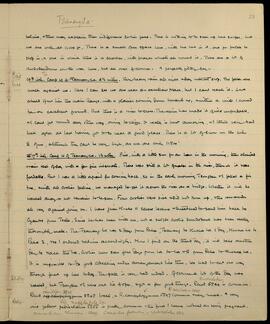
Tsanang La
believe, others may explain their indifference to his face. There is nothing to be seen up here so far, but we are only at 11,000 ft. There is a small open space here, with two huts in it, one for people to stop in and one in which there is a chorten, with prayer wheels all round it. There are a lot of rhododendrons on the way here, but all over of course. A perfectly filthy day—
16th July. Camp W of Tsanang La. 4 1/2 miles. Very heavy rain all night and day without stop. The fates are much against us. Here I can see we are near an excellent place, but I can't reach it. Just ahead of us lies the main range, with a glacier coming down towards us, and within a mile I could be on excellent ground. But there is a river to cross. The rain has made it quite unfordable, and I can't get round any other way, owing to cliffs. It really is most annoying, and I think very bad luck after at last having got so near a good place. There is a lot of snow on the hills to the E of us, although they can't be very high, as we are only 11,800'.
17th July. Camp W of Tsanang La. 1 1/2 miles. Fine, with a little sun for an hour in the morning, then clouded and rain rest of day with a few fine intervals. There was still a lot of water in the river, though it was fordable. But I was a little afraid for coming back, so in the early morning Tsongpen and I felled a fir tree, and with all coolies pulling, we managed to get it across the river as a bridge. Whether it will be washed away or not remains to be seen. Four coolies were sick and did not turn up, the remainder all very against going on. I have given Kusho a severe lecture and threatened to send him back to Gyantse from Tsola. Since he has been with me, not a single coolie bundobast has been really thoroughly made. The Tsanang La was 2 days from Paha, Tsanang to Kucha La 1 day, Kucha La to Paha 2, so I ordered rations accordingly. Now I find on the third day, it will take another day to reach the La. Coolies now say four days from La to La and 5 from Paha to Kucha La. It is impossible to do good collecting under arrangements like this. We had to cut our way through forest up here today. The path is very bad indeed. Of course a lot of the day was wasted, but Tsongpen and I were out till 4.0 pm, and got a few good things. Rhod 5844 (trichocladum) is common. Rhod aff charitope 5848 local, and R. campylogynum 5847 (R. calostrotum 3855) common very small. A very nice yellow Pedicularis 5858 (Ped. megalochila La) is pretty common—the first I have noticed as being fragrant. Cremanthodium thomsonii 5809. Cremanthod. palmatum v. rhodocephalum 5852.