SUMMARY:
After a snowfall delay, the party crossed the Lo La on April 24 and descended the steep south side into the Rhododendron–Abies forest. Along the Chudi Chu they observed numerous Rhododendron and Primula species, including the new Primula P. chionogenes and another unnamed Primula on an inaccessible cliff.
CONTENT:
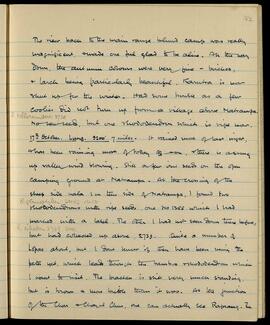
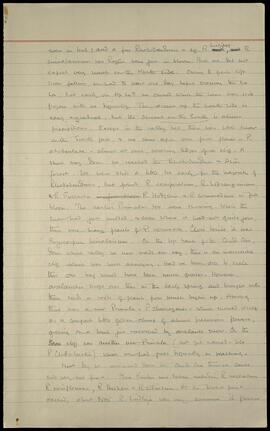
were in bud, and a few Rhododendrons - e.g. R. hirtipes, and R. cinnabarinum var. roylei were just in bloom. But we did not expect very much on the North side. Owing to fresh soft snow falling, we had to wait one day before crossing the Lo La, but early on April 24th we crossed while the snow was still frozen with no difficulty. The ascent up the North side is easy and gradual, but the descent on the South is almost precipitous. Except in the valley bed, there was little snow on the South face, and we came upon our first flower - P. atrodentata - almost at once, covering ledges of a cliff. A short way down we reached the Rhododendron - Abies forest. We were still a little too early for the majority of Rhododendrons, but found R. exasperatum, R. lopsangianum, R. forrestii, R. hodgsonii, and R. commodum in full bloom. The earlier Primulas too were showing. Where the snow had just melted, and even where it had not quite gone, there were many plants of P. vernicosa. Close beside it was Bryocarpum himalaicum. On the left bank of the Chudi Chu, down which valley we now made our way, there is an inaccessible cliff which was most annoying. Had we been able to scale this our bag would have been much greater. However, avalanches swept over this in the early spring and brought with them seeds or roots of plants from much higher up. Among these was a new Primula - P. chionogenes - which showed itself as a compact little golden clump of almost precocious flowers, growing on a bank just uncovered by avalanche snow. On the cliff was another new Primula (not yet named - like P. clutterbuckii) which we had great difficulty in reaching.
Next day we continued down the Chudi Chu through dense and very wet forest. More Rhodos were taken, including R. uvariifolium, R. neriiflorum, R. hookeri and R. ciliatum. At the lowest point reached, about 8500', R. lindleyi was very common in flower.