Showing 16 results

Archival description
16 results with digital objects Show results with digital objects
LSH/1/1/5/1/109 · Part · 1937-06-07
Part of The Ludlow & Sherriff Collection

SUMMARY:
Observations include mass flowering of Primula whitei around 14,000 ft and a pale yellow Sikkimensis-type primula likely from hybridisation. On 10 June the party halted, marked several Primula populations, recorded Primula vernicosa as a notable westward occurrence, kept busy drying specimens, and planned to return to Phobjikha via the Pele La Range towards Chendebi while collecting a few Rhododendron variants.

CONTENT:
P. flagellaris 3231.
Lloydia serotina 3232 Cypripedium tibeticum 3233

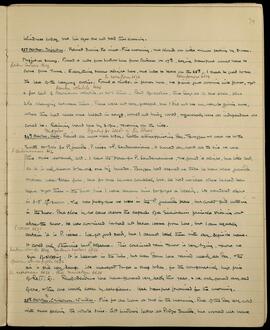
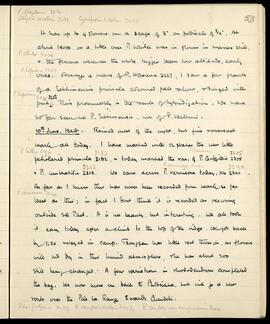
It has up to 4 flowers on a scape of 3" on pedicels of 3/4". At about 14000 or a little over P. whitei was in flower in masses still, & the flowers were on the whole bigger than low altitude, early ones. Among a mass of P. Hopeana 3227, I saw a few plants of a Sikkimensis primula coloured pale yellow, tinged with pink 3228. This presumably is the result of hybridisation. We have so far seen no P. sikkimensis, nor of P. Waltoni.

10th June. Halt. - Rained most of the night, but fine & overcast nearly all today. I have marked with 12 stakes the new little petiolaris primula 3192, & today marked the var. of P. Griffithii 3205 & P. umbratilis 3213. We came across P. vernicosa today, No 3240.

As far as I know this has never been recorded from nearly so far west as this; in fact I don't think it is recorded as occurring outside SE Tibet. It is no beauty, but interesting. We all took it easy today after a climb to the top of the ridge. We got back by 11.30 & stayed in camp. Tsongpen has little rest though, as flowers will not dry in this humid atmosphere, & he has about 200 still being changed. A few variations in Rhododendron completed the bag. We now move on back to Phobjikha, but will go a new route over the Pele La Range towards Chendebi.

Rhod. fulgens 3239. R. campanulatum 3243, R. campan. var. aeruginosum 3244
LSH/1/1/6/1/83 · Part · 1938-06-22
Part of The Ludlow & Sherriff Collection

SUMMARY:
Travel notes record heavy rain, difficult marching, and a camp on the Gyara Phu Chu, followed by a fine day reaching Gyara (Nepar). Common Primula species were noted, Lerwa with young were observed, and there is disappointment at few notable finds, with hopes to visit passes east of Lilung; transport delays prevent moving on to Pamse.

CONTENT:
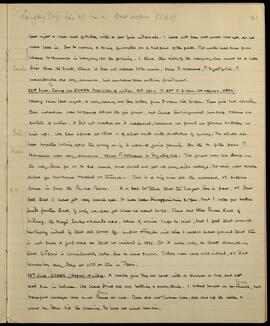
Langong Trip has not been a great success (S. 647)

Last night and rain most of today with a few fine intervals. I have not been out much here yet, as we were late in, due to meeting a string of mules on a bad part of the path. The mules had come from Lhasa to summer in Langong for the grazing. I think this side of the Langong Chu must be a little drier than the south, though it does not appear to be much. Here P. hopeana, P. dryadifolia, P. macrophylla are very common, but we have seen nothing of interest.

To
22nd June. Camp on GYARA PHU CHU. 6 miles. BP. 191.1 T. 55° T. 3.0pm. Ht approx. 11832'.
Heavy rain last night, and very heavy all day today from 8.0am till 2.0pm. Then fine but cloudy. Our intention was to camp above the fir forest, but Chulla distinguished himself and came on another 4 miles. It did not matter as it happened, because we found no flowers to delay us high up. We saw Lerwa at 15,000 - 4 adult birds with a clutch of young. The adults all kept together looking after the young as if it were a joint family. On the N. of the pass P. kansuensis was very common, and some P. hopeana and dryadifolia. The forest was too dense on the way down for us to see much, and we could not see up any side valleys. The rain was really awful for two hours and soaked us through. This is a big river at the moment, and I suppose comes in from the Pacha Peaks. It is sad to think that the longest day is past, and I don't feel that I have got very much yet. It has been disappointing so far, but I hope for better finds further East, if only we can get where we want to go. There are three Passes East of Lilung, the Magu, Shoka and Namdo Las, each of which I hope to visit, but I feel that we will be lucky indeed if that all comes off. Ludlow and Sherriff will also I expect have found that this is not such a good area as that we visited in 1936. Or it may only be that everything in East Tsari is considerably later, due to more snow. Today was very cold indeed, and I don't remember any days as cold as this in Tsari.

To
23rd June. GYARA (Nepar). 4 miles. A really fine day at last, with a shower or two, but hot real sun in between. We have dried all our bedding and everything. I hoped to get on to Pamse, but transport changes here and at Pamse as well. There are no horses here, all are up the valley and won't be down till the evening. So here we must remain.

LSH/1/1/9/1/105 · Part · 1949-07-12
Part of The Ludlow & Sherriff Collection

SUMMARY:
Diary entries describe uncertainty about coolies, plans to reach Bumthang before Betty departs Denchung, and subsequent marches from Amhlungnang over Jü La and Goktang La to Gorzam Camp above Dhur. Noted were heavy rains, a halt day, and rich alpine flora including Meconopsis species, Primula hopeana, a high-altitude iris, and the discovery of a new lily during a fine day interrupted by a storm.

CONTENT:
stuff. We are not now sure if our coolies will come tonight or not. It will be bad if we can't get off tomorrow, but we still can reach Bumthang before Betty, who leaves Denchung on tomorrow. Quite a fine day for such a soaking place as the Bhomali is.

20th July. Amhlungnang. 4 m S of Jü La. A fine day. A long march from 5.45 to 2.30, over two high passes, 14,500 + 15,500 about, and rain very heavy all day. Danong had been over the whole place ten days before, so we were not likely to find much again. Mec. bella very common and growing on open grassy slopes as well as cliffs. Mec. horridula also very common, and a fine colour, often favouring marshy very wet places, in a queer way. M. sinuata also common. P. Hopeana with a red tube, either white or yellow, in great numbers. Down here, there is an Iris, the first high altitude iris I've seen yet. I should think the area is good for a pretty thorough examination, but we will have no time for that. The passes are called the GOKTANG LA and the JÜ LA, the latter being the higher.

21st July. Halt. Stayed in camp. Very wet day.

22nd July. GORZAM Camp 4 m above Dhur. This was a very fine day altogether. It was misty and damp when we left at 6.0 am, but cleared up and we saw blue sky and sun for some hours. It was fine till 3.30 when a terrific storm of rain came on, half an hour before we reached camp. I don't know how long the march was: it was a good long way, but there were plenty of flowers, and good ones, and we did not notice how far it was. I started with a yellow iris, but the pick of the bunch came about halfway, with the finding of a new lily. How lucky this was can be guessed when one thinks that only one flower was seen, and that that happened to be almost exactly where I stopped to put flowers in the press. We would almost...

LSH/1/1/5/1/124 · Part · 1933-06-21
Part of The Ludlow & Sherriff Collection

SUMMARY:
The page distinguishes P. sikkimensis from P. Hopeana by calyx features and notes that P. Hopeana here has a pinkish to red tube, possibly approaching P. Waltoni. It also mentions chasmophila and references P. umbratilis? with number 33014.

CONTENT:
Here P. sikkimensis No , is very much mixed up with
P. Hopeana. But they are distinct, as can be seen from the calyx.
P. Hopeana here shows a pinkish tube, sometimes quite red, which
I suppose goes nearer to P. Waltoni. But I have seen no P. Hopeana
here, where the corolla is red tinted.

chasmophila
P. umbratilis? 33014 See opposite.

LSH/1/1/5/1/131 · Part · 1933-06-21
Part of The Ludlow & Sherriff Collection

SUMMARY:
Notes record Parnassius butterflies, a woodcock nest with four eggs found on 22 June, and a list of Primula species observed. The writer describes the steep peaks of Dungshinggang, clear views toward Sikkim and beyond Chomolahri, getting soaked in a noon storm, and a 25 June entry noting rain overnight, a clear morning, and later cloud.

CONTENT:
that he will not let you know when he has fever. Saw lots of Parnassius butterflies in good condition, but fancy all are common. We put up four pairs of woodcock, which I think were nesting, as the coolies found one nest with four eggs on 22nd June. We saw no eggs or young chicks.

We expected rather too much today and did not take any waterproofs, so were wet pretty well through in the heavy storm at noon, but dried before getting home. I suppose we have not really done badly with primulas. We now have 26, 11 of which are different to last year's, and seven of which I have not collected before. Two are, I hope, new.

The three peaks of Dungshinggang are very steep, the rock rotten, but I think that they should be possible to get up, though difficult. I had hoped we might try, but camp would have to be a good deal nearer than this, especially if one were to get up before the mist covered everything. The snows were again very clear, some cloud in Sikkim, but none away to the East as far west as beyond Chomolahri. The following primulas
were seen here: P. strumosa, P. glabra, P. pusilla, P. Menziesiana,
P. umbratilis, P. sapphirina, P. macrophylla, P. Roylei (over), the small
P. nivalis sp., and P. atrodentata. P. Hopeana not yet in flower.

25th June. Hall - Rain all last night, clear early morning, cloudy rest.

LSH/1/1/5/1/123 · Part · 1933-06-21
Part of The Ludlow & Sherriff Collection

SUMMARY:
The diarist reports fever and painful throat affecting both himself and Tsongpen, while Pinto has recovered. They move from Dungshuggang to a camp 2 miles beyond Wangchelah at about 12,500 ft, finding few new plants but noting abundant rhododendrons and several Primula species.

CONTENT:
Sherriff 60

Morning was perfect, even over the plains of Assam there were no clouds for a while. I have got some kind of fever, which makes me feel pretty queer every week; also a throat which feels completely raw and most painful. So I only stayed out for 3 or 4 hours this morning. We found nothing. I have thought Tsongpen was a little past work too, this evening he has just come in to say he also has fever, got it the same time as I did, but he says he thought his inability to climb was just due to staleness and nothing else. The coolies are all up and Pinto too; he is much better, and says he is quite alright. I think at any rate he has no fever left. No mail has come.

Dungshuggang
22nd June. Camp 2 miles beyond Wangchelah 5 miles. Ht. 12500' approx.
Another perfect morning, with the hills looking better than ever. But Tsongpen and I are not better than ever, and both feel pretty rotten. The fever is not very bad as they go, but our necks are very painful, and to swallow is difficult. On both sides under the lower jaw is swollen. Rhododendrons, P. sikkimensis, P. Hopeana and P. strumosa are plentiful — it is the first time we have seen sikkimensis. Otherwise there is very little that we have not already collected. But I have hopes of tomorrow's place up the

LSH/1/1/9/1/63 · Part · 1949-06-01
Part of The Ludlow & Sherriff Collection

SUMMARY:
High-altitude collecting around 14,000 ft yielded several small plants and a lake, with monal and burhel observed. The diarist notes mail delays, sends letters and parcels to H.H., Raja Dorji, and Betty during a halt, then crosses the Hubsing La to reach Kantanang in wet monsoon weather.

CONTENT:
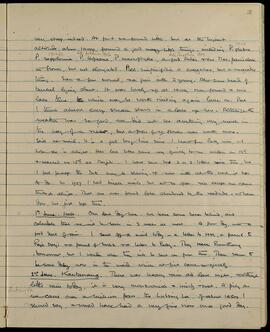
very steep indeed. At first we found little, but at the highest altitude, about 14000, found a good many little things, including P. glabra (19011), P. sapphirina (19025), P. hopeana (Lud. Sherriff 19030), P. macrophylla, a good Aster and one Mec. paniculata (Lud. Sherriff 19019) in flower, but not elongated. Plec. simplicifolia is everywhere, but a miserable thing. Saw a few monal, and a pair with 3 young. Also some heads of burhel lying about. It was lovely up at 14000, and we found a nice lake there, the which may be worth visiting again later on. But I think almost every stream starts in a lake up here. Although the weather was so good, we did not see anything very much in the way of a view, but a press of flowers was worth more.

Still no mail. It is a good long time since I heard from Betty now, and I hope she is alright. Her last letter came very quickly to me, written on 13th and reached me 15th at Menjisi. I have sent her 2 or 3 letters since then, but I feel perhaps the dak may be slowing up now with all the work it has to do. In 1937 I had bigger mails, but not so often, and all except one came through alright. That one was found later abandoned by the roadside - no harm done, but just left there.

1st June. Halt. Our last day here. We leave some boxes behind, and calculate that we will be back in 3 weeks at most. A poor day, with a good deal of rain. I sent off a mail today - a letter to H.H., a parcel to Raja Dorji and a parcel of books and a letter to Betty. They reach Bumthang tomorrow, but I wonder when they will be sent on from there. There seems to be some delay now in the mails, which at first came so quickly.

2nd June. Kantanang. There was heavy rain all last night, and although little rain today, it is very monsoonish and misty and wet. A pity as we came over a hellish pass, the Hubsing La, of about 14500 I should say, and would have had a very fine view on a good day.

LSH/1/1/6/1/155 · Part · 1938-10-22
Part of The Ludlow & Sherriff Collection

SUMMARY:
At Migyitun the diarist reports rain and snow, finds a note from Ludlow sent from Chitsam about transport from Tume, collects limited seeds, and pays off Langong coolies. The next day, despite heavy snow, the diarist and Tsangpen search south for primulas, securing some seed and purchasing a sheep, with yak transport promised. On the 25th they march 15 miles to Chikchar, obtaining a letter from Ludlow at Podzo Sumdo en route.

CONTENT:
79

blindness today, but his eyes are not bad this evening.

23rd October. Migyitun. Rained during the night. Fine morning, but clouds on hills and snow falling by 8.00 am.

Migyitun sunny. Found a note from Ludlow here from Chitsam on 17th, saying transport would have to come from Tume [Berberis ludlowii 6623]. Everything seems alright here, and we hope to leave on the 25th. I shall be glad to see the last of the Langong coolies. Found a rhodo. [R. neriiflorum 6626] in flower here, and a Pieris [Pieris formosa 6627] just coming into flower, and got a few seed of Aconitum volubile [Aconitum volubile 6628], or so I think. Paid off coolies, three days at 12 sho each, plus 3 Rs. changing between them. They were not very grateful, but I did not see any point in giving more, when they had never once helped in camp, would not bring wood, and generally were as independent as could be. Raining hard here by 3.00 pm, snowing on the hills. [Migyitun: Hunting for seeds in the snow.]

24th October. Halt. Rained all night and all today. Rather a disappointing day. Tsangpen and I went up to the south to look for P. jucunda, P. ioessa and P. sandemaniana [P. sandemaniana 6630]. It snowed very hard all the time we were there and was extremely cold. I knew the place for P. sandemaniana, and we found it alright, but little seed, as it is only known to be one big breeder. Tsangpen had assured me that he knew where jucunda and ioessa were taken from, but for once he was completely lost. He had no idea where he had been before and got them—the first time I have known him to forget a locality. We wandered about in 6-8" of snow, and he was pretty sure we were in the P. jucunda place, but could find nothing in the snow. But close by we came across the capsules of a Sikkimensis primula sticking out above the snow. He was convinced he had not taken ioessa from here, but I am equally certain it is P. ioessa [P. ioessa 6631]. We got good seed, but I cannot label them with any definite name. It could only otherwise be P. hopeana [Berberis sheriffii 6634, Berberis hookeri 6636]. This continued rain and snow is very trying, and shows no sign of stopping. It is heaviest in the hills, but even down here rained nearly all day, and the air is still very damp [Quercus semecarpifolia 6632]. We managed to get a sheep today, for the comparatively huge price of Rs. (T) 5/-. Rhododendrons here have flowered very badly this year, and we only found any seed of one, and they are mostly eaten by caterpillars [Rh. microneres 6633, Rhod. neriiflorum 6638]. Yak transport promised for the morning.

25th October. Chikchar. 15 miles. Fine for an hour or two in the morning. Rest of the day very cold with snow falling the whole time. Got Ludlow's letter at Podzo Sumdo, but would not have

LSH/1/1/9/1/147 · Part · 1933-09-01
Part of The Ludlow & Sherriff Collection

SUMMARY:
The page compares P. Hopeana and P. sikkimensis across altitudes, noting that at greater heights they are all sikkimensis. It records dense stands in a small area, flowers lacking a red tube with more white than yellow, and distinctions from P. capitata in a sunless gorge.

CONTENT:
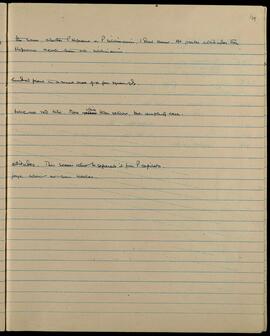
the same, whether P. Hopeana or P. sikkimensis, I don't know. At greater altitudes they
become then all sikkimensis.

hundred plants in a small area of a few square yards.

have no red tube. More white than yellow, but ample of each.

altitudes. This seems also to separate it from P. capitata.
gorge where no sun reaches.

LSH/1/1/9/1/60 · Part · 1949-06-01
Part of The Ludlow & Sherriff Collection

SUMMARY:
List of plants to collect seed from in the Pangotang area, with specimen numbers and locality notes such as cliffs opposite camp, beyond the fir zone, and near Tolegang and the first drogpa. Mentions taxa including Primula, Cypripedium, Saxifraga, Androsace, Meconopsis, Salvia, Potentilla, and others.

CONTENT:
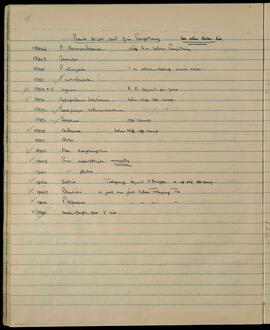
55

Plants to get seed from Pangotang See also later list.

18946 P. barnardiana. cliff 1/2 m below Pangotang
18948 Cassiope
18955 P. elongata. 1 m above camp main river
18957 P. atrodentata
X 18963-5 Legume. to E beyond fir zone
V 18970 Cypripedium tibeticum. below cliff opp. camp.
18972 Saxifraga yellow cushion below cliff opp. camp.
18973 Daphne opp. camp.
V 18974 Androsace below cliff opp camp.
18977 Aster.
V 18995 Meconopsis simplicifolia
V 19009 Primula macrophylla roots.
19011 Primula glabra
V 19021 Salvia Tolegang beyond 1st drogpa & up cliff opp camp.
X 19027 Potentilla. a good one just before Tolegang 150
19030 P. hopeana a good one just before Tolegang
V 18992 small purple pea 2" high.