Showing 11 results

Archival description
11 results with digital objects Show results with digital objects
LSH/1/1/6/1/39 · Part · 1933-05-17
Part of The Ludlow & Sherriff Collection

SUMMARY:
The party moved up the valley with coolies burdened by heavy loads and delays at Molo, noted weather changes, and observed several rhododendrons and primulas. On 22 April at a camp above Singo Samba, a hazardous bridge crossing led Ramzana to cross while Ludlow forded downstream with Tseringpen. On 23 April, despite fresh snow and the coolies’ refusal to move, Ludlow, Tseringpen, and the diarist scouted and broke a path to the Lo La pass, checking known plant sites now under snow.

CONTENT:
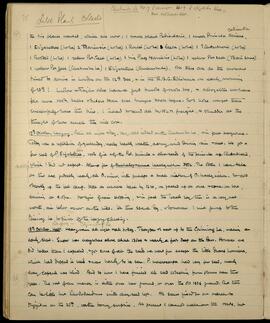
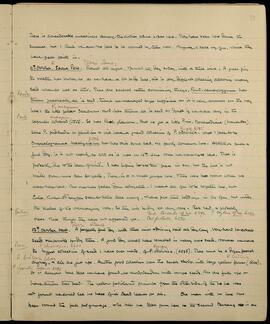
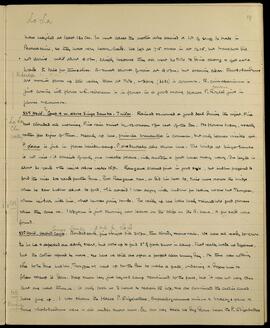
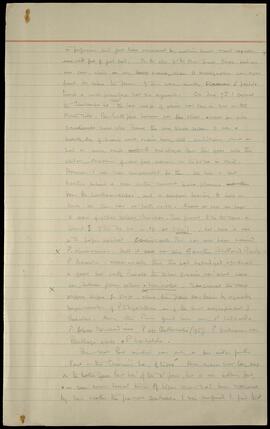
have weighed at least 130 lbs. In most cases the coolies also carried a lot of stuff to trade in Pachakshiri, so they have very heavy loads. We left at 7:15 and were in at 12:15, but transport did not arrive until about 4:00 pm, chiefly because they all went to Molo to drink chang and get extra loads to take for themselves. A small shower of rain at 4:00 pm, but evening clear. Rhododendrons are more in flower up this valley than at Molo, R. 3624 (3631) is common. R. cinnabarinum is just coming into flower and R. vellereum is in flower in a good many places. P. Roylei just in flower common.

22nd April. Camp 4 m. above Singo Samba. 7 miles. Rained and snowed a good deal during the night. Fine but clouded all morning. Fine rain and mist by 12:00 noon and for rest of the day. No flowers today, and really rather few signs of them. Nearly up here, Primula prenantha is common, but only leaves visible yet. P. glabra is just in flower beside camp. P. atrodentata also shown here. The bridge at Singo Samba is not nice - it consists of only one usable plank, with another a foot lower and very wavy. The length is about 30 yards and the height above water 15 ft. Ramzana crossed first in good style, but Ludlow preferred to ford the river 200 yards further down. Poor Ramzana ran, or did his best to, twice more across the bridge when he saw Ludlow about to ford. I'm afraid I was angry with Ludlow for telling no-one but Tseringpen, whom he took with him, what he was going to do. The valley up here looks lovely and should hold good flowers when they come on. Isopyrum is just showing new leaves on the cliffs on the R. bank. A few seed were found.

23rd April, Halted Camp. Clouded early, fine and bright till 2:00 pm, then cloudy and some rain. We were all ready to cross the Lo La and expected an early start, but woke up to find 2" of fresh snow in camp. That really made no difference, but the coolies refused to move, so here we still are after a perfect clear sunny day. As there was nothing else to be done Ludlow, Tseringpen and I went up to the Pass to make a path, ordering a dozen men to follow and stamp it down. Deep snow lay just beyond camp and continued to the pass, but it was not very often that one went through. It only took us 3 hours to reach the top, and we are convinced the coolies could have gone up. I was shown the places P. Elizabethae, Omphalogramma minus and brachysiphon and some rhododendrons were - all under snow now. On our way back we dug down near the P. Elizabethae
LSH/1/1/6/1/66 · Part · 1937-06-05
Part of The Ludlow & Sherriff Collection

SUMMARY:
Field notes describe the ascent to Chubumbu La with bearings, terrain, and vegetation changes, and map labels for nearby locations. The page records locations and observations for several alpine plants, including Rhododendron, Omphalogramma, and Primula specimens, with altitudinal ranges and morphological notes.

CONTENT:
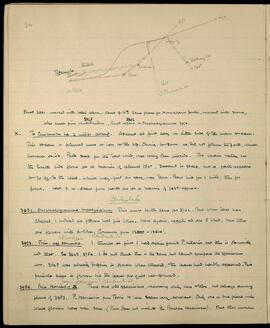
33a

[Map Labels]
Potsangla
Chianang
Pass
Peak
Lagyong
Sheltangla
Chubumbu La
46°
65°
145°
162°

Rhododendron 3941 marked with label above camp of 6th. Same place for Nomocharis souliei, marked with stone, also small pink Rhododendron 3925, Rhododendron repens 3942 and Omphalogramma 3970.

X - To Chubumbu La 2 miles ascent. Ascent at first easy on either side of the main stream. This stream is followed more or less to the top. Owing to snow, we did not follow the path, which however exists. Path steep for the last mile, over rocky open hillside. The main valley on the South side flows at a bearing of almost 180°. Descent is steep, but a path appears to go off to the West, which may find an easy way down. Bare hill for 1 mile, then fir forest. Last 2 miles ascent from North are at a bearing of 142° approx.
Chubumbu La

  1. Omphalogramma brachysiphon. This must be the same as 3762. But when that was collected, I noticed all flowers had five lobes. Here again, nearly all are 5 lobed, but there are flowers with 6 lobes. Common from 13,000 - 13,500'.
    Chubumbu La

  2. Primula aff. strumosa. (chionogenes? Chubumbu La) I thought at first I had again found P. hilaris, but this is obviously not that. See 3648, 3754. I do not think this is the same, but cannot compare the specimens now. 3648 was already dropping its flowers when collected, the leaves had hardly appeared. This primula keeps its flowers till the leaves are quite well formed.
    (tsariensis x chionogenes? Chubumbu La)

  3. Primula tsariensis X. These are odd specimens, occurring only here and there, but always among plants of 3983. P. tsariensis from Tsari to here seems very constant. Only one or two plants with white flowers have been seen. (This does not include the Bhutan specimens). But this number

LSH/1/1/7/1/3 · Part · 1940-05-24
Part of The Ludlow & Sherriff Collection

SUMMARY:
The diarist describes a difficult crossing of the Chubumbu La in mist, rain, and snow, followed by notable finds of Primula species and hybrids on the southern slopes. They also note a later visit to the Chimi La, where melting snow revealed several bodies of Lhopas from the previous autumn.

CONTENT:
In profusion had just been uncovered by melting snow, and seed capsules were still full of good seed. On the edge of the Abies forest, Omphalogramma minus was seen, while on very damp swampy slopes, O. brachysiphon was again found. As before, the flowers of this were mostly 5-partite, though a small percentage had six segments. On June 7th, I crossed the Chubumbu La (13,900'), the last 1,000 ft of which was deep in snow on the North side. The South face, however, was clear except for piles of avalanche snow 1,000' down the very steep slopes. It was a beastly day of driving mist and rain, over cold conditions which we had on every single Himalayan Pass this year, with the solitary exception of one fine morning on the Ka La in April. However, I was soon compensated for this. We took a last breather behind a rock on the summit before plunging down the southern slopes, and a compass bearing to keep us right as there was no path visible. Almost at once, we saw a mass of golden yellow Primulas. This proved to be the same as found south of the Do La in Ap at 11,500'; but here it was with proper habitat. This has now been named P. chionogenes. With it was also another Petiolarid Primula - P. tsariensis, and occasionally these two had hybridized and produced a queer but pretty Primula, the colour of which was about halfway between golden yellow and blue-violet. These covered the steep, slippery slopes for 500 ft, where their place was taken by equally large numbers of P. elizabethae, one of the most magnificent of Primulas. Among other Primulas found here were P. pudibunda, P. firma, P. normandiana, P. aff. clutterbuckii (3937), P. dickieana var. pantlingii, and P. barbatula.

The next Pass visited was only a few miles further East - the Chimi La, of 15,000'. Here again, snow lay deep on the North face, the last 1,000' of the N face, but it was melting fast, and we came across several bodies of Lhopas who had been overcome by bad weather the previous Autumn. I was surprised to find that

LSH/1/1/6/1/148 · Part · 1938-10-16
Part of The Ludlow & Sherriff Collection

SUMMARY:
Lists live plants to be sent by KLM freight to London and the R.B.G. Edinburgh, noting a large quantity of roots, bulbs, and tubers collected. Describes severe weather at Chumbumbu La and successful but difficult seed collecting trips from Langong to the Chiniung La, with plans to march to Migyitun.

CONTENT:
75 Live Plants Collected
Chumbumbu La Oct 17 P. chionantha 6609 P. elizabethae 6610
mec. violacea 6611.

...the live plants wanted, which are now: 1 small plant Pedicularis, 1 small Primula Aliciae, 1 Elizabethae (Lola) 2 Tsariensis (Lola) 1 Rowlei (Lola) & laeta (Lola) 1 ? Clutterbuckii (Lola) 1 Boothii (Lola) 1 yellow Pet. Sect. (Lola) 1 big plant Tsariensis (Lola) 1 yellow Pet sect (Tsari Sama) 1 yellow Pet sect (Chumbumbu La) 1 Elizabethae (Chumbumbu La). All these are at the moment timed to arrive in London on the 12th Dec, & in the R.B.G. Edinburgh on early morning of 13th! Ludlow & Taylor also have a good bundle of roots too, & altogether we have far more roots, bulbs & tubers than ever brought back before. So I hope we get them successfully home this time. I intend to send all by KLM freight, & shudder at the thought of how much they will cost.

17th October. Langong. Rain all night & day. Very cold indeed on the Chumbumbu La, in fact everywhere. Today was a repetition of yesterday, really beastly weather, a strong wind driving rain & sleet. We got a few seed of P. Elizabethae 6610, roots of it & of the Pet. Primula & also seeds of the Primula aff. Clutterbuckii, which I did not expect. Also a few of Omphalogramma brachysiphon 3952. The others I have taken as these are probably nearly all O. minus, with perhaps a small mixture of O. brachysiphon. So cold & beastly up the last camp, that as we were back by 12.30, we packed up at once & came on here, arriving at 4.0pm. No sign of rain stopping, in fact the locals say this is a very wet month, rain below & snow on the hills. We thus save a day, & tomorrow I must go up to the Chiniung La to finish off the Langong collecting.

18th October. Halt. Heavy rain all night & all today. Tsongpen & I went up to the Chiniung La, making an early start. Snow was everywhere above about 13500 & nearly a foot deep on the Pass. However we did better than I expected, & got some of all the seeds we were for except the little dwarf Lonicera, which had dropped its seed & was hardly to be seen. P. macrocarpa had very few seed, nearly every capsule was blind. And so now I have finished all seed collecting from flowers seen this year. The rest of our march is either over new ground, or over the old 1936 ground. But there can be little but Rhododendrons with any seed left. All seems fixed for our march to Migyitun on the 20th, rather to my surprise. At present I cannot make out the route, but

LSH/1/1/6/1/140 · Part · 1936-10-02
Part of The Ludlow & Sherriff Collection

SUMMARY:
At Lo La the diarist records clear, cold weather, intensive seed collecting of Primula and Omphalogramma, and notes on phenology and collection numbers. He mentions health issues (Kusho’s fever, his own heart), logistics and routes for Ludlow and Taylor via Gacha to Rolo, a returned coolie from Tsungpain, and observations over Lopa country, with Jia remembered for recognizing past camps.

CONTENT:
70 Lo La
omph. brachysiphon 6546

Could see, I have nearly two full packets of seed. Both the Omphalogrammas are over, hardly a seed left. I have not had time for more yet. There is not a cloud in the sky these evenings and the whole place is most beautiful. Very cold, hard frost at night. Kusho is sick tonight, but just a touch of fever I think. One of Tsungpain's coolies has returned, so I fear he may have some trouble. I don't know the reason: he merely says he was sent back. Ludlow and Taylor will I hope get over the bridge tomorrow up to Rolo. It was hard luck on them, and will make them late. However I believe all transport is ready for them in Rolo when they arrive, and that is something. I have been feeling my heart the last two days, and must go quietly for a bit. It is a pity now, just when there is such a lot to do, which means a lot of climbing. We still have Tsari Sama (2 passes), Tsela, Chikung La, Chubumbu La and the two to Nyigutun, Todo, and one at Nyigutun and Chikchar.

6th October. Halt. Lo La. Not a cloud all day. I went on collecting P. Elizabethae 6547, and have now five packets. Surely since one will raise something from these. That represents about seven hours work, four of them with 2 of us collecting. No P. Valentiniana seed. Omphalogramma all thrown too almost. P. Elizabethae was under 3-4 ft of snow on 15th May. The seeds must have been at their best for collecting on about 15-25th Sept. — a wonderfully short season. I hear today that Ludlow and Taylor have gone round by Gacha: presumably Pintso has come to Rolo, and if that is so, there can be no mail, or I should have heard. Jia is funny the way she remembers all our camps of even April, where we stopped only a night. She runs ahead when near them and sits down there waiting for the transport to come up.

7th October. Halt. Lo La. Fine, but cloudy a good deal of the day. Although cloudy here, I could see over the Lo La and away down over Lopa country as far as one could see, and it was absolutely clear, so I don't think there will be much snow or hail. The clouds too are coming from the East. I went up today to see if I could find Primula lactea. We got good seeds of P. Valentiniana, and found both P. Subularia and my new Dryadifolia Sect Prim (5865) tsangpoensis and got seed of them — a good collection of the latter, which was coming into flower again. I saw P. Jonarduni flowering.

LSH/1/1/6/1/110 · Part · 1933-07-21
Part of The Ludlow & Sherriff Collection

SUMMARY:
Notes record Primula specimens at Kucha La, including forms of P. dryadifolia and an unidentified capitata-like plant with densely hairy, non-farinose leaves. The page lists distribution ranges for several Primula and Omphalogramma taxa across passes from Tum La and Chubumbu La through Kucha La, Lusha La, Tamnyen La, and into Bhutan and China.

CONTENT:
55a Kucha La

  1. = 5865. Primula Dryadifolia Sect. (Tsongpen) Kucha La. Very common here.
  2. " " Jonarduni (Dryadifolia). " " " " , grows close to 5931.
  3. " " macrocarpa (macrophylla true form). Kucha La. White round the eye not prominent as in 3895.
  4. " " aff capitata.? (Concholoba) Kucha La. I don't recognize this. The leaves have no farina, rare, densely
    covered with long hairs. Unfortunately, only these three specimens were seen.

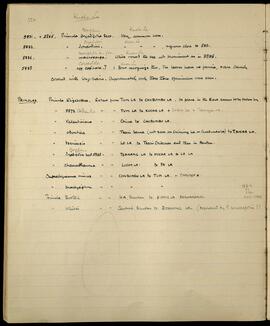
PRIMULAS. Primula Elizabethae. Extent from TUM LA to CHUBUMBU LA. Its place in the East seems to be taken by
" 5872 Calliantha " " TUM LA to KUCHA LA + Lusha La + Tamnyen La.
" Valentiniana " " China to CHUBUMBU LA.
" odontica " " Tsari Sama (not seen on Chining La or Chubumbu La) to TAKAR LA.
" tsariensis " " LO LA to Tsari Chikchar and then in Bhutan.
" Dryadifolia sect. 5865 (Tsongpen) " " TSANANG LA to KUCHA LA + LO LA
" Chamaethauma " " LUSHA LA to PA LA
Omphalogramma minus " " CHUBUMBU LA to TUM LA. + TAMNYEN LA.
" brachysiphon " " " " " " " " 186-2 57 2.6pm 140.7 = 148.5
Primula Boothii " " HA, Bhutan to NYUG LA PACHAKSHIRI.
" Whitei " " Central Bhutan to DOSHONG LA. (replaced by P. sonchifolia?)

LSH/1/1/6/1/69 · Part · 1937-06-05
Part of The Ludlow & Sherriff Collection

SUMMARY:
The diarist records extensive Primula and Omphalogramma observations around a steep pass, notes multiple slips on a difficult grass slope, and experiences photographic mishaps in wind, mist, and rain. They glissade down avalanche snow, then travel to Langong in heavy rain, buy a young yak, develop photographs, and plan to go to the Lo La on the 10th.

CONTENT:
Omph brachysiphon

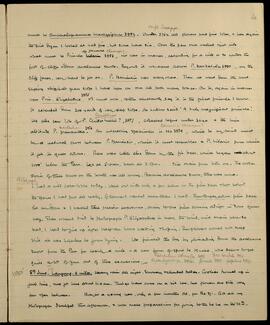
must be Omphalogramma brachysiphon 3982. Under 3762 all flowers had five lobes, & here again the first dozen I looked at had five, but some have six. Over the pass we walked right into what must be Primula aff strumosa chionantha 3983, it was in masses, extending for a mile or so under the foot of cliffs & down avalanche shoots. Beyond it we came across P. barbatula 3990, on the cliff faces, very hard to get at. P. tsariensis was everywhere. Then we went down the most slippery & difficult grass slope I have been on and all took many tosses. On it, again in masses was Prim. Elizabethae 3985 or must now, rather reluctantly, say it is the finest primula I know. It extended down 200 yards of very steep slope. As Ludlow said "A truly magnificent primula". We also saw lots of P. Geraldinae 3987, collected before under 3640 + the high altitude P. mosheoidea 3986. An interesting specimen is No 3984, which to my mind must be a natural cross between P. tsariensis (tsariensis x chionantha?), which it most resembles & P. hilaris from which it gets its queer colour. There was little else down to the fir trees, which began about 1000' below the Pass. Left at 5.0 am, back at 3.0 pm. Mist & rain from then on. The coolies' stories of thick snow on the south was all wrong. Barring avalanche snow, there was none.

Photograph
I had a wild catastrophe today. Went out with only a few films in the film pack case behind the spares I had put all ready. Of course I wanted more than I had. The Dufaycolor film pack let me down & I wasted three precious exposures, owing to one film coming adrift in some queer way. Then when I tried to photograph P. Elizabethae in mass, the wind, mist & rain were so bad, I had to give up after half an hour's walking & hoping. The flowers would not keep still & it was hopeless to form trying. We finished the day by glissading down the avalanche snow from the Pass for nearly a mile - a new form of sport to Kusho, who seems to get quite a bit of fun out of these excursions. R. campylocarpum 3994, vernicatum 3991, forrestii 3995, populare 3997, etc. louloula 3992.

11900' 8th June. To Langong. 6 miles. Heavy rain all night. Scenery occluded today. Coolies turned up in good time, and for here about 11.0 am. Things have come on a bit here, but flowers are still very few & far between. Bought a young yak, only a few months old, for Rs. 3/-. Got all my photographs developed this afternoon, & will make preparations for going to the Lo La on the 10th.

LSH/1/1/6/1/179 · Part · 1938-11-24
Part of The Ludlow & Sherriff Collection

SUMMARY:
This page lists botanical specimens, chiefly Primula and Omphalogramma, with collection numbers and localities including Chianang, Lanzung, and Chubumbula. Several varieties and putative hybrids are noted.

CONTENT:

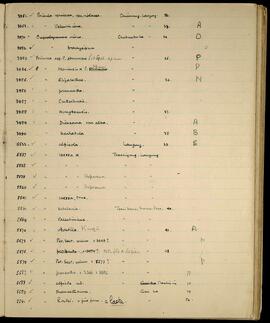
  1. Primula verrucosa, var. violacea. Chianang. Lanzung. 32
  2. Primula Valentiniana. Chianang. Lanzung. 33. A
  3. Omphalogramma minus. Chubumbula. 34. O
  4. Omphalogramma brachysiphon. Chubumbula.
  5. Primula aff P. strumosa Pet. Sect. sp. nov. Chubumbula. 35. P
  6. Primula tsariensis x P. strumosa sp. nov. Chubumbula. P
  7. Primula Elizabethae. Chubumbula. 36. N
  8. Primula prenantha. Chubumbula.
  9. Primula Clutterbuckii. Chubumbula.
  10. Primula kongboensis. Chubumbula. 37.
  11. Primula Dickieana var alba. Chubumbula. A
  12. Primula barbatula. Chubumbula. 38. B
  13. Primula alpicola. Lanzung. 39. S
  14. Primula loessa x Trashigong. Lanzung.
  15. Primula loessa x Trashigong. Lanzung.
  16. Primula loessa x Hopeana
LSH/1/1/6/1/136 · Part · 1933-09-07
Part of The Ludlow & Sherriff Collection

SUMMARY:
The page lists Primula and Omphalogramma specimens (nos. 6504–6554) with identifications, comparisons to earlier numbers, and locality notes. It records that Primula Elizabethae was collected at its type locality (1886), that on May 15th plants were under 3 ft of snow, and seed likely ripened about 15th September. Several entries note proximity to prior collections (e.g., 5872) and observations on forms and seed set.

CONTENT:
68a

6504 Primula rhodochroa Minut. Sect. Gonyore. Possibly equals no 5890. Yes.

  1. " micropetala? belle-ish? Kulu Phu Chu. hyacinthina. Kulu Phu Chu. I was looking for No 5888 but could not find it. This was some miles away.

  2. " Aliceae. Calliantha. Kulu Phu Chu. Kulu Phu Chu. Calliantha. Taken quite close to where I got 5872, I think there is no doubt it is the same thing.

  3. " Morsheadiana. prenautha. Tsarang La. This is the high altitude form, bigger flower, never candelabra in form.

  4. " Aliceae. calliantha. calliantha Tsarang La. This is from the same place as 5872.

  5. " Valentiniana. Yes. valentiniana Tsarang La. Same place as 5866.

  6. " aff glabra. ? Kulu Phu Chu. Lo La.

  7. Omphalogramma brachysiphon. v. Lo La. Too far gone for me to say. It may be O. minus.

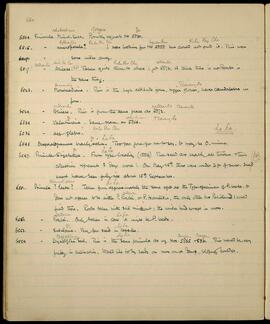
  8. Primula Elizabethae. Yes. La La. From type locality (1886). The seeds are nearly all blown out. This collection represents 2 days' work! On May 15th these were under 3 ft. of snow. Seed must have been fully ripe about 15th September.

  9. Primula ? laeta? Chamaethauma. Do La. Taken from approximately the same spot as the type specimen of P. laeta. It does not appear to be either P. Roylei (calderiana), or P. tsonanensis, the only other two Petiolares I could find there. Roots taken with soil without: the winter bud wrapped in moss.

  10. " Roylei. calderiana. Do La. Only taken in case it might be P. laeta.

  11. " Subularia. v. Do La. Very few seeds in capsules.

  12. " Dryadifolia Sect. tsonapensis. Do La. tsonapensis tsonapensis. This is the same primula as my Nos. 5865 + 5931. This would be very pretty in cultivation. Would like to try seeds on moss on a damp, sloping boulder.

LSH/1/1/6/1/145 · Part · 1936-10-02
Part of The Ludlow & Sherriff Collection

SUMMARY:
The diarist reports uneasiness about leopards and persistent heavy rain and mist that make seed collecting difficult around Tsari Sama and Sacua Pebo. Despite the weather, they gather significant Primula and Rhododendron seeds, note hut damage, and record that team members Cunha, Kuku, and Souypen choose to sleep under an overhanging rock.

CONTENT:
There is considerable uneasiness among the coolies about Leopards here. They have been here during the summer, but I think we are too late to be worried by them now. Anyway I take my gun, which they have great faith in.

To Tsari Sama:
11th October. Sacua Pebo. Rained all night, poured all day today, with a thick mist. A great pity the weather has broken so, as we have a lot to do here, and it is very difficult collecting, collecting many seed when so wet as this. There are several rather astonishing things. Rhod. campylogynum has thrown practically all its seed, though we managed to get sufficient as it is very common on the way here: the little yellow deciduous rhod. (R. mckenziana) has thrown all its seed and I doubt if we have any in the capsules collected (5555). So has Rhod. faucium. But we got a little Prim. morsheadiana (menantra), some P. pudibunda or flexilipes and will have a grand collection of P. odoritica (Kinga 6595). What I take to be Omphalogramma brachysiphon (6596) too has still some seed, is fairly common here. Although such a foul day, it is not nearly so cold as it was on 15th June when we were here last. That is probably due to the lack of wind. I was hoping to see the place in sun, but the hut is not visible from more than 40 yards. There is a v. small gompa here, there were two rooms when we were here last. But one has fallen down altogether. I meant all of us to be together here, but Cunha, Kuku & Souypen seem to think that wrong, and have put their bedding in the open, but under the shelter of the overhanging rock. So they will be dry at any rate. Rats bad, and probably fleas though they have not appeared yet. (Gent. lancantha sp. nov 6592, P. taylorii sp. nov 6593, Sax. probata 6594).

Tsari Sama
12th October. Halt. A perfectly fine day, with thick mist and driving rain all day long. Very hard to collect seeds and impossible to dry them. A good day would have resulted in many more seed. However we have the biggest collection of seed I have ever made, of P. odoritica, (6595) (P. chionogenes 6601). There must be a dozen packets anyway, and all are just ripe. Another good collection was the small rhodo. with large yellow flower (R. ludlowii 6600). (R. forestii repens 6598).

It is curious here that we have found no rhododendron with unripe seeds. All are fully ripe or have thrown their seed. The yellow petioled primula from the other side of the Lo La was not found: we could see no trace of its dead leaves at all. One man with us here has been round the full pilgrimage, and he tells me that from here to the second Tsukang is as