
Mostrando 4 resultados

Descripción archivística
4 resultados con objetos digitales Muestra los resultados con objetos digitales
LSH/1/1/6/1/59 · Part · 1936-06-26
Parte de The Ludlow & Sherriff Collection

SUMMARY:
Entries describe camps and travel around the Langong Chu Valley near Langong with rainy weather, extensive botanical observations (including Berberis, Meconopsis, and several Primula), and bird sightings such as snowcock eggs and blood pheasant. Notes mention an attempt toward the Lo La pass, information that Tsari Sama (Tsari SARPA) will not open until August, and companions Tsongpen and Chulia (the latter unwell).

CONTENT:
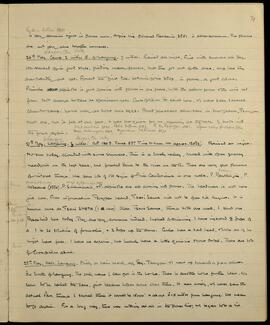
29

Berberis ludlowii 3851 is very common just in flower now. A fine big-flowered Berberis, 3851 is also common. The flowers are not yet close together however.

Langong Chu Valley
26th May. Camp 2 miles E. of Langong. 7 miles. Rained all night. Fine with showers all day. We started off in good style, finding many flowers, but then got out of the area, and here they are hardly out yet. Found the first Meconopsis betonicifolia 3869, in flower, a good colour. Primula alpicola is just coming into flower in one place, with the yellow form, otherwise red form. Not enough to take as specimens yet. Cremanthodium do exist here; I have seen several close to camp. Saw many snowcock eggs. Blood pheasant also seen in two places. Tsongpen shot one, but it fell at our feet and was too quick for us, running at the rate of knots into the forest again.
Fritillaria cirrhosa 3865, Pieris diffusa 3863, Rhododendron anthopogon 3861, Lysimachia prolifera 3860
Meconopsis betonicifolia 3859, Myricaria dahurica 3870

To Langong, Langong Chu Valley
27th May. Langong. 3 miles. B.P. 190.8. Temp. 58°. Time 11.00 am. Ht approx. 12083'. Rained at night. No sun today, clouded with some showers. This is a lovely valley, broad, with open grassy meadows on the left bank, but forested down to the river on the right. There are very few flowers of interest though. We saw lots of old signs of Primula cawdoriana in one nala. Primula pantlingii, P. hopeana (3880), P. sikkimensis, and P. alpicola are all coming into flower. The headman is not here just now. From information Tsongpen heard, Tsari Sama will not be open till August. It is known more as Tsari SARPA (= new) than Tsari Sama, though both are used. I shot one blackbird here today. They are very common indeed. Instead of skinning, I have injected 8 drops of a 1 to 20 solution of formalin, and 2 drops up the anus. Chulia has a bad head, looks as if he might have fever. I have no aspirin, but luckily have a little quinine and some Ortal. There are lots of Cremanthodium about.

28th May. Halt. Langong. Misty and rain nearly all day. Tsongpen T. went up towards a pass almost due South of Langong. The only name I can get is the Lo La. There is another Lo La further West. All seem to be called the same, just because Lopas come over them. It was misty; I never saw the actual Pass, though I should think it would be 15,000' and about 5-6 miles from Langong. We mean to go again. For a long way, there was nothing at all in the flower line; it began to be a bit...
LSH/1/1/6/1/71 · Part · 1938-06-09
Parte de The Ludlow & Sherriff Collection

SUMMARY:
Rainy halt days in Langong with a meeting with the gyimpon, who arranges coolies and discusses routes via Lo La, Trashigong, and the Tsari Sama pilgrimage, with notes on the difficult Migyitun road over the Potsang La. The party moves to a camp by the upper bridge over the Langong Chu, collects plants (including Meconopsis), struggles with midges and slow coolies, and then reaches above Singo Samba where a bridge’s planks appear to have been removed.

CONTENT:
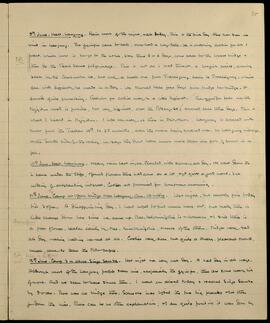
35

9th June. Halt. Langong. Rain most of the night, rain today. This is the first day there has been no wind in Langong. The gyimpon came to call, we had a long talk. He is ordering coolies for all I want, which now is to go to the Lo La, stay there 5 or 6 days, come back to the lowest bridge and then do the Tsari Sama pilgrimage. This is not as I had thought, a longish circle, coming back by the Chumbumbu La, but only a small one from Trashigong back to Trashigong, which can, with difficulty, be made in a day. We should take four days from bridge to bridge. It sounds quite promising. Rations for coolies may be a little difficult. The gyimpon tells me the Migyitun road is possible, but very difficult, over the Potsang La, would take three days. This is what I heard in Migyitun. I hope we may go there in Oct.-Nov. Langong is covered with snow from the Tibetan 10th to 3rd months, even the rivers being covered over. In Langong village, on the south side of the valley, he says they don't have much more than one foot of snow in a fall.

10th June. Halt. Langong. Heavy rain last night. Clouded, with showers all day. We went down the left bank under the cliffs, found flowers there had come on a lot, got quite a good haul, but nothing of outstanding interest. Coolies all promised for tomorrow morning.

11th June. To Camp at upper bridge over Langong Chu. 10 miles. Wet night, but mostly fine today till 3.0 p.m. A disappointing day. I had hoped to find much more out, but really there is little change down here since we came up. Meconopsis betonicifolia is very common, and I still think is a poor flower, beaten easily by Meconopsis simplicifolia, and most of the others. Midges very bad all day, making walking no rest at all. Coolies very slow, but quite a cheery, pleasant crowd, much more so than the Molo people.

12th June. Camp 3 miles above Singo Samba. Wet night and a very wet day. A bad day in all ways. Although most of the Langong people seem nice, especially the gyimpon, there are some nasty bits of work. And we seem to have struck them. I went on ahead today and reached Singo Samba by 9.0 a.m. There was no bridge there. Someone has lifted the two big planks and let them go down the river. There can be no other explanation; I am quite positive it was done by...

LSH/1/1/6/1/111 · Part · 1933-07-25 - 1933-07-27
Parte de The Ludlow & Sherriff Collection

SUMMARY:
Notes from Kucha La and nearby valleys describe poor flowering despite promising terrain, with common Primula (including Dryadifolia/tsangensis and nivalid forms) and several Meconopsis. Weather shifts from clear to mist, rain, and thunder lead to a move back to Kulu Lungma; wildlife seen or reported include lerwa with young, Heteroxenicus stellatus, bear tracks and cubs, deer, and possible wild cattle. A hypsometer reading near the Go nyi re ridge suggests an elevation around 15,800 ft.

CONTENT:
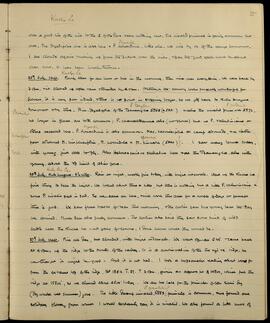
Kucha La

over a good bit of the hill to the E of the Pass saw nothing new. The nivalid primula is fairly common but over. The Dryadifolia one is also here & P. jonardunii (Dryadifolia). Little else. We move by N of the range tomorrow. I see clouds again rushing up from the S west over the hills, that the good spell must be about over now. It has been lovely weather.

Kucha La
25th July. Halt. Fairly clear for an hour or two in the morning, then mist over everything. We were back by 3.0pm, it cleared up after rain & thunder by 4.0pm. Although the country looks perfectly wonderful for flowers, it is very poor indeed, there is no point in stopping longer, so we go back to Kulu Lungma tomorrow & try there. Prim. Dryadifolia (P. tsangensis) of the Tsanangha 5865 (= 5931) & also the nivalid primula 5872 (P. calliantha), no longer in flower, are both common; P. chamaethauma also (no flower) but no P. valentiniana or others expected here. P. jonardunii (Dryadifolia) is also common. Mec. betonicifolia at camp abounds, & a rather poor coloured M. simplicifolia, M. horridula & M. sinuata (speciosa) (5940). I saw many lerwa today, with young just able to fly. Also Heteroxenicus stellatus near the Tsanangha, also with young, about the top limit of abies zone.

Kulu Phu Chu
26th July. Kulu Lungma. 6 1/2 miles. Rain at night, mostly fine today, with bright intervals. Went up the Kucha La first thing to take the height. We looked about there a little, but there is nothing but a little P. valentiniana & some P. nivalis sect. in seed. So we came on here, will work this area for a couple of days as perhaps there is good. We saw fresh tracks of bear this morning, the coolies saw two young bear the day we arrived. Much deer also pretty common. The coolies also said they saw some kind of wild cattle near the Kucha La - not yaks of course. I don't know what they would be.

27th July. Halt. Fine all day, but clouded, with bright intervals. We went off at 5.45 & came back at 4.0pm, up the ridge to the North of the valley. It is a continuation of the Go nyi re ridge, so we thought it might be good. And it is not bad. I took a hypsometer reading about 400 ft from the extreme top of the ridge, BP 186.2 T. 57. at 2.0pm., giving an approx ht of 14800, which puts the ridge at 15800', so we climbed about 4500' today. We are too late for the primulas of the semi dry (dry winter wet summer) zone. The little dwarf nivalid (P. amabilis?), 5889, primula is common, we found one solitary flower, from which I would certainly say it is nivalid. We also found a little more of

LSH/1/1/8/1/87 · Part · 1938-04-09
Parte de The Ludlow & Sherriff Collection

SUMMARY:
Tsangpo returned with 41 specimens, including notable rhododendrons from near Mandi and Trulung. The diarist reports continuous rain and late snow while moving through Dau, Lunang, and Latsa, with limited flowering observed except some primulas and rhododendrons in bud. Observations include weather severity and early-season phenology such as P. calderiana, P. whitei, P. atrodentata, and Mec. betonicifolia.

CONTENT:
neither one thing nor the other. Tsangpo came back on 8th, with 41 specimens, showing that down there there is now very much more than here. The big Maddenii Series Rhododendron from Trulung is still not out, but he got two good ones — one yellow from just below Mandi (12348) which is new to us, and may be interesting. The other, in two forms (12354, 12370) of which we got some seed in Feb. It must be a beautiful thing. The former is slightly pink, the latter pure white. They are probably the same, though leaf shape and size of plant are rather different as well.

10th April. A filthy day of rain all day long without a pause, and it looks like going on for a good while.

11th April. Dau. Another even worse day. It has now rained continuously for two days and 3 nights which is a lot for this time of year. Snow lay low to around 1000' this morning, and had been lying a good deal below Dau. After 3.0pm here it was very heavy — half snow half rain. Rhododendrons fairly good. R. virgatum series was really lovely. No 12375 is a fine tree too. We only saw one R. triflorum in flower — a miserable thing. There are a great many P. chungensis just in bud now, all along the road, which should soon be very fine indeed.

12th April. Lunang. There was 1" of snow last night in camp, but it did not snow very much with us. In the narrow valley 2 m below Lunang the going was difficult, as there were 9-10" of fresh snow, and up here when we arrived, about 5". Locals don't seem surprised at the snow, but it surprises me, as I would not have expected that on the main Himalayan Range in mid April. Owing to deep snow we saw no flowers — if there were any to see. In some clearings, I did see P. calderiana in bud showing colour. There were too P. whitei and P. atrodentata occasionally visible where snow had melted. Leaves of Mec. betonicifolia also seen.

13th April. Latsa. We are still too early for flowers here. P. calderiana is still in bud. Mec. betonicifolia very common indeed, but only 2-4" high in leaf. P. atrodentata is the only flower seen. No Rhodos. in flower yet.