Showing 4 results

Archival description
4 results with digital objects Show results with digital objects
LSH/1/1/9/1/151 · Part · 1949-04-09 - 1949-09-05
Part of The Ludlow & Sherriff Collection

SUMMARY:
Page records advances made to families of workers and details ration allowances. It also notes staff joining dates and payment arrangements in 1949, including amounts advanced and recipients such as spouses, brothers, and friends.

CONTENT:
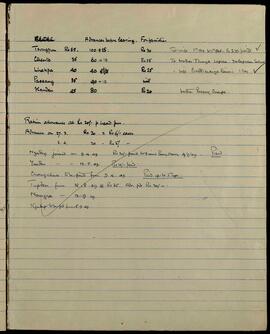
Advances before leaving. For families
Tsongpon Rs 55. 100 + 15. Rs 30 To wife 1st Apr to 1st Oct - Rs 210 paid
Chento 35 60 + 10 Rs 15 To brother Thage Lepcha. Dalapchen School
Lhakpa 40 40 Rs 25 - wife Buddhimaiya Raini 1 May
Passang 35 40 + 10 nil
Kanden 45 80 Rs 20 brother Pasang Sherpa.

Ration allowance at Rs 20/- per head per month.
Advance on 27.3. Rs 30 = Rs 6/- each
5.4. 20 = Rs 4/-
Ngudup joined on 9.4.49. Rs 30/- paid to friend Pasang 4/7/49. Paid.
Yunden joined on 12.5.49. Rs 10/- paid.
Changchun to be paid from 9.4.49. Paid up to 5 Sept.
Tupden from 15.8.49 @ Rs 35. Advance paid Rs 30/-.
Namgye from 13.9.49.
Ngudup to be paid from 5.9.49.

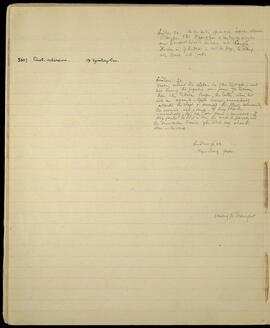
LSH/1/1/6/1/30 · Part · 1938-03-31
Part of The Ludlow & Sherriff Collection

SUMMARY:
Notes mention specimen 3607 Rhod. vellereum from up Kyimdong Chu and a reference to Kyimdong paper. Ludlow records sending his Lepcha collector (Tsongpon) while the Dzongpon dispatches a man to inspect snow on the Lang La with plans to stamp a yak track if feasible; he also recounts how Tibetan troops treated aconite-tipped arrow wounds, and mentions waiting for transport.

CONTENT:
3607 Rhod. vellereum. Up Kyimdong Chu.

Ludlow 32 - we are sending up my own Lepcha collector
(Tsongpon). The Dzongpon is sending up one of his
men to inspect the snow condition on the Lang La.
The idea is, if the snow is not too deep, to stamp
out a track with yaks.

Ludlow 32.
Talking about the Lobas, he (the Dzongpon) said
that during the fighting some years ago between
them and the Tibetan troops, the latter, when hit
with an aconite-tipped arrow, immediately
extracted the shaft and excised the flesh surrounding
the wound with a knife. If they did this
immediately, they had some chance of survival. If
they failed to do it in time, the aconite paralysed
the muscular tissues of the whole body and death
soon intervened.

Ludlow p 33.
Kyimdong paper.

Waiting for transport.

LSH/1/1/6/1/138 · Part · 1936-09-29 - 1936-10-02
Part of The Ludlow & Sherriff Collection

SUMMARY:
Diary notes describe failed hopes of reaching Tsari due to snow on the Tsari La, bulb collection of Lilium wardii near Lilung, and negotiations with local officials for transport. The writer arranges men and yaks to cross near Singo Samba, dispatches Tsongpon with coolies, reorganizes supplies, and collects Primula and Cyananthus seed while preparing to move toward the Lo La and Langong.

CONTENT:
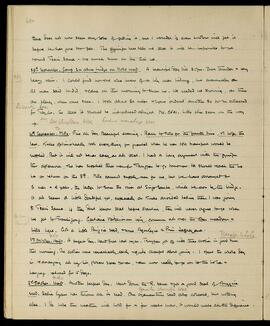
there does not now seem any hope of getting in, but I wonder if even Ludlow will see it before he has gone too far. The gyampon here tells me that it will be impossible to get round Tsari Sama — too much snow on the Tsari La.

29th September. Camp 2 miles above bridge on Molo road. A beautiful day till 3:00 pm. Then thunder and very heavy rain. I could find no one who knew of a lily near Lilung, but eventually an old man said he did, and came on this morning to show us. We needed no showing, as there are plenty, when once seen. I took about 50 bulbs and have ordered another 50 to be collected for Taylor. So that it should be introduced all right. No. 6541. Little else seen on the way up.
Lilium wardii 6541.
Abies strigillosa 6539.
Lactuca macrorhiza 6540.

30th September. Molo. Fine all day. Beautiful evening. Back to Molo for the fourth time, and I hope the last. Kusho optimistically took everything for granted when he was told transport would be supplied. But it will not be as easy as all that. I had a long argument with the gyampon this afternoon, and he has supplied three men for Tsongpon to go tomorrow. He should reach the Lo La on return on the 8th. Molo cannot supply men for me, but we have arranged for 6 men and 4 yaks, the latter to swim the river at Singo Samba, while we cross by the bridge. It all seems a little doubtful yet, especially as Kusho avoided telling them I was going to Tsari Sama. If they don't know that before starting, they will never agree to go when we get to Trashigong. Gentiana veitchiorum very common all over the open meadows and hills here. Got a little Primula seed, and some Aquilegia and Primula jaffrayana.
Tsangpo La Lo La

1st October. Molo. A perfect day. Hard frost last night. Tsongpon got off with three coolies in good time this morning. The coolies were remarkably early and quite cheerful about going. I spent the whole day in rearranging all my kit, flower stores and so on, and am now ready to go on to the Lo La and Langong, victualled for 15 days.

2nd October. Molo. Another perfect day. Went down the river bank and got a good deal of Primula seed. Salvia hians has thrown all its seed. One Cyananthus seed also collected, but nothing else. I do hope this weather will hold for a few weeks now. It would make all the difference.
Cyananthus sherriffii 6545

LSH/1/1/8/1/27 · Part · 1946-12-11
Part of The Ludlow & Sherriff Collection

SUMMARY:
The diarist negotiates transport with the Dzongpon, notes low rates, and plans to cross by ferry near Chamna and go over the Temu La, with observations on weather and local birds. On 18 Dec at Dzeng, Betty and the diarist travel with a small party, crossing the river by ferry opposite Chamna, where the headman recalls their 1938 visit.

CONTENT:
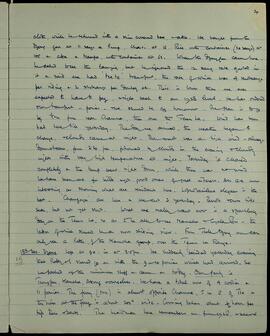
cloth, while he returned with a skin covered box - atta. We bought from the Dzongpon at 11 sangs a lump, chari at 15. Rice with container (30 sangs) at 105 - atta & tsampa, with container at 63. When the Dzongpon came here, he asked to see the lamyig, but he ignored the 12 sang rate quoted in it & said we had 'tse te' transport, the rate of which was 4 shokangs per riding & 2 shokangs per donkey etc. This is lower than we ever expected to have to pay, right back to our 1938 level. He has ordered our transport - ponies - they should be off tomorrow. The plan is to go by tru from near Chamna, then over the Temu La. Wind has been bad here till yesterday. The day we arrived, the weather began to change, & clouds came at night. The result was a high wind - always downstream, from 2.30 pm, followed by clouds in the evening & cloudy nights with very high temperature at night. Yesterday it cleared completely & the temp went right down, while there was no wind. We have been out for birds & got good ones of great interest. All are now interesting as showing what are residents here. Lophobasileus elegans is the best. 'Chang-tsai' are here & we shot 3 yesterday. Parrots & crossbills seen, but not yet shot. What we really want now is a sparkling day on the Temu La, so as to be able to see Namcha & Gyala Peri - the latter of which should be a more striking view. From Tsela Dzong one can only see a little of the Namcha group, over the Temu La Range.

18th Dec. Dzeng. Left at 9.0: in at 3.0 pm. We suddenly decided yesterday evening that Betty & I should go on with the goro ponies which had arrived. So we packed up the minimum stuff & came on today. Our party is Tsongpon, Kancha, Akong & ourselves. We have a total now of 4 coolies & 11 ponies. The ferry (tru) is almost opposite Chamna, 5 m. E. of Tse & the river at the ferry is about 200 yds wide. Crossing takes about 1/2 hour per trip there & back. The headman here remembers us from 1938, & seems