Showing 5 results

Archival description
5 results with digital objects Show results with digital objects
LSH/1/1/8/1/99 · Part · 1947-05-06
Part of The Ludlow & Sherriff Collection

SUMMARY:
The diarist travels from Lenda toward Lhapso Dzong amid transport difficulties and an uncooperative headman, but later receives help from a lama deputy at Lhapso Dzong. Mules arrive tired, Tamchen returns to Ludlow with Yusum mules, and an unusual halo phenomenon is observed and noted. Weather shifts from rain to fine conditions with some storms and hail.

CONTENT:
4th May Lenda. There was a good deal of rain last night, but it cleared up in the morning, though storms are all round now in the evening. I had sent Mond out here to arrange transport & found him waiting ½ m out of Lenda with a tale of woe. The headman said he would do nothing without the lama Dzongpen's permission, & the latter demanded 15 sang a pony, otherwise he would produce nothing at all. He refused everything. However I'm glad to say that the muleteers agreed to come on to Lhapso Dz, but said 2 days would be necessary. There is an unpleasant feeling of noncooperation here, & obviously some chalaki going on somewhere. There is no dzing here at all, & someone has been getting at Mond. But the headman is not helpful at all. He won't provide grain. Eggs are produced at 5 sho each soon. I'll be glad to get on tomorrow & to get to Lhapso.

5th May. Lhapso Dzong. A fine day & very beautiful, with cumulus clouds above. In the evening we had some rain storms round about. There was a little hail. Mond went to see the Dzongpen, who is not here however. He has left a lama 'tsap', who has given us all we wanted — given or promised to give. He seems a good man & very helpful. The mules were obviously tired & had rather a struggle to get in here at all. Some were not in till 6.5pm.

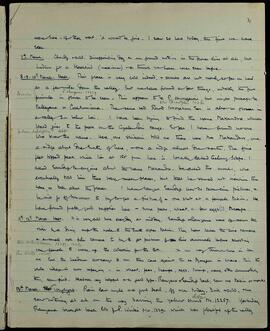
6th May. Halt. Tamchen went off back to Ludlow today with our Yusum mules. At 10.0 am I noticed the extraordinary system of halos as drawn on the opposite page. The biggest halo is, I imagine, another of those which I noticed in 1925 or 1926 & reported to the R. Met. Society, who told me what it was & what caused it. It is apparently very unusual & as far as I remember, they said it had only been reported 38 times. At that time the curious ovate shaped halo was absent. It was a clear bright morning, but soon very thin & very high cloud appeared almost as a veil in the blue sky and then the halos were seen. It remained fine, but clouded over after 12.0 midday. Everyone here very helpful, & we hope to be off tomorrow without trouble.
LSH/1/1/3/3/173 · Part · 1983-05-05
Part of The Ludlow & Sherriff Collection

SUMMARY:
The party halted near Migyitun, explored east up the valley to the Tsokar lake via the Nga La and Pang La, and collected game while noting Primula species abundant around 13,000 ft amid continuous rain. A mix-up over a horse with the headman occurred earlier, and on a subsequent rainy halt day they stayed in to pack and finally received a long-awaited mail.

CONTENT:
Primula, with very hairy leaves, was seen, but it is not yet out; it will be a full week or more before the first are in bloom. I thought a horse had been ordered for me, and was rather peeved with the headman when it did not turn up. So I made him carry my camera and come with me. But it appeared afterwards that he never got the order for a horse.

31st May. Halt. Went up all together up the valley E of Migyitun, then up the road to the Tsokar lake, over the Nga La and Pang La. I shot two Lerwa and a snow cock, Ludlow 3 Lerwas. The snow cock seems to be a new species altogether, much smaller than the usual one. Saw no new flowers, but P. glabra and the purple Roylei — a beauty — were everywhere at about 13,000 ft. Rained all day.

1st June. Halt. Rained all day. None of us went out and spent the day in packing up and rearranging loads. Our mail arrived at last, and was a good fat one. What a joy it is to get the mail after just on two months. It is really worth waiting for. I suppose it was not really

LSH/1/1/8/1/77 · Part · 1936-03-03
Part of The Ludlow & Sherriff Collection

SUMMARY:
Cold halts with little flowering observed; the party notes the first primula in flower and red Rhododendron irroratum, investigates the place-name Makandro near the Gyala Peri range, and sends Sandup and Ramzana to try to film and collect a takin without success. Villagers repay a loan in kind, and on March 13 they move to Tongkyuk, recording a yellow Litsea and plentiful “Winter” plants.

CONTENT:
were here. If they went, it would be fine. I saw 10 here today, the first we have seen.

7th March. Cloudy & cold. Disappointing day as we found nothing in the flower line at all, but luckier for a blackbird (maximus) & a thrush we have never seen before.

8-9-10th March. Halt. This place is very cold indeed, & shrubs are not nearly so far on here as a few miles down the valley. But we have found a few things, notably the first primula in flower to be seen. This appears to be P. chungensis (12279), but might perhaps be Bulleyana or Cockburniana. The same red Rhod. Irroratum Ser. (12280) is also in flower in a valley 2m below here. I have been trying to find the name Makandro which Ward gives to the peak on the Gyala Peri range. So far I have found no one who knew the name. Here, one shikari told me there were two Makandros, one a ridge almost due South of here, & one a ridge almost due North. The fine flat topped peak which lies at 150° from here is locally called Gelung Sokpo. I asked Sandup to enquire about the name Makandro. He asked the monks, who eventually told him there were such places, but that he should not mention the name or talk about the places. I have taught Sandup how to take cine pictures, & he will go off tomorrow to try to get a picture of & one shot at a female takin. We have found pretty good supplies here - some peas, wheat, a few eggs(!), tsampa.

11th-12th March. Halt. It is very cold here every day at midday. Sandup & Ramzana went off across the river for a drive up the nala to the South after takin. They have taken the cine camera & a small roll film camera to try to get pictures of live animals before shooting one female to make up the collection for the B.M. On our way through here in Jan we lent the headman 400 sangs to run their case against the ex Dzongpon in Lhasa. Now the whole village is repaying - in wheat, peas, tsampa, eggs, turnips, & any other commodity they can find. Headmen very helpful & a good type. Ramzana & Sandup back; saw no takin or marks.

13th March. Tongkyuk. Rain last night & a good deal, off now today. Dull & cold, & we saw nothing at all on the way barring the yellow shrub Litsea No. 12257. Yesterday Ramzana brought back lots of Winter No. 12291 which was plentiful up the valley.

LSH/1/1/9/1/125 · Part · 1933-08-26
Part of The Ludlow & Sherriff Collection

SUMMARY:
The diarist reports fleas from bamboo mats, notes Lilium nepalense and collects fine Podocarpum seed while traveling from Kotakha across Suele La and Tsele La into the Phobsikha valley, then planning and taking the Chele La toward Rukusi and Chendesi amid disputes with coolies and route advice from locals. News arrives that Ludlow has sent Dawong back to Bumthang with a bad leg.

CONTENT:
Too many fleas in it, from the bamboo mats supplied by locals. Nothing of interest seen on the way, except we noticed that there are some Lilium nepalense, though not many. Kotakha is about 2½ miles beyond the Muele La, on the left bank of the wide valley. This valley here is called the Pausa Chu, and the headman says that lower down it is called the Biameshu Chu, which is marked on the map.

27th August. Issa in Phobsikha valley. Very heavy rain last night, but it was to a clear sky at last that we woke up, and set off at 5.0 am. It remained fine except for some showers till the evening. This is the first sun we have seen since I left Betty at 10.30 on the Hala-Kyu La. The ascent to the Suele La was easy in climbs, but the wind was really awful and very difficult to deal with. The pass is about 10500-11000' and about 5 miles from Kotakha. Descent easy into another broad open valley. Path skirts the top of this, keeping up pretty well. It then climbs easily again to the Tsele La at about mile 10. It is again about 11000'. Descent into the Phobsikha valley not very steep, and path comes down half way between Phobsikha and Gonte Gompa. I could not find where we were supposed to go. We had been told Gonte, but coolies insisted in coming here. The locals want us to go over the pass north of Gonte, which would mean we could not reach Chendesi tomorrow. I have refused to go that way, and we will go over another pass, the Chele La to Rukusi. Got very fine seed of Podocarpum today. No flowers at all.

28th August Chendesi - I got in at 1.0, but Tupden had to stay for one miserable coolie who did not turn up and is very late. He had to change twice, once only 3 miles away, and again at Rukusi. The pass, the Chele La, about 12000', was not bad at all, but the path this side is very poor. No news from Ludlow, but it seems he has had to send Dawong back to Bumthang with a very bad leg. He is

LSH/1/1/8/1/27 · Part · 1946-12-11
Part of The Ludlow & Sherriff Collection

SUMMARY:
The diarist negotiates transport with the Dzongpon, notes low rates, and plans to cross by ferry near Chamna and go over the Temu La, with observations on weather and local birds. On 18 Dec at Dzeng, Betty and the diarist travel with a small party, crossing the river by ferry opposite Chamna, where the headman recalls their 1938 visit.

CONTENT:
cloth, while he returned with a skin covered box - atta. We bought from the Dzongpon at 11 sangs a lump, chari at 15. Rice with container (30 sangs) at 105 - atta & tsampa, with container at 63. When the Dzongpon came here, he asked to see the lamyig, but he ignored the 12 sang rate quoted in it & said we had 'tse te' transport, the rate of which was 4 shokangs per riding & 2 shokangs per donkey etc. This is lower than we ever expected to have to pay, right back to our 1938 level. He has ordered our transport - ponies - they should be off tomorrow. The plan is to go by tru from near Chamna, then over the Temu La. Wind has been bad here till yesterday. The day we arrived, the weather began to change, & clouds came at night. The result was a high wind - always downstream, from 2.30 pm, followed by clouds in the evening & cloudy nights with very high temperature at night. Yesterday it cleared completely & the temp went right down, while there was no wind. We have been out for birds & got good ones of great interest. All are now interesting as showing what are residents here. Lophobasileus elegans is the best. 'Chang-tsai' are here & we shot 3 yesterday. Parrots & crossbills seen, but not yet shot. What we really want now is a sparkling day on the Temu La, so as to be able to see Namcha & Gyala Peri - the latter of which should be a more striking view. From Tsela Dzong one can only see a little of the Namcha group, over the Temu La Range.

18th Dec. Dzeng. Left at 9.0: in at 3.0 pm. We suddenly decided yesterday evening that Betty & I should go on with the goro ponies which had arrived. So we packed up the minimum stuff & came on today. Our party is Tsongpon, Kancha, Akong & ourselves. We have a total now of 4 coolies & 11 ponies. The ferry (tru) is almost opposite Chamna, 5 m. E. of Tse & the river at the ferry is about 200 yds wide. Crossing takes about 1/2 hour per trip there & back. The headman here remembers us from 1938, & seems