
Showing 3 results

Archival description
3 results with digital objects Show results with digital objects
LSH/1/1/6/1/31 · Part · 1938-03-31
Part of The Ludlow & Sherriff Collection

SUMMARY:
The party halts at Kyimdong Dzong for several days due to transport delays, washing and repairing gear, developing photographs, and interacting with local officials; the Tsongpen scouts a snowy pass and brings back a rhododendron, while the Dzongpen visits and provides provisions. Kyimdong is noted as the source of Lhasa note paper and has villages under it (Shu, Langong, Sumbatse); later they move to a camp below Taktsa after Pinto assembles animals, with Ludlow not yet following, and note coniferous forest along the route.

CONTENT:
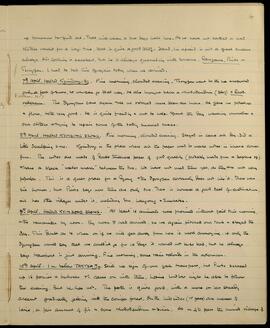
up tomorrow to find one. That will mean a two days halt here. As we have not bathed or had clothes washed for a long time, that is quite a good thing. Daud, I'm afraid is not a great success always. His cooking is excellent, but he is always quarrelling with someone, Ramzana, Pinto or Tsongpen. I had to tell him off again today when we arrived.

7th April. Halted Kyimdong Dzong. Fine morning, clouded evening. Tsongpen went to the la and reported only a foot of snow, so we can go that way. He also brought back a rhododendron (3607) = Rhod. vellereum. The Dzongpen came again to see us and stayed more than an hour. He gave us potatoes and flour, both very good. He is quite friendly and out to help. Spent the day washing ourselves and our clothes and trying to repair some of the badly smashed boxes.

8th April. Halted KYIMDONG DZONG. Fine morning, clouded evening. Stayed in camp all day. Did a little developing etc. Kyimdong is the place where all the paper used to make notes in Lhasa comes from. The notes are made of double thickness paper of good quality (probably made from a Daphne sp.) and have a black "water mark" between the two. We have not used them yet, as they are not very popular. This is a queer place for a Dzong and this Dzongpen certainly does not like it. There were six houses, but Pinto says now there are only two. There is however a good deal of cultivation, and it has other villages under it, including Shu, Langong and Sumbatse.

9th April. Halted KYIMDONG DZONG. "At least" 16 animals were promised without fail this morning, and the remainder by noon. By noon 8 had arrived, so we again pitched our tents and stayed the day. This doubt as to when or if we will get away from here is most annoying. If only the Dzongpen would say that we couldn't go for 10 days it would not be so bad, but he always says transport is just arriving. Fine morning, some rain clouds in the afternoon.

10th April. 1 m. below TAKTSA. Still no sign of our yak transport, but Pinto scraped up 16 ponies and bullocks and came on with them, hoping Ludlow might be able to follow this evening. But he has not. The path is quite good, with a more or less steady ascent gradually getting into the conifer forest. On the hillsides (N face) are masses of larix, a fair amount of fir and some rhododendron and birch. At m 4 1/2 pass the ruined village of
LSH/1/1/6/1/21 · Part · 1938-03-21
Part of The Ludlow & Sherriff Collection

SUMMARY:
While halted at Tsetang, the party sent Pimbo back to Gonkar to recover 11 boxes of kit, which he found near Chora. They met the Ladakhi trader Ata Ulla, who spoke about Bailey, showed bird eggs from near Lhagyari, and helped procure a sheep. On 26 March they marched to Rong (Rongchaka) Dzong with poor bullock transport, and the writer suffered a minor fall from a pony.

CONTENT:
Atta Ulla Khan, a Ladakhi merchant trading in Tsetang

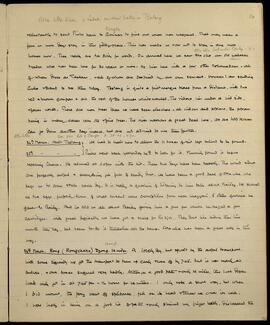
Kongka reluctantly to send Pimbo back to Gonkar to find out what has happened. That may mean a four or more days stay in this filthy place. This has made us vow not to stay in any more houses now. They really are too dirty for words. On arrival here we saw Ata Ulla, an old Ladakhi trader who has been here for 30 years or more. He lives here with a few other Mohammedans—all of whom dress as Tibetans, and all of whom are despised by our own servants. However I am sending Culla and Daud to see them today. Tsetang is quite a picturesque place from a distance, with two red and brown gompas and all the rest of the houses whitewashed. The village lies under a hillside, faces north. There are more trees than we have seen elsewhere—all willows and poplars, the poplars being in many cases very old and fine trees. The river narrows a great deal here. We are told kowas can go down another day's march, but are not advised to use them further.

24th March. Halt Tsetang. We had to halt here to allow the 11 boxes of kit left behind to be found.

25th March. Halt Tsetang. Pimbo went back yesterday 24th to look for it, and luckily found it before reaching Chora. He returned at 6:00 pm with the kit. These two days have been beastly. The wind and dust are perfectly awful and everything gets full of sandy dust. We have seen a good deal of Ata Ulla who begs us to come and talk each day. It is really a question of listening to him talk about Bailey. He showed us two eggs, properly blown, of what he said were crossoptilon from near Lhagyari, 5 others of which he gave to Bailey. And he told us all about Bailey giving him a gun for which he had a few cartridges. With great difficulty we have got a sheep for Rs 2/12. They don't like killing them this month they say, but seem to do it themselves all the same. Ata Ulla has been a great help in this way.

26th March. Rong (Rongchaka) Dzong. 14 miles. A lovely day, but spoilt by the awful transport. With some difficulty we got the transport to turn up early and were off by 7:45. But it was nearly all bullocks, and our boxes suffered very badly. Although a good path and only 14 miles, the last dozen loads only got in at 7:45 pm—12 hours for 14 miles. I only rode a short way, but when I did mount, the pony went off splitarse, fell on its head and threw me over its neck. I was lucky in being on a good bit of path and only skinned my finger badly, and dislocated the...

LSH/1/1/6/1/15 · Part · 1938-03-21
Part of The Ludlow & Sherriff Collection

SUMMARY:
The party travels along the Yamdrok Tso via Pede toward Kamba Padze and on to Gorkar Dzong, enjoying mostly fine weather, abundant birdlife, and striking lake and mountain scenery. They change transport at Tamalung, collect seeds of several plants, and cross the Khamba La after a brief blizzard; Daud struggles with the rigors of the journey while Puitro secures animals for the pass.

CONTENT:
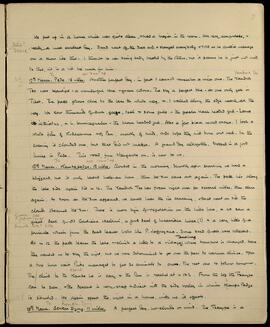
We put up in a house which was quite clean, and had a brazier in the room. All very comfortable, and really a most excellent day. Daud went off the deep end, and staggered everybody; he told us he couldn't manage on a show like this. I thought he was being badly treated by the others, but it seems he is just not used to this, and it is a bit too much for him.

17th March. Pede. 15 miles. To alt 14400' ap. Another perfect day: in fact I cannot remember a nicer one. The Yamdrok Tso was beautiful—a wonderful blue-green colour. The sky a perfect blue—as one only gets in Tibet. The path follows close to the lake the whole way, and I walked along the edge nearly all the way. We saw thousands of duck, geese, teal & some gulls—the greater black-headed gull, Larus ichthyaetus, & L. brunnicephalus, the brown-headed gull. Also a few black-necked cranes. I took a whole film of Kodachrome for Pan, mostly of birds, and hope they will turn out well. In the evening it clouded over, but that did not matter. A grand day altogether. Stopped in a poor house in Pede. This road, from Nangartse on, is new to us.

18th March. Kamba Padze. 18 miles. To alt 12000' ap. Clouded in the morning. Shortly after starting we had a blizzard, but it only lasted half an hour, then the sun came out again. The path lies along the lake side again till 12. The Yamdrok Tso was frozen right over for several miles, then clear again. As soon as the sun appeared, we could hear the ice cracking, and that went on till the clouds obscured the sun. There is more sign of vegetation on the hills here, & we saw a great deal of Gentiana waltonii, a good deal of Incarvillea lutea (?) & a very little of a primula which from the dead leaves looks like P. jaffreyana. Some seed of all were collected. At 12 the path leaves the lake & climbs a little to a village, Tamalung, where transport is changed. Here they wanted us to stay the night, but we were determined to get over the pass to warmer climes. After a two hour wait Puitro managed to get 20 animals to cross. The rest are to follow tomorrow. The climb to the Khamba La is easy & the Pass is reached at 13 1/2. From the top the Tsangpo can be seen, the descent is very steep & direct into the side valley in which Kampa Padze is situated. We again spent the night in a house, with no ill effects.

19th March. Gorkar Dzong. 11 miles. To Kongka Dzong. A perfect day, no clouds or wind. The Tsangpo is a