
SUMMARY:
The writer describes attempts to follow scarce paths in the Himalayas, requiring hard work cutting through dense vegetation and yielding little progress. Citing Captain K. Ward, they note that collecting would be easier with more paths, while locals warn of hunters' poisoned arrow traps and a missing hunter, making one route unsafe until traps decay.
CONTENT:
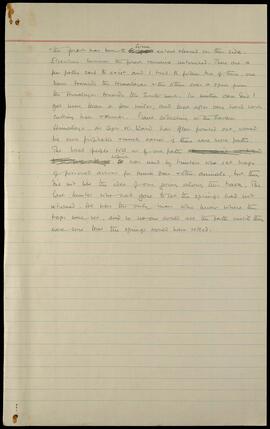
The forest has been to some extent cleared on this side. Elsewhere however the forest remains untouched. There are a few paths said to exist and I tried to follow two of these, one back towards the Himalayas and the other over a spur from the Himalayas towards the Southwest. In neither case did I get more than a few miles, and that after very hard work cutting trees and shrubs. Plant collecting in the Eastern Himalaya, as Captain K. Ward has often pointed out, would be more profitable and much easier, if there were more paths. The local people told us of one path which was used by hunters who set traps of poisoned arrows for musk deer and other animals, but they did not like the idea of our going along this track. The last hunter who had gone to set the springs had not returned. He was the only man who knew where the traps were set, and so no one could use the path until they were sure that the springs would have rotted.