Mostrar 4565 resultados

Registro de autoridade
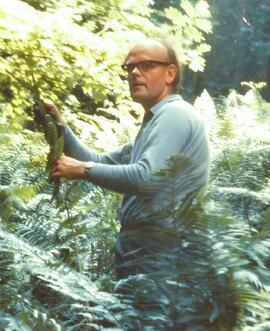
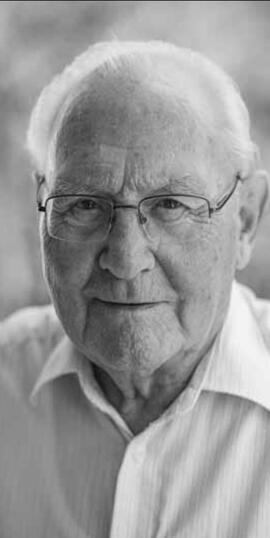
Rasbach, Kurt
Pessoa · 1923-2019

German botanist and pteridologist, husband of Helga Rasbach.

Longtime collaborator with his wife, Helga Rasbach. Members of the Baden State Association for Natural History and Nature Conservation for over 60 years.

[Translated from German via Google from "In memoriam Helga und Kurt Rasbach"]
Dr. Kurt Rasbach came from the Westerwald region. He grew up in modest circumstances and under difficult times. He often recounted how he had to walk long distances to school, which sharpened his eye for natural phenomena. Returning from the Second World War with a gunshot wound, he studied medicine in Heidelberg, became a physician, and – perhaps even more importantly – a professional nature photographer.

In Glottertal in 1960, the State Insurance Institution took over the local spa and sanatorium, including the associated forest and open spaces. Under the direction of Dr. Rasbach,
the spa clinic was established for the treatment of physical overexertion, neurovegetative disorders, and states of exhaustion or burnout. When the idyllic clinic was chosen as the filming location for the TV series "Die Schwarzwaldklinik" (The Black Forest Clinic) in 1986, Dr. Rasbach took early retirement to avoid the hustle and bustle of filming. Throughout his medical career, he was actively involved in nature and landscape photographer.

Supported, among other things, by his early membership in the Baden State Association for Natural History and Nature Conservation, the Rasbachs maintained diverse contacts within the natural science community in Tübingen, Freiburg, and Karlsruhe. Especially in geobotanical work, they supported projects by young scientists at the diploma thesis level, many of whom later became professors. Here, too, the Rasbach couple proved themselves to be a perfect team: Helga Rasbach meticulously prepared the thematic requirements for photographic documentation of the relevant questions and results. Over the weekend, they both worked through the assigned tasks – and on Sunday night, the results were produced together in their own darkroom.

As a nature photographer, Dr. Rasbach possessed the gift of combining expressive plant portraits with their natural habitat. A guiding principle of his approach was: "Photographing for the eye." By this, he meant the challenging task of capturing the complex process of sensory perception in a single, static image. His best vegetation photographs show both the identifying characteristics of the individual plant and its habitat embedded in the landscape, thus embodying the process from detailed view to overview in a single shot. He always found his first and most important editor in his wife. This close collaboration between specialist author, expert guidance, and photographic realization at the highest technical and aesthetic level continues to set standards. As a result, both became sought-after volunteers for key book projects in Germany and internationally. The series of publications on the most important nature reserves of the former LfU Karlsruhe would be virtually inconceivable without the Rasbach couple. For the first editions of the volume "Kaiserstuhl," they were both responsible for the editorial work. The "Feldberg" book from the same series was also edited by them and received all the photographic material from them.

Both played a prominent role in the major species conservation works of the State Institute.

The eight-volume vascular plant flora, the moss flora, and the lichen flora contain many hundreds of illustrations by Helga and Kurt Rasbach. For specific tasks involving mosses and lichens, for illustrating a book by Gerold Hügin on lady's mantle species, and especially for Arno Hölzer's work on sphagnum mosses, Kurt Rasbach explored the photographic edges of macro photography. The early, large-format work "The Ferns of Central Europe," with the young Otti Wilmanns as the expert author, remains a classic of plant photography. The aesthetic of the black-and-white illustrations shown here is reminiscent of Karl Blossfeldt's seminal work.

The last major project they jointly undertook was the design of the 4th edition of the
Kaiserstuhl book – published in 2009. Helga and Kurt Rasbach did not complete the transition from
analog to digital photography, which was almost finished at that time, although they had a
lively interest and continually critically examined the new possibilities.

For Helga and Kurt Rasbach, illustrations were not merely an accessory or illustration, but rather,
in the field of natural history, a first-rate source that describes more about the nature and structure of an organism than would be possible in text form. They both left behind many
plans for future publications and an image archive of approximately 400,000 black-and-white negatives and color slides, which is currently being prepared for further use.
Taylor, William Carl
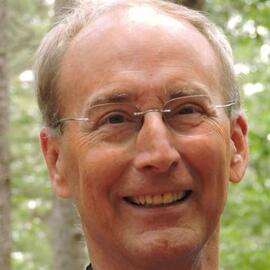
Pessoa · 1946-2025

American botanist at Milwaukee Public Museum (WI USA). Best known for his studies on the taxonomy of Isoetes, pteridophytes, and lycophytes.

Awarded BA from University of Missouri (USA) and his MA & PhD in botany from Southern Illinois University in Carbondale (IL USA).

1970-1971 served in the US Army, sergeant in the infantry in Viet Nam. Awarded a purple hear and a bronze star.

Began his career at MPM, was there for 30 years. Briefly moved to Old Dominion University in Norfolk, VA and then became a Program Officer at the National Science Foundation in Arlington, VA.

Boudrie, Michel
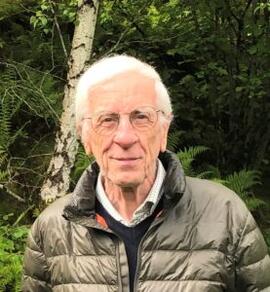
Pessoa · 1950-Present

a French botanist-pteridologist specializing in the study of pteridophytes in France, Europe, and the Guianas.

Spent 24 years working in French Guiana.

The author/co-author of nearly 150 publications on the pteridophytes of France and the Guianas, and co-author of several books (including: Ecological Atlas of Ferns and Allied Plants, 1990; Guide to Ferns and Allied Plants of France and Western Europe, 2002; Ferns and Allied Plants of Europe, 2021)

His name is associated, as an author, with the description of several hybrid taxa from Europe, Juan Fernandez (Chile), and, most importantly, several new species for the Guianas. He also participates in the revision of the taxonomic reference works for pteridophytes in France and the Guianas.

He is a member of the Botanical Society of France (SBF) and several other French and international botanical societies, and has been a corresponding member of the National Museum of Natural History in Paris since 2023.

Awarded the Gandoger Prize for Cryptogamy in 2003 by the Botanical Society of France (SBF)

Werth, Charles Richard
Pessoa · 25 Sept 1974 - 27 July 2001

American botanist, evolutionary biologist.

1969 received BA in biology from University of Virginia (USA).

1969-1976 he taught middle school science and mathematics at various schools in Virginia (USA)

1973 received a MA in Secondary Education and another MA in biology in 1978 from the University of Virginia (USA). Received PhD in botany from Miami University (USA) in 1983. His PhD invovled the genetics of "Appalachian Asplenium complex."

Following his PhD, Werth went to teach at the University of Kansas. 1987 appointed associate professor and curator of RL Reed Herbarium in Biological Sciences at Texas Tech University.

Lovis, John Donald
Pessoa · 24 April 1930 - 5 September 2017

Studied botany at the Queen Mary College at the University of London. After graduation, moved to University of Leeds, completed a PhD on Apslenium trichomanes with Prof. Irene Manton. Received a DSIR Postgraduate Fellowship to study in New Zealand for a year where he collected 75% of the native fern speices. He completed his PhD in 1958 and was appointed to a lectureship at the University of Leeds.

Over the next 20 years, Lovis would continue to study the complexities of evolution through hybridisation of Asplenium. He was the first to artificially reconstruct a naturally occurring polyploid fern, and later was able to synthesise a new and artificial alloploid species unknown in the wild. In 1977, published 'Evolutionary patterns and processes in ferns' in Advances in Botanical Research, which summarised all of his cytology work in ferns to date. 1978, he was awarded a degree of Doctor of Science from the University of London for his contributions to the understanding of fern evolution.

1977, Lovis became the Professor and Chair of Botany at University of Canterbury (New Zealand). There he took an interest in fossil botany. He led regular student trips to the Cass field station and other parts of the South Island and collected intensively from the plant groups he was researching or just interested in.

Lovis was a man of many talents and interests. In his younger days quite the athlete in a variety of sports: bowling, cricket, and hockey. Loved learning about wine and ran a wine appreciation courses at Canterbury University's Department of Continuing Education. He loved photography, rugby, classical music, cheese, and Ceylon tea.

After his death in 2017, his daughter donated his whole collection to Te Papa (New Zealand).

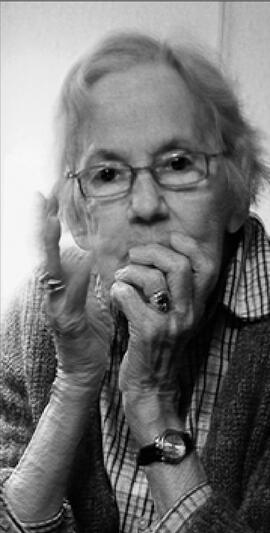
Rasbach, Helga
Pessoa · 1925-2018

German botanist and pteridologist, wife of Dr. Kurt Rasbach.

Helga was also an outstanding botanical illustrator – from cytology (e.g., of ferns) to the overall habitat (e.g., in her husband's early orchid volume).

Longtime collaborator with her husband Dr. Kurt Rasbach. Members of the Baden State Association for Natural History and Nature Conservation for over 60 years.

[Translated from German via Google,
Helga Rasbach was a biologist who specialized in the taxonomy of ferns. Her specialty was the discovery of unusual species. Numerous new discoveries of fern species in Central and Southern Europe can be traced back to her. At the same time, Helga Rasbach possessed the systematic knowledge to identify and thoroughly investigate doubtful cases in the field, particularly to examine them cytologically with regard to the chromosome numbers of individual ferns. Based on this, she was able to describe new hybrids, cytotypes, and subspecies of ferns and to identify hybrids. She also contributed many anonymously, for example, her work on the identification key for ferns in Oberdorfer's Excursion Flora.

Supported, among other things, by his early membership in the Baden State Association for Natural History and Nature Conservation, the Rasbachs maintained diverse contacts within the natural science community in Tübingen, Freiburg, and Karlsruhe. Especially in geobotanical work, they supported projects by young scientists at the diploma thesis level, many of whom later became professors. Here, too, the Rasbach couple proved themselves to be a perfect team: Helga Rasbach meticulously prepared the thematic requirements for photographic documentation of the relevant questions and results. Over the weekend, they both worked through the assigned tasks – and on Sunday night, the results were produced together in their own darkroom.

The series of publications on the most important nature reserves of the former LfU Karlsruhe would be virtually inconceivable without the Rasbach couple. For the first editions of the volume "Kaiserstuhl," they were both responsible for the editorial work. The "Feldberg" book from the same series was also edited by them and received all the photographic material from them.

Both played a prominent role in the major species conservation works of the State Institute.

The eight-volume vascular plant flora, the moss flora, and the lichen flora contain many hundreds of illustrations by Helga and Kurt Rasbach.

The last major project they jointly undertook was the design of the 4th edition of the
Kaiserstuhl book – published in 2009. Helga and Kurt Rasbach did not complete the transition from
analog to digital photography, which was almost finished at that time, although they had a
lively interest and continually critically examined the new possibilities.

For Helga and Kurt Rasbach, illustrations were not merely an accessory or illustration, but rather,
in the field of natural history, a first-rate source that describes more about the nature and structure of an organism than would be possible in text form. They both left behind many
plans for future publications and an image archive of approximately 400,000 black-and-white negatives and colour slides, which is currently being prepared for further use.
Pichi Sermolli, Rodolfo Emilio Giuseppe
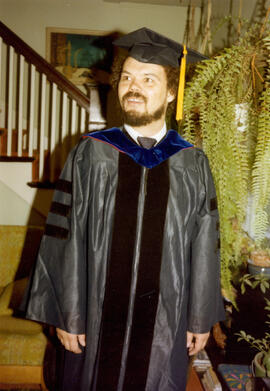
Pessoa · 24 Feb 1912 - 22 April 2005

An Italian botanist. He was a specialist on the ecology and phytogeography of tropical Africa, and also worked in plant taxonomy and pteridology.

In 1935, he graduated with a degree in Natural History from University of Florence.

From 1935 to 1958, was an assistant at the Institute of Botany in the University of Florence.

From 1958 to 1959 became a professor of botany at the University of Sassari in Sardinia.

From 1959, Rodolfo was a professor at the Institute of Botany in the University of Genoa and director of the Botanical Garden.

Pichi was a member of the Linnaean Society of London, the Botanical Society of America and the American Society of Ferns, he received the Hailé Selassié prize for his work in Ethiopia. He was also made a professor emeritus by the University of Perugia, Italy.

Fraser-Jenkins, Christopher Roy
Pessoa · 1948-

Christopher is a very well-known expert on the ferns of the Indian subcontinent. He has written widely on the taxonomic, cytological and molecular-cladonomic studies of the Indian pteridophytes and recently published the three-volume An Annotated Checklist of Indian Pteridophytes (2021). He has worked closely with other Indian pteridologists and more widely internationally. He has always been a ready source of advice on the identification of ferns, and he is an Honorary Member of the British Pteridological Society and the Honorary Patron of the Exotic Fern Group. Born in South Wales, he currently lives between Portugal and the UK, having moved from Nepal.

Wangchuck, Jigme Dorji
Pessoa · 2 May 1928 - 21 July 1972

3rd Druk Gylapo (King) of Bhutan (30 March 1952-21 July 1972)

"Father of modern Bhtuan". He began to open Bhutan to the outside world, began modernization, and took the first step towards democratization.


Only child of Druk Gylapo Jigme Wangchuck and Ashi Phuntsho Choden Wangchuck.

Married in 1951 to Ashi Kesang Choden (b.1930). They had five children. He also had a concubine and four additional children.

Wangchuck, Pema Dechen
Pessoa · 1918-1991

Wife of the 2nd King of Bhutan, Druk Gyalpo (King) Jigme Wangchuck. Co-Druk Gyaltsuen (queen) with her older sister, 1st consort, Ashi Phuntsho Choden.


Daughter of Chumed Zhalgno, Dasho Jamyang (of the Tamzhing Choji family – also known as the Myo family -) and Yeshay Choden, sister of the first Druk Gyalpo (King) of Bhutan, Gongsar Ugyen Wangchuck.

Married in 1932, at 14 years old. Had 4 children with Druk Gyalpo Jigme Wangchuck: Druk Gyalsem(Princess) Choki Wangmo Wangchuck (b.1937), Druk Gyalsey (Prince) Namgyel Wangchuck (b. 1943), Druk Gyalsem(Princess) Deki Yangzom Wangchuck (b. 1946), Druk Gyalsem(Princess) Pema Choden Wangchuck (b. 1949)