Person
·
1935-Present
A Finnish botanist.
RBGE acknowledges that our collections contain historic materials which may contain, either in their content or catalogue descriptions, terminology which is inappropriate, outdated, offensive or distressing. Such information does not reflect the current views and values of RBGE.
We welcome feedback about the language in our catalogues. While we cannot change fixed attributes connected to items in the collection (e.g. published titles, names or contents) we will always consider requests for changes to be made to other aspects of the records in our catalogues. Please contact archives@rbge.org.uk

A Finnish botanist.
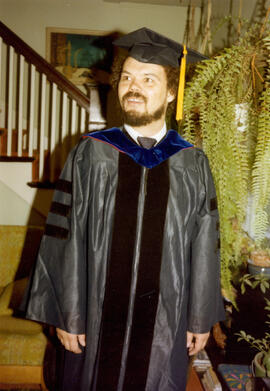
American botanist, evolutionary biologist.
1969 received BA in biology from University of Virginia (USA).
1969-1976 he taught middle school science and mathematics at various schools in Virginia (USA)
1973 received a MA in Secondary Education and another MA in biology in 1978 from the University of Virginia (USA). Received PhD in botany from Miami University (USA) in 1983. His PhD invovled the genetics of "Appalachian Asplenium complex."
Following his PhD, Werth went to teach at the University of Kansas. 1987 appointed associate professor and curator of RL Reed Herbarium in Biological Sciences at Texas Tech University.
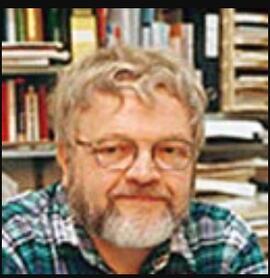
Finnish botanist
[FROM JSTOR GLOBAL PLANTS]
Pertti Uotila was born at Viipuri, Finland. After studies at the University of Helsinki (MSc 1968, Licentiate 1972, DPhil 1978), he joined the university staff. Initially appointed as an assistant in botany, he rose to Acting Professor (1989-1990) and Head Curator (1980-1993) at the Botanical Museum of the Finnish Museum of Natural History. He has also worked at the Academy of Finland as a research assistant (1974-1977) and with a senior scientist's grant (1987-1988); at the University of Turku Botanical Museum (Head Curator, 1979-1980) and at the Finnish Association for Nature Protection (Managing Director, 1968-1969).
Uotila's research activities focus on vascular plant taxonomy, plant geography and chorology in Europe, especially northern and Mediterranean Europe. He has worked on a worldwide monographic study of the genus Chenopodium and is also interested in aquatic plants and endangered plants. In the 1990s he was involved in several large international flora projects (Flora Iranica, Flora Iberica, Flora Hellenica, Flora of Pakistan, Flora of Turkey, Flora Nordica and Atlas Florae Europaeae). From 1999-2011 he served as editor of the Europe and Mediterranean PlantBase checklist.
He has conducted much field work in all parts of Finland and in the adjacent parts of Russia, and in many parts of Scandinavia including Svalbard and Iceland. In addition he has made several excursions all over the rest of Europe, particularly working in the Mediterranean area. Among the countries he has visited are Turkey (1972, 1978, 1981, 1983, 1985 and 1990), Iran, Afghanistan, Pakistan and India (1972; together with I. Kukkonen and M. Korhonen), North Morocco (1994) and Kyrgyzstan (2009) Uotila mainly collects phanerogams, (especially aquatic plants, Chenopodiaceae), but also bryophytes, algae and fungi (including lichens).
Uotila is a member of the Finnish Academy of Science and Letters, the Finnish Dendrological Society (president, 1985-1987) and has served on a number of committee boards such as the Finnish Botanical Publishing Board. He is Editor of the Finnish Botanical Museum journal Lutukka.
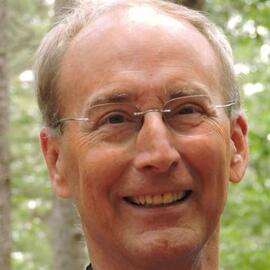
American botanist at Milwaukee Public Museum (WI USA). Best known for his studies on the taxonomy of Isoetes, pteridophytes, and lycophytes.
Awarded BA from University of Missouri (USA) and his MA & PhD in botany from Southern Illinois University in Carbondale (IL USA).
1970-1971 served in the US Army, sergeant in the infantry in Viet Nam. Awarded a purple hear and a bronze star.
Began his career at MPM, was there for 30 years. Briefly moved to Old Dominion University in Norfolk, VA and then became a Program Officer at the National Science Foundation in Arlington, VA.

Went to the University of Exeter to take an Honours Degree in Botany. In 1961, she moved to the botany department at the University of Leeds to become a research student of Professor Irene Manton. Anne's area of research was in two genera: Asplenium and Polystichum. She investigated the relationship between diploid taxa and the evolution of polyploids.
Many aspects of her work can be found in her 1966 dissertation, "Some cyto-taxonomic problems in the fern genera Asplenium and Polystichum," which, unfortunately, was never published and therefore only exists in a few copies. She was then awarded a research fellowship to spend two years in Japan from 1967 to 1969 to continue her work on ferns. She recalled this as a formative experience in her life. It allowed her to travel extensively in the East and establish a broad circle of professional and personal friendships.
Anne had barely returned from Japan when she developed systemic sclerosis, a rare and debilitating disease that proved difficult to diagnose and treat. This illness increasingly restricted her and made it less and less possible for her to pursue scientific work. Despite the great difficulties arising from her illness, she continued to expand her research, though the practical fern work proved increasingly difficult. Eventually, her illness began to affect her heart, and she eventually succumbed to the disease.
The Anne Sleep Award (The Linnean Society), Established by Mrs. Ivy Sleep in fulfilment of the wishes of her daughter, Dr Anne Sleep FLS. Awards of up to £3,000 are made at (odd-numbered) two year intervals, to assist one or more scholars to carry out biological research in the Middle or Far East, or similarly for scholars from the Middle or Far East to pursue their own biological research in the UK.
Mrs. Ivy Sleep, died in 1996 and left the sum of £120000 to the Linnean Society of London in fulfilment of her daughter’s wishes.
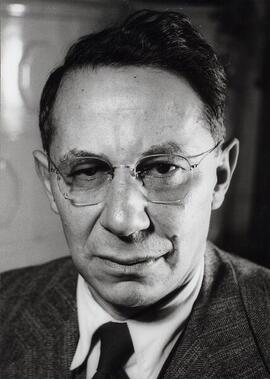
A Polish-Swiss chemist.
Won a Nobel Prize in Physiology or Medicine (1950) along with Edward C. Kendall & Philip S. Hench, “for their discoveries relating to the hormones of the adrenal cortex, their structure and biological effects.”
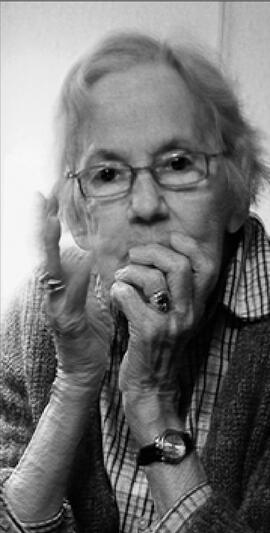
German botanist and pteridologist, wife of Dr. Kurt Rasbach.
Helga was also an outstanding botanical illustrator – from cytology (e.g., of ferns) to the overall habitat (e.g., in her husband's early orchid volume).
Longtime collaborator with her husband Dr. Kurt Rasbach. Members of the Baden State Association for Natural History and Nature Conservation for over 60 years.
[Translated from German via Google,
Helga Rasbach was a biologist who specialized in the taxonomy of ferns. Her specialty was the discovery of unusual species. Numerous new discoveries of fern species in Central and Southern Europe can be traced back to her. At the same time, Helga Rasbach possessed the systematic knowledge to identify and thoroughly investigate doubtful cases in the field, particularly to examine them cytologically with regard to the chromosome numbers of individual ferns. Based on this, she was able to describe new hybrids, cytotypes, and subspecies of ferns and to identify hybrids. She also contributed many anonymously, for example, her work on the identification key for ferns in Oberdorfer's Excursion Flora.
Supported, among other things, by his early membership in the Baden State Association for Natural History and Nature Conservation, the Rasbachs maintained diverse contacts within the natural science community in Tübingen, Freiburg, and Karlsruhe. Especially in geobotanical work, they supported projects by young scientists at the diploma thesis level, many of whom later became professors. Here, too, the Rasbach couple proved themselves to be a perfect team: Helga Rasbach meticulously prepared the thematic requirements for photographic documentation of the relevant questions and results. Over the weekend, they both worked through the assigned tasks – and on Sunday night, the results were produced together in their own darkroom.
The series of publications on the most important nature reserves of the former LfU Karlsruhe would be virtually inconceivable without the Rasbach couple. For the first editions of the volume "Kaiserstuhl," they were both responsible for the editorial work. The "Feldberg" book from the same series was also edited by them and received all the photographic material from them.
Both played a prominent role in the major species conservation works of the State Institute.
The eight-volume vascular plant flora, the moss flora, and the lichen flora contain many hundreds of illustrations by Helga and Kurt Rasbach.
The last major project they jointly undertook was the design of the 4th edition of the
Kaiserstuhl book – published in 2009. Helga and Kurt Rasbach did not complete the transition from
analog to digital photography, which was almost finished at that time, although they had a
lively interest and continually critically examined the new possibilities.
For Helga and Kurt Rasbach, illustrations were not merely an accessory or illustration, but rather,
in the field of natural history, a first-rate source that describes more about the nature and structure of an organism than would be possible in text form. They both left behind many
plans for future publications and an image archive of approximately 400,000 black-and-white negatives and colour slides, which is currently being prepared for further use.
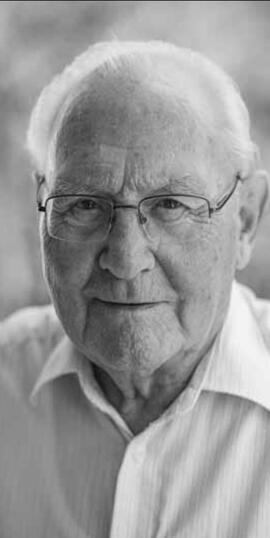
German botanist and pteridologist, husband of Helga Rasbach.
Longtime collaborator with his wife, Helga Rasbach. Members of the Baden State Association for Natural History and Nature Conservation for over 60 years.
[Translated from German via Google from "In memoriam Helga und Kurt Rasbach"]
Dr. Kurt Rasbach came from the Westerwald region. He grew up in modest circumstances and under difficult times. He often recounted how he had to walk long distances to school, which sharpened his eye for natural phenomena. Returning from the Second World War with a gunshot wound, he studied medicine in Heidelberg, became a physician, and – perhaps even more importantly – a professional nature photographer.
In Glottertal in 1960, the State Insurance Institution took over the local spa and sanatorium, including the associated forest and open spaces. Under the direction of Dr. Rasbach,
the spa clinic was established for the treatment of physical overexertion, neurovegetative disorders, and states of exhaustion or burnout. When the idyllic clinic was chosen as the filming location for the TV series "Die Schwarzwaldklinik" (The Black Forest Clinic) in 1986, Dr. Rasbach took early retirement to avoid the hustle and bustle of filming. Throughout his medical career, he was actively involved in nature and landscape photographer.
Supported, among other things, by his early membership in the Baden State Association for Natural History and Nature Conservation, the Rasbachs maintained diverse contacts within the natural science community in Tübingen, Freiburg, and Karlsruhe. Especially in geobotanical work, they supported projects by young scientists at the diploma thesis level, many of whom later became professors. Here, too, the Rasbach couple proved themselves to be a perfect team: Helga Rasbach meticulously prepared the thematic requirements for photographic documentation of the relevant questions and results. Over the weekend, they both worked through the assigned tasks – and on Sunday night, the results were produced together in their own darkroom.
As a nature photographer, Dr. Rasbach possessed the gift of combining expressive plant portraits with their natural habitat. A guiding principle of his approach was: "Photographing for the eye." By this, he meant the challenging task of capturing the complex process of sensory perception in a single, static image. His best vegetation photographs show both the identifying characteristics of the individual plant and its habitat embedded in the landscape, thus embodying the process from detailed view to overview in a single shot. He always found his first and most important editor in his wife. This close collaboration between specialist author, expert guidance, and photographic realization at the highest technical and aesthetic level continues to set standards. As a result, both became sought-after volunteers for key book projects in Germany and internationally. The series of publications on the most important nature reserves of the former LfU Karlsruhe would be virtually inconceivable without the Rasbach couple. For the first editions of the volume "Kaiserstuhl," they were both responsible for the editorial work. The "Feldberg" book from the same series was also edited by them and received all the photographic material from them.
Both played a prominent role in the major species conservation works of the State Institute.
The eight-volume vascular plant flora, the moss flora, and the lichen flora contain many hundreds of illustrations by Helga and Kurt Rasbach. For specific tasks involving mosses and lichens, for illustrating a book by Gerold Hügin on lady's mantle species, and especially for Arno Hölzer's work on sphagnum mosses, Kurt Rasbach explored the photographic edges of macro photography. The early, large-format work "The Ferns of Central Europe," with the young Otti Wilmanns as the expert author, remains a classic of plant photography. The aesthetic of the black-and-white illustrations shown here is reminiscent of Karl Blossfeldt's seminal work.
The last major project they jointly undertook was the design of the 4th edition of the
Kaiserstuhl book – published in 2009. Helga and Kurt Rasbach did not complete the transition from
analog to digital photography, which was almost finished at that time, although they had a
lively interest and continually critically examined the new possibilities.
For Helga and Kurt Rasbach, illustrations were not merely an accessory or illustration, but rather,
in the field of natural history, a first-rate source that describes more about the nature and structure of an organism than would be possible in text form. They both left behind many
plans for future publications and an image archive of approximately 400,000 black-and-white negatives and color slides, which is currently being prepared for further use.
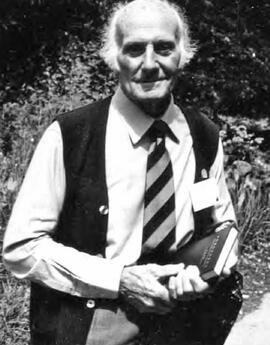
An Italian botanist. He was a specialist on the ecology and phytogeography of tropical Africa, and also worked in plant taxonomy and pteridology.
In 1935, he graduated with a degree in Natural History from University of Florence.
From 1935 to 1958, was an assistant at the Institute of Botany in the University of Florence.
From 1958 to 1959 became a professor of botany at the University of Sassari in Sardinia.
From 1959, Rodolfo was a professor at the Institute of Botany in the University of Genoa and director of the Botanical Garden.
Pichi was a member of the Linnaean Society of London, the Botanical Society of America and the American Society of Ferns, he received the Hailé Selassié prize for his work in Ethiopia. He was also made a professor emeritus by the University of Perugia, Italy.
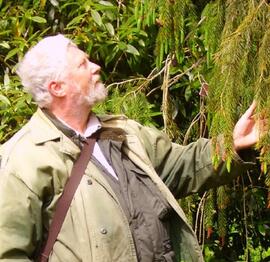
English botanist, specialised in ferns and spermatophytes. Also interested in conifers.
Phd in cytogenetics from Newcastle University, followed by a post-doctoral fellowship at University of Queensland, Brisbane (1968-1970). 1971 appointed to conduct conifer and fern reserach at Royal Botanic Garden Edinbrugh (RBGE).
One of his greatest projects at RBGE was the Conifer Conservation Programme, established a network of safe sites throughout Britain and Ireland for the cultivation of threatened conifer species.
Published: